Best Tablet for Autism Therapy: Improve Focus, Learning and Communication with VergeTAB

Reading Time: 4 minutes

Clinically Reviewed by

Aswathy Ponnachan

Medical and Psychiatric Social Worker

Quick Summary

  • Regular tablets often distract children with autism
  • Structured digital therapy improves focus and engagement
  • VergeTAB provides a distraction-free, therapy-based learning system
  • Used by therapists, special schools, and parents
  • Supports communication, cognitive skills, and attention development

Introduction

Parents and therapists working with children on the autism spectrum often face one common challenge: keeping children engaged long enough to build meaningful developmental skills.

Many children with autism learn best through:

  • Visual instructions
  • Structured activities
  • Predictable routines

However, traditional worksheets or verbal teaching methods don’t always hold attention.

At the same time, many families introduce tablets hoping to support learning—but most devices are designed for entertainment, not therapy. Games, notifications, and distractions often interrupt focus.

This is where therapy-focused technology makes a real difference.

VergeTAB, powered by the XceptionalLEARNING digital therapy ecosystem, is designed specifically for therapy and special education. It delivers structured, guided activities that improve focus, communication, and cognitive development.

Want to see how VergeTAB works in real therapy sessions?

Talk to our team, explore features, and understand how therapists use VergeTAB in clinics, schools, and home programs.

Why the Right Tablet Matters in Autism Therapy

Children with autism respond strongly to structured and visual environments. The right digital tool combines:

  • Visual instructions
  • Interactive responses
  • Immediate feedback
  • Clear task completion

These elements reduce confusion and help children stay engaged longer, which is critical for skill development.

When children clearly understand what to do, they are more likely to:

  • Complete tasks
  • Build confidence
  • Participate actively

The Problem with Regular Tablets

Many parents start with standard tablets, but they often create more challenges than benefits:

  • Easy access to games and videos
  • Frequent notifications and distractions
  • No structured therapy progression
  • No meaningful progress tracking

For children with attention difficulties, this leads to:

  • Reduced focus
  • Interrupted learning
  • Less effective therapy sessions

Therapists often spend more time redirecting attention than actually teaching.

What Makes a Tablet Suitable for Autism Therapy?

A therapy-focused tablet must be designed around developmental goals—not entertainment.

Essential Features:
  • Structured Learning Activities → Step-by-step guided tasks
  • Visual Learning Support → Images, prompts, animations
  • Distraction-Free Environment → No games or interruptions
  • Therapist-Aligned Programs → Built for real therapy goals
  • Progress Monitoring → Tracks improvement over time

When these features work together, therapy becomes more consistent and measurable.

VergeTAB vs Regular Tablets

FeatureRegular TabletVergeTAB
PurposeEntertainmentTherapy-focused
DistractionsHighNone
StructureApp-basedStructured system
TrackingLimitedBuilt-in
LearningUnstructuredGoal-based
VergeTAB vs Regular Tablets: Why Therapy-Focused Design Makes the Difference

This structured ecosystem helps children focus on learning instead of switching between apps.

Compare Plans and Find the Right Fit

Explore VergeTAB plans to find the right therapy solution for your child or institution.

Why VergeTAB Is Different

Unlike typical tablets, VergeTAB is built specifically for therapy environments.

It works within the XceptionalLEARNING ecosystem, offering structured programs across key developmental areas:

  • Cognitive skill development
  • Speech and language practice
  • Attention and focus training
  • Visual perception development
  • Functional learning skills

Because the system is structured, children stay engaged in purposeful learning tasks without digital distractions.

Key Features That Support Autism Therapy

1. Interactive Therapy Activities

  • Improve attention, memory, and problem-solving
  • Provide step-by-step guidance
  • Offer immediate feedback for better learning

This helps children complete tasks successfully and stay motivated.

2. Structured Learning Modules

  • Organized in progressive levels
  • Gradual skill development
  • Designed for therapy-based outcomes

Example:
A child who struggles with attention may begin with simple matching tasks and gradually move to multi-step problem-solving activities.

3. Progress Monitoring

  • Tracks performance and engagement
  • Helps therapists adjust therapy plans
  • Identifies improvement patterns

This makes therapy data-driven instead of guesswork.

4. Distraction-Free Environment

  • No games, ads, or social media
  • Fully focused therapy interface

This is one of the biggest advantages over regular tablets.

Watch Real Therapy in Action

See how structured digital activities improve engagement and learning outcomes during actual therapy sessions.

From Struggles to Success: How VergeTAB Transformed My Client’s Therapy | Chinnu Thomas, SLP

Book a Free Demo on WhatsApp

Talk to our team instantly and explore how VergeTAB fits your child or therapy centre 

How VergeTAB Supports Communication Development

Communication is one of the most important goals in autism therapy.

VergeTAB supports both:

Receptive Language

  • Understanding instructions
  • Identifying objects
  • Following prompts

Expressive Language

  • Vocabulary building
  • Responding to tasks
  • Guided communication

Activities include:

  • Object identification
  • Matching exercises
  • Following simple instructions

These structured interactions make communication practice engaging and repeatable.

How Therapists Use VergeTAB

VergeTAB is used across multiple therapy disciplines:

  • Speech Therapy → Language and communication
  • Occupational Therapy → Attention and processing skills
  • Special Education → Structured classroom learning

Because activities are pre-structured, therapists can focus more on teaching and interaction rather than managing distractions.

Supporting Home Therapy

Children improve faster when therapy continues beyond sessions.

VergeTAB helps parents:

  • Practice therapy activities at home
  • Maintain consistency
  • Reinforce skills learned in therapy

This consistency creates a stronger learning environment, leading to better outcomes.

Frequently Asked Questions

What is the best tablet for autism therapy?

A tablet designed specifically for structured therapy and learning—not general entertainment.

Can tablets help children with autism?

Yes, when used in structured and guided environments, they improve focus, communication, and cognitive skills.

Is VergeTAB suitable for home therapy?

Yes. It supports both clinical and home-based learning programs.

Does VergeTAB replace therapists?

No. It supports therapists and enhances structured learning.

Conclusion: A Smarter Digital Tool for Autism Therapy

Children with autism benefit from structured, visual, and consistent learning environments. When technology is designed specifically for therapy, it becomes a powerful support tool rather than a distraction.

VergeTAB, powered by the XceptionalLEARNING platform, helps therapists, educators, and parents deliver structured and engaging therapy programs that improve focus, communication, and overall learning outcomes. By combining guided digital activities with professional therapy and home reinforcement, it creates a more consistent and effective developmental journey for children.

Ready to explore VergeTAB for your child or institution?

Experience how structured digital therapy can transform learning outcomes for children with autism.

Speech Delay in Children: Causes, Signs and How VergeTAB Helps Your Child Speak Better

Reading Time: 4 minutes

Clinically Reviewed by

Rakshitha S

Consultant Speech Swallow pathologist, Digital practitioner -SLP

Quick Summary

  • Speech delay is common—but shouldn’t be ignored beyond key milestones 
  • Early intervention leads to faster and better outcomes. 
  • Causes range from hearing issues to developmental conditions like autism or ADHD. 
  • Simple daily activities at home can improve communication skills 
  • VergeTAB offers structured, therapist-designed activities for speech development 
  • Combining therapy + guided digital tools accelerates progress 

Worried Your Child Isn’t Talking Yet?

It’s something many parents quietly worry about.

You keep telling yourself:
“Maybe they’ll start talking next month…”
“Maybe it’s just a phase…”

But deep down, the question remains:
“Should I be concerned?”

If your child isn’t speaking as expected, you’re not alone—and the good news is: you can take action early and make a real difference.

What is Speech Delay?

Speech delay occurs when a child does not meet expected speech and language milestones for their age. This can include:

  •  Limited vocabulary 
  •  Difficulty forming words or sentences 
  •  Trouble understanding or responding to communication 

It’s important to note that speech delay is different from language delay, though the two are often connected.

Speech Development Milestones

0–12 Months

  •  Responds to sounds 
  •  Babbles (ba-ba, da-da) 
  •  Uses gestures 

1–2 Years

  •  Says simple words 
  •  Understands instructions 
  •  10–50 word vocabulary 

2–3 Years

  •  Combines words 
  •  Follows directions 
  •  Vocabulary rapidly increases 

3–4 Years

  •  Speaks in sentences 
  •  Asks questions 
  •  Mostly understood by others

If your child is not meeting these milestones, it may indicate a delay.

Common Causes of Speech Delay

Every child develops differently, but common causes include:

  • Hearing Issues – Difficulty hearing affects speech imitation 
  • Developmental Conditions – Autism, ADHD, or delays 
  • Oral-Motor Challenges – Weak muscle coordination 
  • Low Interaction – Limited communication exposure 
  • Neurological Factors – Brain development differences 

The key is not guessing—but understanding your child’s specific need.

Early Signs of Speech Delay in Children

Take action early if your child:

  •  Is not speaking words by 18 months 
  •  Doesn’t respond to their name 
  •  Struggles to follow simple instructions 
  •  Shows limited eye contact or interaction 

These are early signals—not labels. Early support makes a huge difference.

What Should You Do If Your Child Has a Speech Delay?

Start with simple, powerful steps:

  •  Talk more during daily routines (mealtime, playtime) 
  •  Encourage your child to repeat sounds and words 
  •  Reduce passive screen time 
  •  Introduce structured communication activities 
  •  Track developmental milestones 
  •  Seek expert guidance early

Get Expert Guidance Instantly

Not sure if your child’s speech delay needs attention?
Chat on WhatsApp and get expert clarity in minutes

Effects of Speech Delay on Child Development

When communication is difficult, it impacts more than just speech:

  •  Social interaction becomes harder 
  •  Frustration increases 
  •  Learning slows down 
  •  Confidence drops 

That’s why early intervention is critical.

How VergeTAB Supports Speech Development

This is where technology truly transforms therapy.

VergeTAB is not just a tablet—it’s a structured therapy tool designed to improve communication skills step by step.

What Makes It Effective?

  • Active Learning (Not Passive Watching)
    Children engage, respond, and interact 
  • Therapist-Designed Activities
    Guided exercises tailored for speech development 
  • Visual + Audio Support
    Helps children understand and repeat words 
  • Daily Practice at Home
    Consistency leads to real improvement 
  • Progress Tracking
    Parents can clearly see measurable growth.

See Real Progress (Not Just Theory)

Watch a real transformation—from limited speech to confident communication

From Struggles to Success: How VergeTAB Transformed My Client’s Therapy | Chinnu Thomas, SLP

Want to See How It Works for Your Child?

Chat with our experts on WhatsApp for personalized guidance.

VergeTAB vs Regular Screen Time

Let’s be honest—most screen time doesn’t help.

Regular Screen TimeVergeTAB
Passive videosActive learning
EntertainmentTherapy-focused
No structureGuided activities
No progress trackingMeasurable results
Not All Screen Time Is Equal—See the Difference

VergeTAB transforms screen time into productive therapy time.

Real-Life Change (What Parents Notice)

Watch how one child improved communication, confidence, and interaction using structured digital therapy with VergeTAB.

Watch Our Child Thrive with Our Digital Activity Book! | ft.VergeTAB

Seeing real progress like this shows what’s possible when the right support and consistency come together.

Want the same progress for your child?

Request a FREE demo and see how VergeTAB works step by step

Combining Therapy and Technology

The best results come from a hybrid approach:

  •  Professional therapy sessions 
  •  Daily guided practice using VergeTAB
  • Active parent involvement

This combination ensures faster and lasting progress.

Tips for Parents Using VergeTAB at Home

  •  Set a daily routine (15–30 minutes) 
  •  Sit with your child during activities 
  •  Encourage repetition 
  •  Celebrate small wins 
  •  Stay consistent

Why Early Intervention Matters

Early years are critical for brain development.

The earlier you start:

  •  The faster your child improves 
  •  The better long-term outcomes 
  •  The lower risk of future learning challenges

The Power Behind It: XceptionalLEARNING (XL Platform)

VergeTAB is powered by the XceptionalLEARNING platform, a complete digital therapy ecosystem.

It offers:

  •  Digital Activity Book for structured learning 
  •  Expert-designed therapy programs 
  •  Online therapy sessions 
  •  Tools for therapists and parents 

Together, they create a complete support system for your child.

Common Myths Parents Believe

“My child will outgrow it.”
Sometimes—but not always

“Boys talk late, it’s normal.”
Delays should still be evaluated

“Any screen time helps.”
Only structured, guided tools are effective.

Conclusion

Speech delay in children can feel overwhelming, but with the right approach, it becomes manageable and improvable. Early identification, consistent practice, and expert guidance are key to helping your child develop strong communication skills. Tools like VergeTAB, powered by the XceptionalLEARNING platform, provide structured, engaging, and effective support both at home and alongside professional therapy. When parents combine daily interaction, guided activities, and the right technology, children can make meaningful progress and build confidence in communication.

Take the Next Step (Don’t Wait)

If you’re noticing signs of speech delay, starting early can make all the difference.

Help your child build confidence, communication, and a brighter future—starting today.

Frequently Asked Questions (FAQ)

Still have questions about your child’s speech delay? Here are some quick answers:

 When should I worry about speech delay?

If your child is not speaking words by 18–24 months.

Can speech delay improve?

Yes—with early intervention and consistent practice.

Does screen time cause delay?

Passive screen time can slow speech development.

 How does VergeTAB help?

It provides structured, interactive speech activities designed by experts.

 How long does improvement take?

Many children show progress within a few months with consistency.

Autism and ADHD Therapy Isn’t Working? How VergeTAB Helps Children Make Real Progress

Reading Time: 4 minutes

Clinically Reviewed by

Aswathy Ponnachan

Medical and Psychiatric Social Worker

Every parent wants to see their child grow. You follow therapy plans, attend sessions, and try to stay consistent at home. Yet after weeks or months, one question keeps coming up:

“We’re doing everything… so why isn’t my child improving?”

If this feels familiar, you’re not alone.

In most cases, therapy isn’t failing — something important is missing between sessions.

In this blog, you’ll learn why progress sometimes stalls and how structured home routines, supported by VergeTAB and the XceptionalLEARNING (XL) Platform, can transform your child’s development.

The Common Gap in Therapy  

Most therapy plans focus on scheduled clinic sessions—two or three times per week. During sessions:

  • A therapist works with your child
  • Parents may observe
  • A few instructions are given for home

The problem: children don’t learn only during therapy sessions. Learning happens in hundreds of small moments throughout the day:

  • During playtime
  • While following daily routines
  • Through repeated practice of new skills

Without guidance in these moments, therapy’s impact remains limited to the clinic. Even excellent therapy sessions alone cannot create meaningful improvement.

Why Children Don’t Improve at Home  

Many parents are doing everything right:

  • Attending therapy regularly
  • Trying activities at home
  • Supporting their child

But still, progress feels inconsistent.

Why?

Because of:

  • No fixed routine
  • Practice based on time/mood
  • Lack of structured guidance

This creates effort without structure — and that slows real progress.

Need Help Structuring Home Therapy?

Quick guidance can make a huge difference — even 20–30 minutes of structured practice daily helps your child progress.

Why Structure, Consistency and Repetition Matter

Children with autism, ADHD, or other developmental challenges improve not through exposure alone, but through:

  • Consistency – predictable routines every day
  • Repetition – practising skills regularly in real-life contexts
  • Structure – guided, goal-oriented activities that build upon previous skills

Without these, even high-quality therapy sessions may not translate into real-world progress.

Why More Therapy Isn’t Always the Answer  

Many parents think:
“Let’s add more sessions”

But this often leads to:

  • Overload
  • Resistance
  • Burnout

The real solution is daily structured practice, even for just 20–30 minutes.

Why Regular Tablets and Apps Don’t Work

Many families turn to tablets or apps. Initially promising, problems soon emerge:

  • Distractions: Games, notifications, or random videos reduce focus
  • No clear goals: Apps rarely align with therapy objectives
  • No progression tracking: Skills aren’t systematically reinforced
  • Disconnected from therapist guidance: Parents can’t ensure alignment with therapy goals

Result: Child is busy… but not learning effectively.

What Makes VergeTAB Different

VergeTAB is not a regular tablet — it’s a structured therapy system designed for real progress.

It provides:

  • Distraction-free environment
  • Goal-based therapy activities
  • Structured daily routines
  • Alignment with therapist sessions

Parents often notice:

  • Better focus
  • Longer engagement
  • More predictable responses

See How Structured Therapy Works in Real Life  

Watch: From Struggles to Success – How VergeTAB Helped Improve Engagement and Learning

From Struggles to Success: How VergeTAB Transformed My Client’s Therapy | Chinnu Thomas, SLP

See how children improve through consistent, structured daily practice.

How VergeTAB Improves Home Therapy  

Instead of random activities, children get:

  • Guided daily sessions
  • Repetition for skill-building
  • Predictable routines
  • Progress tracking

Even 20–30 minutes daily creates meaningful improvement.

Step-by-Step Home Routine (Example)  

1. Warm-Up (5 minutes)

  • Simple stretching or movement
  • Short mindfulness or breathing exercises

2. Skill Practice (15 minutes)

  • Speech: Repeating words using visual prompts
  • Behaviour: Completing mini daily routine tasks
  • Occupational therapy: Fine motor or hand-eye coordination exercises

3. Guided Play (5–7 minutes)

  • Interactive games with a clear learning goal
  • Focus on turn-taking, attention, and response

4. Cool-Down / Reflection (3 minutes)

  • Review what was learned
  • Praise participation
  • Log progress for parent/therapist

Consistency matters more than duration.

Before vs After Structured Therapy

BeforeAfter
Therapy only in sessionsDaily guided home practice
No clear routineStructured daily plan
Easily distractedFocused engagement
Parents unsureParents confident
Before vs After Using VergeTAB for Autism and ADHD Therapy at Home

This shift is where real progress begins.

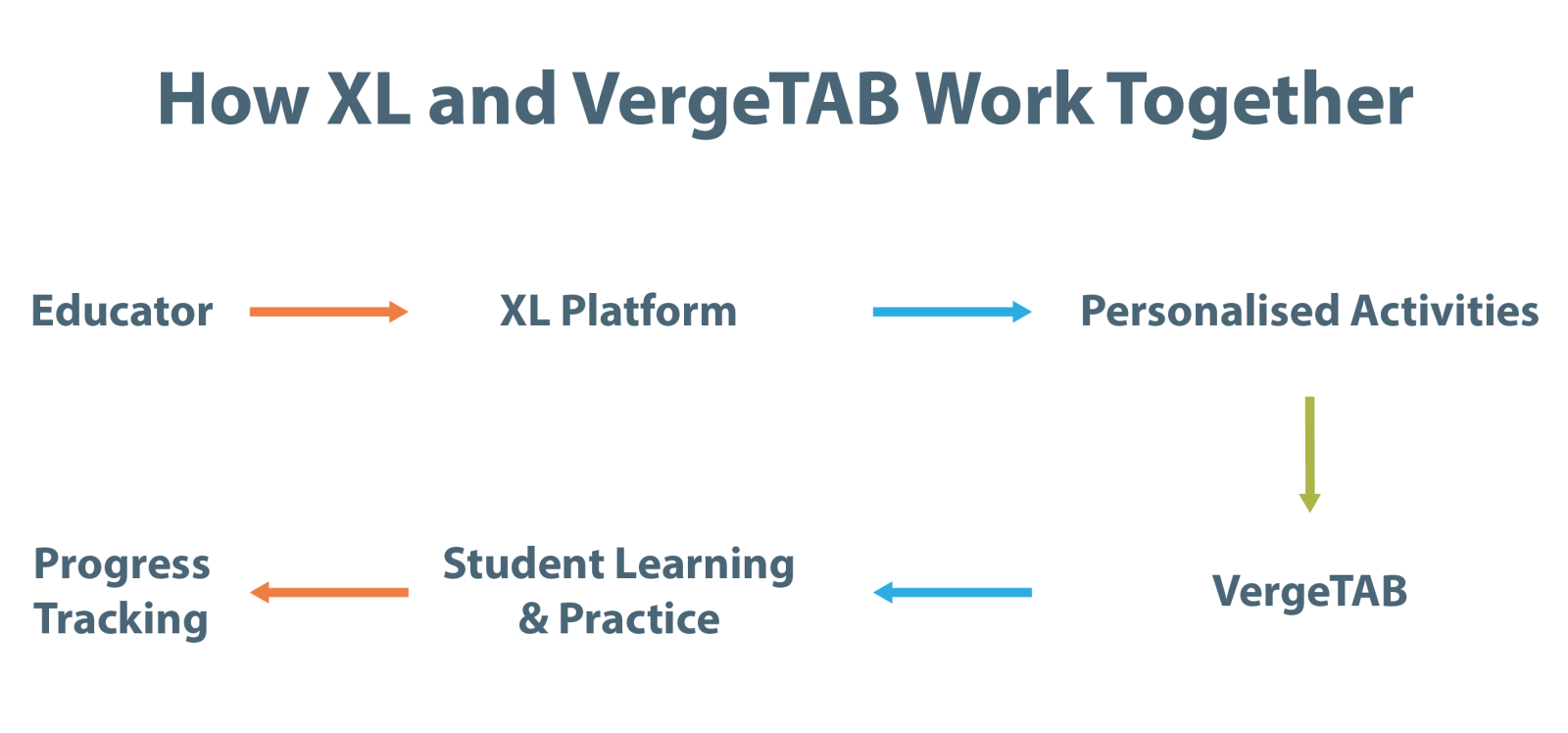
How VergeTAB + XL Platform Work Together  

This system:

  • Connects therapy + home practice
  • Tracks progress through the XceptionalLEARNING (XL) Platform
  • Guides parents step-by-step
  • Ensures consistency daily

Result: Therapy continues beyond sessions.

Frequently Asked Questions (FAQ)

Is digital therapy safe for children with ADHD or autism?

Yes. Digital therapy tools like VergeTAB provide distraction-free, goal-oriented learning, ensuring safe and focused engagement.

What makes VergeTAB different from regular tablets or apps?

Unlike typical apps, VergeTAB is aligned with therapy goals, tracks progress, and provides structured, guided sessions.

How do I track my child’s progress at home?

VergeTAB + XL Platform automatically logs completed tasks and skill development. Parents and therapists can review progress anytime.

Why is my child not improving in therapy?          

Progress often slows when skills are practiced only during sessions—children need consistent, structured practice at home to improve. Even 20–30 minutes of guided daily repetition helps bridge this gap and supports steady development.

Final Thoughts  

If your child’s progress feels slow, the issue is rarely therapy itself.

The missing link is structured daily practice at home.

With the right system, you can:

  • Build consistent routines
  • Support your child with confidence
  • See measurable improvement

Even small daily steps can lead to big changes over time.

Ready to Improve Your Child’s Progress?  

Start building structured, consistent therapy at home today.

How Digital Transformation is Changing Special Education in Schools

Reading Time: 4 minutes

Written By

Jasna K

Special Educator

Introduction: Special Education in a Changing World

Special schools today are no longer limited to traditional teaching methods. With rising therapy needs and increasing parental expectations, digital transformation in special education is becoming essential for delivering structured and measurable outcomes.

For both educators and parents, the goal remains the same—ensuring that every child receives meaningful, structured, and effective learning opportunities.

Today, special schools are evolving by integrating digital therapy platforms and special education technology to support not just academic growth, but also independence, communication, and life skills.

Changing Social Needs and Educational Expectations

There has been a significant shift in how society understands disability and education. Increased awareness of inclusion and disability rights has raised expectations from both schools and parents.

Modern special education schools now focus on:

  • Life skills development
  • Social interaction
  • Communication abilities
  • Vocational readiness

This shift requires individualized special education programs that adapt to each child’s unique needs.

Digital Transformation in Special Education: Why It Matters for Special Schools

Technology is no longer optional—it is becoming essential.

Digital tools in special education help:

  • Simplify complex concepts through visual learning
  • Provide structured and repeated practice
  • Support multiple learning styles (visual, auditory, activity-based)

For educators, special education software and digital systems improve lesson planning and progress tracking.
For parents, these platforms offer better visibility into their child’s learning journey.

Traditional vs Digital Special Education: What’s Changing?

Traditional ApproachDigital Approach
Manual progress trackingReal-time tracking and reports
Limited engagementInteractive, activity-based learning
One-size-fits-all teachingIndividualized learning programs
Paper-based materialsDigital activity-based content
How Digital Transformation Improves Therapy Outcomes

How Digital Learning Improves Engagement in Special Education

Children with special needs respond better to learning that is interactive, structured, and engaging.

Digital methods such as:

  • Animated lessons
  • Interactive exercises
  • Activity-based digital learning

help improve:

  • Attention span
  • Participation
  • Confidence

This leads to more consistent and meaningful learning outcomes.

See Real Classroom Impact: How Digital Learning Improves Engagement

Watch how digital learning is transforming special education classrooms in real-life settings:

How VergeTAB Is Transforming Learning for Children with Special Needs | A Special School Perspective

Want to implement this in your school?

Digitalizing Education in Special Schools (DESS): A Transformative Initiative

To address the growing need for effective and inclusive learning, initiatives like the Digitalizing Education in Special Schools (DESS) project by XceptionalLEARNING are bringing meaningful transformation to classrooms.

DESS introduces a hybrid learning model, combining traditional teaching with digital solutions to create a balanced and effective learning experience.

At the core of this model is VergeTAB, a digital activity book designed to enhance structured learning.

Within this approach:

  • Each student uses an individual device for focused engagement
  • Lessons are delivered through structured, interactive content
  • Teachers can guide, monitor, and manage activities in real time

For educators, this enables better classroom management and personalized instruction.
For parents, it ensures that learning is structured, monitored, and meaningful.

By combining teacher-led instruction with digital support, DESS creates a more inclusive and adaptive learning environment.

The Evolving Role of Teachers

Despite rapid technological advancement, teachers remain central to a child’s learning journey.

Today, educators are:

  • Facilitators of interactive learning
  • Guides for individualized learning paths
  • Users of digital tools to enhance understanding

Ongoing training and professional development are essential to help teachers effectively integrate technology into their teaching practices.

Challenges in the Transition

While digital transformation offers many benefits, schools may face challenges such as:

  • Limited infrastructure
  • Need for training and technical support
  • Adjustment to new teaching methods

With proper planning and collaboration between educators and parents, these challenges can be effectively managed.

The Future of Special Schools

The future of special education lies in combining traditional teaching strengths with digital innovation.

Special schools will continue to focus on:

  • Building independence and life skills
  • Enhancing social and communication abilities
  • Preparing children for real-world participation

With advancements in assistive and digital technologies, the potential to support children will continue to grow.

Conclusion

Special schools are evolving by integrating traditional teaching approaches with digital innovation to create more structured and effective learning environments.

Initiatives like DESS highlight how combining teacher-led instruction with tools like VergeTAB can significantly improve engagement, consistency, and learning outcomes.

By working together—educators, parents, and organizations—special schools can create empowering environments that support independence, confidence, and long-term development for children with special needs.

Need help choosing the right digital solution for your school or child?

Frequently Asked Questions

What is a digital therapy tablet in special education?

A digital therapy tablet is a specialized device designed to deliver structured, goal-based learning and therapy activities for children with special needs. It supports engagement, tracks progress, and enables personalized learning within a controlled environment.

How does digital therapy work with VergeTAB?

VergeTAB works exclusively with the XceptionalLEARNING platform, where therapy activities, lesson plans, and progress tracking are managed. Teachers and therapists can assign structured activities, monitor performance, and guide students in real time.

Can digital therapy replace traditional teaching?

No. Digital therapy supports teachers and therapists by enhancing engagement and consistency. The best results come from a hybrid therapy approach.

How does digital therapy improve learning outcomes in special education?

Digital therapy improves learning by providing consistent practice, visual and interactive activities, and real-time progress tracking. When combined with teacher-led instruction, it creates a hybrid learning model that enhances engagement, skill development, and overall outcomes.


From Isolated Therapy to Unified Systems: How Special Schools Implement VergeTAB for Structured Digital Therapy

Reading Time: 7 minutes

Clinically Reviewed by

Jinson Alias

Consultant Psychologist, Special Educator & Digital Therapy Trainer

Special schools carry responsibilities that extend far beyond textbooks and timetables. Every day, they support children in developing communication skills, emotional regulation, motor coordination, independence, and essential life abilities that shape their long-term future.

The work is intensive. It is deeply personal. And it requires extraordinary dedication from educators, therapists, administrators, and families alike.

In many institutions, the commitment is unquestionable. Staff members work tirelessly. Therapists design thoughtful intervention plans. Teachers reinforce goals in the classroom. Parents try to continue practicing at home.

Yet despite all this effort, many special schools quietly face a common challenge:

Everyone is working hard — but not always working together within a unified system.

Speech therapy goals may exist in one place. Classroom reinforcement happens elsewhere. Parent updates depend on occasional meetings. Documentation is scattered across files and reports.

This is where structured digital therapy platforms for special education schools are beginning to transform how therapy and learning are delivered.

At the centre of this transformation is VergeTAB, a purpose-built therapy tablet for special education environments designed to work exclusively within the XceptionalLEARNING ecosystem. Together, they create a coordinated digital infrastructure that connects therapists, teachers, administrators, and parents within a single intervention system.

Why Structured Technology Is No Longer Optional in Special Schools

In many special schools, therapy and classroom activities still operate in partially disconnected workflows.

For example:

  • Speech therapy goals may be stored in isolated files
  • Occupational therapy objectives may not always be reinforced in classrooms
  • Behaviour observations are often recorded manually
  • Parent updates depend on periodic meetings rather than continuous engagement

The challenge is not a lack of dedication.

The challenge is infrastructure.

To deliver consistent developmental outcomes, schools increasingly require structured special education technology systems that support:

  • Cross-disciplinary goal alignment
  • Standardized therapy documentation
  • Measurable intervention tracking
  • Parent participation in home practice
  • Controlled and distraction-free digital learning environments

Modern digital therapy platforms for schools allow these elements to function within one coordinated framework instead of fragmented processes.

What Makes VergeTAB Different

Today, many institutions experiment with general-purpose tablets for educational use. However, consumer devices often introduce distractions, inconsistent applications, and open internet access.

These conditions rarely support structured therapy environments.

VergeTAB was developed specifically as a therapy tablet for autism and special education programs. It is not a consumer device adapted for therapy use.

Instead, it operates entirely within the XceptionalLEARNING digital therapy platform, creating a closed, secure environment where all activities are aligned with therapeutic and educational goals.

In simple terms:

VergeTAB is the hardware.
XceptionalLEARNING is the intelligence layer.

Together, they form a controlled therapy management system for schools where every module, activity, and report supports structured intervention.

There are:

  • No gaming applications
  • No open browsing
  • No unrelated digital distractions

This controlled architecture is critical in special education settings where overstimulation and digital safety must be carefully managed.

But beyond safety, the real advantage lies in system alignment.

VergeTAB becomes more than a device.
It becomes an institutional implementation tool.

Why Special Schools Are Adopting Digital Therapy Tablets

Across many special education institutions, administrators are recognizing that therapy outcomes depend not only on professional expertise but also on consistent reinforcement across environments.

Digital therapy tablets are increasingly adopted because they help schools:

  • Reinforce therapy goals during classroom instruction
  • Improve documentation and progress tracking
  • Enable multidisciplinary collaboration
  • Provide structured home practice modules for parents
  • Reduce administrative workload through digital reporting systems

When integrated into a structured IEP digital platform, these systems help schools monitor student development more effectively and make data-informed decisions about interventions.

Instead of relying solely on periodic reviews, educators and therapists can track daily engagement and progress patterns in real time.

A Child-Level Transformation: What This Looks Like in Practice

In one special school classroom, a child working on expressive communication struggled to generalize vocabulary learned during speech therapy sessions.

Before digital integration:

  • Vocabulary was practised only during therapy
  • Classroom reinforcement was inconsistent
  • Parents were unsure how to practice effectively at home

After VergeTAB implementation:

  • The same vocabulary targets appeared in structured classroom activities.
  • Teachers reinforced communication tasks digitally.
  • Parents accessed guided practice modules at home.
  • Progress became visible across stakeholders.

Within weeks, educators observed more spontaneous responses and improved engagement.

One educator summarized the change simply:

“Earlier, we saw progress during therapy time. Now we see it throughout the day.”

This transformation is not about replacing therapists.

It is about extending therapy impact across environments.

See VergeTAB in a Real Classroom Setting

Watch how structured digital therapy supports engagement and reinforcement during classroom learning.

Watch the classroom video

From Touch to Transformation: A Special Child’s Journey with Digital Learning

Project DESS: Structured Institutional Implementation

Technology adoption in special schools must go beyond distributing devices.

That is why the Project DESS (Digitalizing Education in Special Schools) framework focuses on system-level transformation.

The model includes:

  • Institutional needs assessment
  • Staff onboarding and workflow training
  • Phased deployment across departments
  • Performance monitoring and evaluation
  • Parent integration models
  • Scalable expansion planning

Schools implementing VergeTAB through Project DESS move from isolated therapy processes to coordinated intervention systems.

Transformation becomes measurable rather than theoretical.

See How Special Schools Are Implementing VergeTAB

Many institutions are adopting structured digital therapy platforms and assistive technology for autism to align therapy, classroom learning, and home practice.

Watch how real special schools are integrating VergeTAB into their daily intervention systems.

Watch VergeTAB in Action

Measurable Outcomes Observed in Participating Special Schools

Within one academic cycle, institutions implementing VergeTAB under structured models have reported:

  • Significant increases in structured task engagement
  • Reduced administrative documentation workload
  • Improved clarity during interdisciplinary review meetings
  • Stronger carryover of therapy goals into classroom routines
  • Increased parent participation in home practice

Interestingly, staff often report that workload does not increase.

Instead, documentation becomes more streamlined because digital systems replace repetitive manual processes.

Efficiency improves because friction within workflows is reduced.

Institutional Impact: Real Special School Transformations

Santwanam Special School

At Santwanam Special School, VergeTAB helped digitize therapy workflows and align intervention goals across departments.

Principal Athira Krishnan reported improved coordination between therapists and educators, along with more structured documentation practices.

Key outcomes included:

  • Streamlined therapy scheduling
  • Stronger classroom reinforcement of therapy goals
  • Increased student engagement
  • Clearer progress visibility

Watch Santwanam Special School Implementation

Santwanam Special School is Digitalised, Claims Principal Athira Krishnan

Asha Nilayam Special School

Asha Nilayam Special School adopted VergeTAB to create a hybrid therapy–classroom model.

Therapists and educators now assign goal-based digital activities, monitor progress in real time, and provide parents with structured updates.

Key outcomes included:

  • Integrated therapy and classroom workflows
  • Real-time multidisciplinary monitoring
  • Improved parent communication
  • Greater institutional transparency

Watch Asha Nilayam Special School Case

Transforming Asha Nilayam: How Digital Learning Empowers Special Needs Education

How VergeTAB Strengthens Multidisciplinary Collaboration

Effective special education relies on coordinated collaboration among professionals.

With VergeTAB integrated into daily workflows:

  • Special educators reinforce therapy goals during classroom sessions
  • Speech-language pathologists assign communication-focused modules
  • Occupational therapists incorporate motor-based digital activities
  • Behaviour therapists monitor engagement patterns
  • Parents access guided home practice activities

Instead of parallel interventions, schools operate within a connected intervention model.

Research consistently shows that coordinated multidisciplinary approaches produce stronger functional outcomes than isolated therapy sessions.

Key Benefits for Special Schools

1. Improved Generalization Across Settings

A child may confidently form sentences during a session, yet remain silent when a teacher asks a simple question in class. At home, parents may still hear one-word answers. The ability is there, but consistency across environments is missing.

When therapy goals, classroom activities, and home practice are aligned, something changes. The child begins seeing the same structure, cues, and expectations everywhere — not just in one room.

Within weeks, participation improves, and confidence grows. Progress becomes visible not only in sessions but in real life. And when families are actively involved, support shifts from occasional encouragement to meaningful partnership in the child’s development.

2. Data-Driven Decision Making

Manual reporting systems are time-intensive and subjective.

Digital dashboards within the XceptionalLEARNING framework allow special schools to:

  • Monitor individual goal progression
  • Track performance patterns
  • Identify stagnation early
  • Make informed intervention adjustments

Administrators also gain visibility into institutional-level outcomes.

3. Stronger Parent Engagement

One of the biggest gaps in special education is what happens after the school day ends. Progress made in structured sessions can slow down when home practice lacks clarity.

With structured, guided modules, parents are no longer given vague advice like “practice at home.” Instead, they receive clear, step-by-step activities aligned with the child’s therapy goals. This transforms the role of parents in therapy — from passive supporters to active partners in progress.

When parents understand what to reinforce and how to do it confidently, consistency improves. Children experience the same expectations across school and home, reducing confusion and strengthening outcomes. As a result, progress feels steady, measurable, and less stressful for families.

4. Operational Efficiency

Special schools often function with limited staffing.

Structured digital systems reduce:

  • Repetitive documentation
  • Manual file management
  • Cross-department communication delays

Staff can focus more on intervention and less on administrative tasks.

5. Scalable Institutional Growth

Digital infrastructure allows special schools to:

  • Pilot implementation in one department
  • Train staff systematically
  • Monitor measurable outcomes
  • Expand gradually

This makes adoption sustainable and financially strategic.

Ethical, Secure, and Child-Centered

Technology in special schools must remain:

  • Professionally supervised
  • Screen-time regulated
  • Data secure
  • Goal oriented

VergeTAB’s controlled architecture ensures digital usage remains structured, safe, and focused on therapeutic outcomes.

Implementation Model for Special Schools

Successful adoption follows five stages:

  1. Institutional assessment
  2. Staff onboarding and training
  3. Pilot classroom deployment
  4. Data monitoring and refinement
  5. Scalable institutional expansion

This phased model ensures sustainable implementation and measurable impact.

The Future of Special Schools

Special schools are gradually evolving from paper-heavy, disconnected systems toward coordinated digital ecosystems.

The future of therapy and special education will be:

  • Collaborative
  • Data-informed
  • Parent-inclusive
  • Secure
  • Scalable

When therapy platforms, classrooms, and home environments are connected through structured technology, intervention becomes more consistent and effective.

VergeTAB, implemented within frameworks like Project DESS, supports this evolution by aligning therapy, education, and family participation into one unified system.

Conclusion: From Fragmentation to Institutional Leadership

When special schools adopt structured digital therapy platforms and therapy tablets for special education, intervention becomes measurable, collaborative, and sustainable.

Institutions that move beyond disconnected processes and build coordinated digital systems are better positioned to support long-term developmental outcomes for children with diverse learning needs.

If your school is exploring structured digital implementation, you can:

  • Watch how other institutions have implemented VergeTAB
  • Schedule a guided demonstration for your leadership team
  • Connect with our team on WhatsApp for quick inquiries and implementation support

The future of special education belongs to institutions that build structured, scalable systems — not disconnected processes.

And that transformation begins with alignment.

How Parents Can Maximize Therapy at Home with VergeTAB

Reading Time: 4 minutes

Clinically Reviewed by

Meha P Parekh

Special Educator

A Practical Guide to Meaningful, Measurable Progress

Therapy doesn’t stop when a session ends.

It continues at the kitchen table during homework.
On the staircase, when balance is tested.
In quiet moments before bedtime, when frustration surfaces again.

And as a parent, you feel it.

You want to help your child progress.
You want to reinforce what the therapist is doing.
But sometimes you’re unsure what to practice — or whether you’re doing it the right way.

That uncertainty can quietly slow progress. Structured clarity changes that.

This is exactly where VergeTAB, a digital therapy tablet, reshapes the home therapy experience — not by adding pressure, but by bringing alignment, consistency, and measurable direction.

Why Home Practice Matters More Than You Think

A therapist may see your child for one or two hours each week.
You are there every day.

Children develop through repetition — especially repetition in environments where they feel safe and emotionally regulated. Research in neuroplasticity consistently shows that the brain strengthens pathways that are activated consistently and meaningfully.

When therapy goals are reinforced at home:

  • Neural pathways consolidate more effectively
  • Motor patterns become smoother
  • Attention stabilizes
  • Emotional regulation improves
  • Skills transfer into real-life situations

Without follow-through, progress can stay inside the clinic. With aligned home reinforcement, skills begin to generalize into classrooms, playgrounds, and daily routines.

That transfer is where real independence develops.

What Makes VergeTAB Different

Many parents worry about increasing screen time — and that concern is valid.

But VergeTAB is not a general-use tablet.

It is a purpose-built therapeutic device that works exclusively within the secure XceptionalLEARNING platform through the protected XL Portal.

There is:

  • No app store
  • No entertainment content
  • No social media
  • No random downloads

Every activity is therapist-assigned. Every program aligns with developmental goals. Every session connects back to measurable outcomes.

Instead of distraction, it provides direction.
Instead of passive consumption, it delivers goal-driven practice.

The Power of Parent Involvement

Therapists design evidence-based intervention plans.
Parents provide consistency and emotional safety.

When therapy is reinforced at home in short, guided sessions:

  • Repetition strengthens adaptive motor control
  • Emotional confidence increases through predictable routines
  • Cognitive flexibility develops through structured sequencing
  • Attention endurance improves gradually

You are not replacing the therapist — you are extending the therapeutic environment.

And when clinic and home operate in alignment, progress becomes more predictable and sustainable.

How the VergeTAB System Works

VergeTAB functions within a connected developmental ecosystem:

  1. Therapists assign structured programs through the XceptionalLEARNING platform.
  2. Activities sync directly to VergeTAB.
  3. Your child completes guided sessions at home.
  4. Performance data is securely tracked.
  5. Therapists review results and adjust programs accordingly.

No guessing. No conflicting strategies. No unstructured repetition.

Just aligned developmental continuity.

See How the VergeTAB System Works

A Step-by-Step Approach for Effective Home Therapy

Step 1: Create a Consistent Routine

Keep sessions:

  • 10–20 minutes
  • At the same time, daily
  • In a calm, distraction-free environment

Consistency builds neural efficiency more effectively than occasional long sessions.

Short, predictable practice builds lasting progress.

Step 2: Follow the Assigned Activity

Activities are intentionally sequenced to support:

  • Adaptive motor coordination
  • Balance and bilateral integration
  • Fine motor precision
  • Attention pacing
  • Speech and communication
  • Emotional regulation

Even if tasks appear simple, they are layered with progression logic.

Trust the developmental sequencing.

Step 3: Encourage Effort Over Perfection

Home therapy should never feel like an exam.

Instead of focusing on mistakes, reinforce effort:

“Good work.”
“Try again, you can do it.”
“Let’s try that together.”

Confidence increases engagement. Engagement accelerates learning.

Step 4: Watch for Subtle Improvements

Progress is often gradual — and powerful.

You may begin noticing:

  • Smoother handwriting
  • Improved posture
  • More stable balance
  • Longer attention span
  • Reduced frustration
  • Faster recovery after small mistakes

Small improvements compound into meaningful transformation.

See How One Family Reinforces Therapy at Home

Every child’s journey is different. Below is an example of how one family integrates structured digital reinforcement into daily routines — supporting therapy goals in small, consistent ways.

Watch Our Child Thrive with Our Digital Activity Book! | ft.VergeTAB

Notice how the focus remains on routine, repetition, and encouragement — not perfection.

Want to explore more therapy demonstrations?
Discover how children engage with guided learning activities on the VergeTAB Therapy Tablet through our video library.

Explore the VergeTAB Video Library

Why a Distraction-Free Device Matters

Many children receiving therapy struggle with attention regulation, pacing, or sensory sensitivity.

General tablets are engineered to stimulate and capture attention continuously.

VergeTAB removes that overstimulation.

Because it operates only within the XceptionalLEARNING ecosystem:

  • Cognitive load is controlled
  • Visual clutter is minimized
  • Task sequencing is intentional
  • Feedback is purposeful

Screen exposure becomes therapeutic — not recreational.

Common Mistakes That Slow Progress

  • Skipping sessions frequently
  • Turning practice into pressure
  • Comparing your child’s journey to others
  • Mixing therapy time with unrelated digital distractions

Consistency and calm reinforcement outperform intensity and urgency.

Progress should feel steady — not stressful.

The Real Goal: Independence

The objective of structured home therapy is not task completion.

It is helping your child:

  • Self-correct naturally
  • Regulate effort and fatigue
  • Transfer skills across environments
  • Adapt confidently to new challenges
  • Build independence without constant prompting

Independence is not built in one session — it is built through aligned repetition over time.

When therapist guidance, VergeTAB sessions, and parent support work together, development becomes measurable and sustainable.

This is not random digital engagement.
It is a connected developmental ecosystem designed for long-term growth.

Frequently Asked Questions

Can home therapy replace clinic sessions?

No. Home reinforcement strengthens clinical therapy — it does not replace professional assessment, planning, or therapist guidance. The most effective progress happens when clinic sessions and home practice work together in alignment.

How much home practice is ideal?

In most cases, short, consistent 10–20 minute sessions are more effective than longer, inconsistent practice. Daily repetition builds neural efficiency and supports steady developmental progress without overwhelming the child.

Is digital therapy safe for children?

When screen exposure is structured, goal-based, and distraction-free — as with VergeTAB — it supports focused learning rather than overstimulation. Purpose-driven digital engagement is very different from passive entertainment screen time.

Moving Forward

If you’re ready to bring clarity, structure, and confidence into your child’s home therapy routine — and strengthen the vital role parents play in accelerating progress — explore how VergeTAB integrates into real therapy sessions.

Contact us or connect with our team on WhatsApp to receive personalized guidance, a suitability assessment, and structured solutions tailored to your child’s developmental needs.

Because when parents are empowered with the right structure, progress doesn’t just continue — it accelerates.

How Children Improve Eye Movement Skills Using VergeTAB

Reading Time: 6 minutes

Clinically Reviewed by

Ann Mary Jose

Special Educator

Have you noticed your child skipping lines while reading, struggling to follow a moving ball, or losing focus during drawing or play? Many parents first notice these signs as small concerns, often assuming the child is distracted or careless. In reality, these behaviours may point to challenges in ocular motor development—the set of eye movement skills that support reading, writing, coordination, and sustained attention.

The encouraging news is this: with early support, consistent practice, and the right tools, children can strengthen these skills naturally. When therapy is engaging and suited to a child’s level, progress becomes not only possible but enjoyable.

VergeTAB, a digital therapy tablet powered by the XceptionalLEARNING Platform, is designed with this exact goal in mind. It transforms ocular motor exercises into interactive, adaptive, and engaging activities that help children improve eye movement, coordination, and focus while keeping therapy motivating and structured. In this blog, we explore what ocular motor development really means, why it matters, and how VergeTAB supports meaningful, real-world progress.

Want to learn how VergeTAB helps children improve eye-tracking and visual focus skills?
Connect with our team on WhatsApp to get quick guidance, learn more about the activities, and request a demo.

Understanding Ocular Motor Development  

Ocular motor development refers to how a child learns to move their eyes accurately and efficiently to gather visual information. These skills allow the eyes to work together smoothly, helping children interact confidently with their surroundings.

Strong ocular motor skills form the foundation for everyday activities such as:

  • Reading and writing with ease
  • Catching, throwing, or tracking a ball
  • Drawing, colouring, and completing puzzles
  • Navigating classrooms and play environments confidently

When these skills are underdeveloped, even simple learning tasks can feel tiring or frustrating for a child.

Key Components of Ocular Motor Skills  

Ocular motor development is made up of several interconnected skills:

  • Fixation – The skill of keeping the eyes steadily focused on one target for a period of time
  • Saccades – Quick, accurate eye movements between two points
  • Smooth Pursuits – Following a moving object smoothly
  • Convergence – Turning both eyes inward to focus on near objects
  • Divergence – Shifting focus from near to far objects
  • Accommodation – Adjusting focus clearly across different distances

These skills develop gradually during early childhood and continue to be refined with practice and experience.

Why Ocular Motor Skills Matter  

Children with well-developed ocular motor skills often find learning more comfortable and enjoyable. They are better able to:

  • Read fluently without losing their place
  • Copy from the board or a book accurately
  • Participate confidently in sports and play
  • Maintain attention for longer periods without eye strain

On the other hand, children with weaker ocular motor control may experience:

  • Skipping lines or words while reading
  • Messy handwriting or difficulty copying
  • Headaches, eye fatigue, or avoidance of visual tasks
  • Reduced confidence in classroom or play situations

Even mild challenges can quietly affect motivation, self-esteem, and participation if left unaddressed.

Who May Struggle with Ocular Motor Skills?  

Some children are more likely to experience ocular motor difficulties, including those with:

  • Developmental delays or learning difficulties
  • Autism Spectrum Disorder (ASD) or ADHD
  • Sensory processing differences
  • Vision conditions such as lazy eye or eye alignment issues
  • A history of premature birth or neurological conditions

Therapists often notice signs such as:

  • Avoidance of puzzles, drawing, or reading
  • Losing place frequently while reading
  • Appearing clumsy or poorly coordinated
  • Becoming tired or frustrated quickly during visual tasks

These early signs are important. Timely intervention can make a significant difference in long-term outcomes.

Traditional Approaches – And Their Limitations  

Occupational therapists, vision specialists, and special educators commonly use approaches such as:

  • Tracking objects with the eyes
  • Pencil push-ups for convergence
  • Eye–hand coordination games
  • Visual guides during reading tasks

While these methods are effective, they can sometimes feel repetitive or difficult to sustain—especially for young children. Progress may be hard to measure, and maintaining motivation over time can be challenging.

This is where technology, when used thoughtfully, can enhance therapy rather than replace it.

Introducing VergeTAB – How It Works  

VergeTAB is a blank tablet designed to work exclusively with the XceptionalLEARNING Platform. On its own, it contains no distracting content. When paired with the platform, it becomes a focused, personalized therapy tool tailored to each child’s needs.

Through interactive activities, VergeTAB supports:

  • Fixation and visual attention
  • Saccades and scanning
  • Smooth pursuits
  • Convergence and depth awareness
Key Features  
  • Customizable Activities – Exercises adapt to the child’s current skill level
  • Engaging Visuals – Bright, child-friendly designs that encourage participation
  • Progress Tracking –Session-based insights help therapists monitor improvement and refine goals.
  • Minimal Distractions – A safe, focused environment designed for therapy

VergeTAB allows therapy sessions to remain consistent, measurable, and enjoyable—for children, therapists, and parents alike.

Practical Strategies for Ocular Motor Development Using VergeTAB  

Below are four core strategies commonly used in therapy sessions, supported by VergeTAB activities and real-life observations.

1. Tracking and Smooth Pursuits  

Objective: Improve the child’s ability to follow moving objects smoothly.

VergeTAB Activities:

  • Follow-the-line exercises
  • Animated shape tracking and tap challenges

Tips for Success:

  • Begin with slow-moving targets
  • Gradually increase speed as control improves
  • Keep early sessions short (5–10 minutes)

Everyday Practice:

  • Watching birds, cars, or moving toys
  • Tracing lines with a finger while reading

Therapy Insight: Children who initially lose track of moving shapes often begin to follow them more confidently within a few weeks. This improvement commonly transfers to smoother reading and better participation in ball games.

2. Saccades and Rapid Eye Movements  

Objective: Strengthen quick and accurate eye shifts between targets.

VergeTAB Activities:

  • Spot-to-spot challenges
  • Interactive number or word scanning tasks

Tips for Success:

  • Start with simple layouts
  • Increase complexity gradually
  • Celebrate small improvements

Everyday Practice:

  • Playing visual search games like “I Spy.”
  • Practising scanning letters or numbers during homework

Therapy Insight: With repeated, playful practice, children who once struggled to shift their gaze begin scanning text and environments more efficiently, supporting classroom learning.

3. Convergence and Divergence Exercises  

Objective: Improve focus on objects at different distances.

VergeTAB Activities:

  • Zoom-in and zoom-out tracking tasks
  • Near–far focus games

Tips for Success:

  • Use slow, predictable movements
  • Reinforce concepts with simple verbal cues like “near” and “far.”

Everyday Practice:

  • Reading from books and then looking up at the board
  • Playing catch to encourage depth perception

Therapy Insight: Children gradually show better control when shifting focus between near and far objects, leading to improved classroom engagement and smoother play interactions.

4. Visual Fixation and Sustained Attention  

Objective: Build the ability to maintain gaze and attention on a task.

VergeTAB Activities:

  • Timed focus games
  • Pattern and visual memory tasks

Tips for Success:

  • Begin with short focus durations
  • Increase time gradually as tolerance improves
  • Use storytelling or challenges to keep interest high

Everyday Practice:

  • Completing puzzles or drawing for short periods
  • Encouraging distraction-free focus during simple tasks

Therapy Insight: Children with limited attention spans often show noticeable improvements in task completion, homework tolerance, and classroom focus after consistent practice.

Want to explore more guided activities like these?

Watch VergeTAB therapy videos to see how structured digital exercises help children improve eye movement skills step-by-step while building better focus, tracking, and coordination.

Overcoming Common Challenges  

Even with the right tools, progress may vary. Common challenges include:

  • Short attention spans – Keep sessions brief and varied
  • Frustration or resistance – Use positive reinforcement and gamified tasks
  • Eye fatigue – Schedule breaks between activities
  • Slow progress – Adjust difficulty gradually and celebrate effort

Every child’s journey is unique. VergeTAB allows therapy to be adapted without pressure, supporting steady, confidence-building progress.

Therapist–Parent Collaboration  

The most effective outcomes occur when therapists and families work together. With VergeTAB, collaboration becomes easier through:

  • Baseline assessments of ocular motor skills
  • Customized exercise plans via XceptionalLEARNING
  • Progress monitoring and data-informed adjustments
  • Simple home strategies shared with parents

Even small daily practices at home can reinforce therapy gains and build confidence.

Benefits Beyond Therapy  

Strengthening ocular motor skills offers long-term benefits that extend beyond therapy sessions:

  • Improved reading fluency and academic performance
  • Better coordination in sports and creative activities
  • Increased confidence and motivation
  • A stronger foundation for future learning

Therapists often observe smoother classroom participation, reduced visual fatigue, and greater independence as children progress.

Conclusion  

Ocular motor development plays a vital role in how children learn, play, and engage with the world. When these skills are supported early through structured, engaging strategies, children gain not only stronger visual abilities but also greater confidence and enjoyment in learning.

With VergeTAB, powered by the XceptionalLEARNING Platform, therapy becomes more structured, engaging, and personalized. As a Digital Therapy Device for Special Education, it helps therapists deliver goal-based activities while also strengthening the role of parents in therapy through guided practice at home.

Through structured activities and progress tracking, VergeTAB also helps families and therapists better understand how digital therapy works, supporting children’s development in a clear and measurable way.

To learn how VergeTAB can support your child or therapy practice, contact us today or connect with our team on WhatsApp for quick guidance and a free demo.

How VergeTAB Transforms Motion and Forces into Real Learning for Neurodiverse Children

Reading Time: 4 minutes

Clinically Reviewed by

Meha P Parekh

Special Educator

Understanding scientific concepts like motion and force can be challenging for many children. For neurodiverse learners, including children with Autism, ADHD, Intellectual Disabilities, and Learning Disabilities, these abstract concepts often require specialized teaching approaches. Traditional classroom methods relying on textbooks and verbal explanations may not always provide meaningful learning experiences.

For many neurodiverse children, learning becomes meaningful when they can actively experience and interact with concepts rather than simply hear or read about them. Assistive technology tools like VergeTAB —a blank, purpose-built device that runs exclusively on the XceptionalLEARNING Platform are transforming how these concepts are taught by making learning interactive, engaging, and functional.

Making Abstract Concepts Meaningful

Motion and force are foundational scientific concepts that explain how objects move and interact with the world. However, these ideas can be difficult to grasp when they are presented only through written explanations or static diagrams. Neurodiverse children typically benefit from visual, hands-on, and structured learning experiences that help them connect theoretical knowledge with real-life understanding.

VergeTAB, a digital therapy tablet addresses this learning gap by converting abstract scientific ideas into visually engaging and interactive activities. Through animations and guided learning modules, children can observe how objects move, change direction, or respond to pushes and pulls. This approach helps learners develop a clearer understanding of cause-and-effect relationships.

Learning Through Touch and Interaction

One of the key strengths of VergeTAB is its touch-based interactive learning environment. Instead of passively watching or listening, children actively participate by tapping, dragging, tracing, and manipulating digital objects. These activities strengthen visual-motor coordination while reinforcing conceptual understanding of motion and movement.

Interactive learning also supports children who learn better through physical engagement. When children control movement on the screen, they develop stronger connections between their motor actions and cognitive processing, leading to deeper learning retention.

Building Cause-and-Effect Understanding

Understanding motion and force requires recognizing how actions lead to outcomes. VergeTAB uses step-by-step sequencing activities and interactive simulations to help children observe how objects respond when moved, pushed, or pulled. These structured activities strengthen logical thinking and problem-solving skills while helping children connect movement concepts with everyday experiences.

Gradually increasing activity complexity allows children to build confidence while progressing at their individual learning pace. This personalized learning approach ensures that children are neither overwhelmed nor under-challenged.

To better understand how these learning principles are implemented, VergeTAB includes several interactive activities designed specifically to teach motion and force concepts in engaging and meaningful ways.

See VergeTAB in Action

Want to explore how interactive motion and force activities work in real learning environments? Watch real therapy-based simulations and guided modules designed specifically for neurodiverse children.
Explore VergeTAB in Action Now

Possible VergeTAB Activities to Teach Motion and Force

1. Push and Pull Simulation Activities

What Children Do
Children interact with digital objects by pushing or pulling them across the screen. They may move a toy car, slide a box, or pull objects toward a target.

What Children Learn
Children understand that force creates movement and influences direction. They also learn how different levels of force affect object motion.

Skills Developed

  • Cause-and-effect understanding
  • Direction awareness
  • Visual-motor coordination
  • Problem-solving skills

2. Movement Path Tracing

What Children Do
Children trace movement routes such as straight paths, curved lines, and zigzag patterns using touch interaction.

What Children Learn
Children understand how objects move along different paths and recognise various movement patterns.

Skills Developed

  • Fine motor control
  • Hand-eye coordination
  • Visual tracking
  • Spatial awareness

3. Speed Comparison Games

What Children Do
Children compare objects or characters moving at different speeds, such as fast vehicles and slow animals.

What Children Learn
Children develop an understanding of speed and recognise differences between fast and slow movement.

Skills Developed

  • Observation and attention
  • Visual discrimination
  • Cognitive comparison skills
  • Concept development of speed

4. Cause-and-Effect Motion Activities

What Children Do
Children tap, drag, or swipe objects to observe immediate movement responses. For example, tapping a ball may make it roll or bounce.

What Children Learn
Children learn how their actions create movement outcomes and develop logical connections between action and response.

Skills Developed

  • Cause-and-effect reasoning
  • Decision-making skills
  • Motor coordination
  • Engagement and participation

5. Sequencing Movement Tasks

What Children Do
Children arrange movement-related steps in the correct order, such as steps involved in throwing a ball or completing an obstacle path.

What Children Learn
Children understand that movement happens in sequences and requires planning and coordination.

Skills Developed

  • Motor planning
  • Executive functioning
  • Sequencing and organisation
  • Problem-solving skills

These structured activities not only strengthen conceptual learning but also help children apply motion and movement skills to everyday real-life situations.

Personalized Learning for Every Child

Every child learns differently, and VergeTAB supports individualized learning plans tailored to each learner’s developmental needs. Therapists and educators can customize activities, monitor progress, and adjust learning goals based on the child’s performance. Real-time progress tracking helps professionals provide targeted interventions and ensures consistent learning support across therapy, school, and home environments.

When learning experiences match a child’s abilities and interests, it naturally increases engagement and participation.

Enhancing Motivation and Engagement

Maintaining attention and motivation can be challenging for neurodiverse children. VergeTAB incorporates gamified learning elements, milestone tracking, and reward-based activities that encourage active participation. These features help children remain engaged, reduce learning anxiety, and build confidence in their abilities.

Supporting Collaborative Learning

VergeTAB promotes collaboration among therapists, teachers, and parents by providing shared progress insights and learning data. This coordinated support system helps ensure consistency in teaching strategies and reinforces learning across different environments. Parents can actively participate in their child’s learning journey by continuing reinforcement activities at home.

Conclusion

VergeTAB transforms motion and force learning from abstract scientific concepts into interactive, multisensory, and meaningful educational experiences for neurodiverse children. By combining visual simulations, touch-based interaction, adaptive learning, and collaborative progress monitoring, VergeTAB helps children develop conceptual understanding, motor coordination, and functional independence.

As technology continues to reshape special education, tools like VergeTAB are creating inclusive learning opportunities that empower neurodiverse children to explore, understand, and engage with the world around them.

Talk to Our Experts Today

Have questions about implementing VergeTAB in your school, therapy center, or home learning program?

Our specialists can guide you through device features, customization options, institutional deployment, and individualized learning plans.

Chat with us directly on WhatsApp to get a quick demo, pricing details, and implementation guidance.
Click here to start a WhatsApp conversation

How Children Learn Better Motor Control Through Guided Movement with VergeTAB

Reading Time: 5 minutes

Clinically Reviewed by

Elizabeth Francis

Occupational Therapist

Movement is more than action—it is intelligence in motion.

A child steps onto a playground, pauses mid-step, and subtly shifts their balance before climbing a slide. Fingers hover over a pencil, then adjust instinctively to grip it just right. No one told them how to move—it’s their nervous system learning silently.

For children struggling with coordination, movement planning, pacing, or fatigue—whether in classrooms, playgrounds, or therapy—these subtle adjustments reveal the most advanced learning happening inside them.

Adaptive motor control shapes how effort is calibrated, outcomes are anticipated, pace is regulated, and movement becomes efficient across environments. This guide explores how children learn to move with awareness, intention, and adaptability—and how VergeTAB, a digital therapy tablet powered exclusively by the XceptionalLEARNING platform, supports this process through structured digital therapy.

Want to understand how adaptive motor control shapes movement, coordination, and independence—and how structured digital therapy through the XceptionalLEARNING platform can support measurable progress? Connect with our team on WhatsApp for personalized guidance and solutions.

When Movement Learns Before the Mind

The body often understands before the mind can explain.

A pause in the fingers. A quieter step. A subtle shift in balance—each guided by the brain’s ability to predict, adjust, and conserve effort. These moments often pass unnoticed, yet they reflect the most advanced learning within a child: movement guided by awareness rather than instruction.

This is adaptive motor control—not about strength, not about speed, but the nervous system’s ability to sense, plan, correct, and adapt automatically.

VergeTAB, a purpose-built therapeutic tablet that works exclusively with the XceptionalLEARNING platform, transforms these invisible motor processes into structured, trainable experiences. Through carefully designed digital therapy activities, children refine movement from within.

When movement becomes intelligent, independence follows naturally.

Curious how adaptive motor control is strengthened through structured digital therapy?
See how VergeTAB works in real sessions.

Understanding Adaptive Motor Control

More Than Just Motor Skills

Adaptive motor control is a child’s ability to plan, regulate, predict, adjust, and optimize movement in real time. Unlike basic motor milestones, it’s not about completing a task—it’s about how they perform it, when they adjust, and why strategies change mid-action.

Children with strong adaptive motor control can:

  • Modify movement without external prompting
  • Detect potential errors before they occur
  • Adjust speed and effort intuitively
  • Conserve energy while maintaining coordination
  • Transfer skills across environments

These abilities emerge through structured experiences that challenge the nervous system while allowing self-discovery—the core principle behind VergeTAB’s integration with the XceptionalLEARNING platform.

Motor Calibration: Learning Self-Correction

Motor calibration is often mistaken for accuracy or force control. In reality, it is the brain’s ability to continuously adjust movement based on sensory feedback—visual, tactile, vestibular, and internal signals working together.

Calibration answers constant questions:

  • Was that movement too much or too little?
  • Should I adjust grip, posture, or speed?
  • Did the outcome match my expectations?

Children who struggle with calibration may overshoot targets, press too hard, or rely heavily on adult correction—not due to lack of effort, but because their sensory feedback integration needs support.

On VergeTAB, interactive tapping challenges respond in real time to the child’s force, encouraging self-correction. A child tracing a spiral pattern learns to refine pressure naturally, while another practices tapping letters accurately, building the nervous system’s internal guidance.

Movement Efficiency: Smooth Over Fast

Efficient movement is economical, not fast.

Children with reduced movement efficiency expend excessive energy on simple tasks. Their bodies recruit unnecessary muscles, causing fatigue, frustration, and reduced endurance—even during familiar activities.

Efficiency depends on:

  • Smooth coordination across joints
  • Minimal unnecessary muscle activation
  • Balanced force distribution
  • Seamless transitions between actions

Rhythm-based stepping games on VergeTAB guide children to synchronize movements across joints. A child virtually walking along a balance beam or tracing a zig-zag path learns to conserve energy while maintaining accuracy, promoting smooth, efficient motion without explicit instruction.

Developing Somatic Awareness

Somatic awareness is more than proprioception—it’s the internal understanding of how the body feels during movement.

Children with limited somatic awareness may move constantly yet struggle to sense when something feels “off.” This can lead to compensatory patterns, excessive tension, or inefficient posture.

Somatic awareness develops through:

  • Slow, intentional movement
  • Reduced reliance on visual cues
  • Tasks emphasizing sensation over outcome

Through slow-motion digital simulations on VergeTAB, children notice subtle shifts in balance or posture. A child adjusting virtual stacking blocks or tracing shapes on the screen learns to sense effort and alignment, supporting self-regulated, sustainable movement.

Motor Prediction: Anticipating Before Acting

Before a child moves, the brain runs a silent simulation—motor prediction—anticipating outcomes before action.

It supports:

  • Adjusting grip before lifting
  • Preparing posture before transitions
  • Modifying direction mid-movement

When prediction is underdeveloped, movement becomes reactive rather than proactive. Children rely on trial-and-error, appearing hesitant or unsure.

Progressive task variation on VergeTAB strengthens prediction by subtly changing task demands. The brain learns to anticipate rather than guess, leading to smoother, confident movement over time. For example, a child predicting which virtual block to catch next builds proactive coordination skills.

Error Anticipation: Catching Mistakes Early

Error anticipation is the ability to sense when a movement is about to fail and adjust mid-action.

Children lacking this skill often:

  • Recognize errors only after failure
  • Become frustrated quickly
  • Depend heavily on external feedback.

Near-miss maze challenges on VergeTAB allow children to feel deviations and self-correct. A child navigating a virtual obstacle course or balancing on a simulated beam learns internal monitoring and adaptive correction naturally.

Task Pacing Regulation: Controlling Speed Internally

Task pacing regulation is a child’s ability to control movement speed without reminders.

Poor pacing affects:

  • Task completion
  • Endurance
  • Emotional regulation

Timed stacking or sorting challenges on VergeTAB encourage self-regulated speed. Children practice moving at an optimal pace, sustaining engagement without external prompts.

Fatigue Recognition: Listening to the Body

Fatigue is information.

Children who struggle to recognize fatigue may push beyond their limits, leading to drops in movement quality, attention, or emotional regulation.

VergeTAB sessions help children connect internal sensations with performance changes, building awareness, autonomy, and long-term endurance.

Context-Based Motor Adaptation: Real-World Transfer

Adaptive motor control must transfer beyond therapy spaces. Context-based motor adaptation allows children to adjust movement strategies across classrooms, homes, playgrounds, and daily routines.

Through varied digital contexts on the XceptionalLEARNING platform, VergeTAB prepares the nervous system for real-world transitions. Skills become flexible, adaptable, and functional—not fixed or task-bound.

Children can practice everyday tasks digitally—climbing virtual stairs, reaching for classroom objects, or navigating a playground path—helping them generalize these movements instinctively.

VergeTAB and XceptionalLEARNING: A Unified System

VergeTAB is not a general-use tablet. It is a blank, purpose-built therapeutic device designed to work exclusively with the XceptionalLEARNING platform.

This closed ecosystem ensures:

  • Zero distractions
  • Structured progression
  • Consistent therapeutic intent

Together, they transform adaptive motor control from an abstract concept into a measurable, trainable experience—supporting therapists, educators, and families alike.

Why Adaptive Motor Control Shapes Independence

Adaptive motor control is not about perfection—it’s about resilience.

Children with strong adaptive motor systems can:

  • Navigate unfamiliar challenges
  • Recover from errors
  • Regulate effort and fatigue
  • Move confidently across changing environments

VergeTAB, operating exclusively with the XceptionalLEARNING platform, supports this journey by building movement intelligence—quietly, consistently, and meaningfully.

When children learn to listen to their bodies, anticipate outcomes, and adapt with confidence, movement stops being a struggle—and becomes a strength.

Take the Next Step

Discover how digital therapy works through structured, therapist-guided activities and interactive learning experiences that help children build adaptive motor control, coordination, and functional skills. Digital Therapy Solutions for Special Education empower personalized learning and measurable progress in areas such as communication, behaviour, and motor development. Learn how the role of parents in therapy enhances outcomes by supporting consistent practice and reinforcement at home. Connect with our team on WhatsApp for personalized guidance on demos, suitability, setup, training, pricing, and tailored solutions designed to meet your child’s or clinical practice’s needs through the XceptionalLEARNING ecosystem.

Everyday Maths Made Easy for Children with Special Needs on VergeTAB

Reading Time: 5 minutes

Clinically Reviewed by

Meha P Parekh

Special Educator

Maths is everywhere — in the rooms we live in, the floors we walk on, playgrounds where children run, and the boxes we pack daily. Long before children learn numbers, they experience maths through movement, space, distance, and size.

For many children, especially those with special educational needs, traditional maths can feel abstract. Worksheets and formulas often fail to reflect real-life maths. True understanding comes from awareness of space, boundaries, capacity, and object relationships.

This is where functional learning comes in — helping children learn maths through everyday experiences, building independence, confidence, and practical problem-solving.

VergeTAB, integrated with the XceptionalLEARNING platform, turns these experiences into interactive, therapy-aligned learning modules.

Understanding Boundaries: Exploring the Idea of “Around”

Instead of introducing formal mathematical terms, VergeTAB helps children explore the idea of boundaries — the concept of going around something.

Think of tracing a fence in a playground, wrapping a ribbon around a gift, or following a path around a table. These everyday experiences help children understand what it means to follow a boundary.

On VergeTAB, children interact with animated paths and characters that move along the edges of shapes or spaces. They trace outlines, follow routes, and visually observe how boundaries work — all without being burdened by formulas or calculations.

Functional Learning Activities on VergeTAB:
  • Tracing the outline of rooms, objects, or play areas on-screen
  • Comparing which object takes a longer path visually
  • Guiding animated characters along visible paths

Through these interactions, children build spatial awareness, sequencing skills, and visual tracking — essential for daily functioning.

Making Boundaries Relatable Through Everyday Contexts

Functional learning becomes meaningful when children recognise concepts in their own environment.

Using VergeTAB with XceptionalLEARNING, educators and therapists can relate boundary-based activities to familiar settings such as:

  • Classrooms
  • Homes
  • Playgrounds
  • Therapy rooms

For example:

  • Which room takes longer to walk around?
  • Which garden fence feels longer?
  • Which object has a bigger outline?

By grounding learning in real-life contexts, children begin to understand that spatial ideas are not abstract — they are part of their everyday world.

Exploring Space Inside: Understanding “How Much Space Is There?”

While boundaries define the outside, children also need to understand what lies within — the space inside an area.

This concept becomes relevant when children:

  • Sit together on a mat
  • Spread out toys on a table
  • Choose where to play
  • Organize their belongings

With VergeTAB, learners explore the idea of space visually and interactively. Using the XceptionalLEARNING platform, children can:

  • Fill shapes
  • Colour spaces
  • Arrange objects within boundaries on-screen
  • Compare two areas visually
Functional Applications of Space Awareness:
  • How many children can sit comfortably on a mat? (Guided in real life with adult support)
  • Which play area allows more movement? (Visual concept on-screen)
  • Is there enough space for drawing or writing? (Observation-based judgment)

Through digital interaction, children begin to make judgments based on observation rather than calculation, which can then be reinforced in real-life activities.

Understanding Capacity: Learning About “How Much It Can Hold”

Capacity — the idea of how much something can hold — is a key life skill. From pouring water into a glass to packing items into a box, children encounter this concept daily.

With VergeTAB, learners explore capacity through hands-on digital simulations. They can:

  • Fill containers on-screen with blocks or liquids
  • Stack objects visually
  • Compare quantities in a stress-free way
Everyday Functional Examples (hybrid learning):
  • Simulated pouring into different cups
  • Packing virtual toys into containers
  • Stacking objects digitally to see fullness

These activities support motor planning, visual judgement, and practical independence, especially for children with developmental or learning differences.

Learning Through Play and Exploration

What sets VergeTAB apart is its emphasis on learning through interaction rather than instruction. Traditional maths teaching often relies on abstract symbols and written work. VergeTAB replaces this with exploration, movement (digital), and discovery.

Children can:

  • Trace edges
  • Fill spaces
  • Stack objects digitally
  • Compare visually

This multi-sensory, screen-based approach reduces anxiety, improves engagement, and allows children to learn at their own pace, making learning feel natural rather than forced.

Functional Learning Beyond Academics

Spatial concepts support far more than academic learning. They help children:

  • Navigate environments confidently
  • Organise personal spaces
  • Pack bags and belongings
  • Make practical decisions
  • Develop independence in daily routines

For children with special educational needs, these skills are often more meaningful than academic achievement alone. VergeTAB supports these outcomes by aligning learning with functional goals often included in Individualised Education Plans (IEPs).

Designed for Special Educational Needs

Children with special educational needs benefit most when learning is:

  • Visual
  • Interactive
  • Predictable
  • Adaptable

VergeTAB supports this by offering:

  • Visual cues through animation and colour
  • Touch-based interaction
  • Gradual progression without pressure
  • Learning grounded in familiar experiences

This makes VergeTAB a valuable tool for therapists, educators, and inclusive classrooms, supporting concept exposure without academic overload.

Progressive, Child-Centred Learning Levels

VergeTAB structures learning in a way that respects individual readiness:

Level 1: Awareness
Exploring boundaries, spaces, and containers visually.

Level 2: Functional Understanding
Relating concepts to classrooms, homes, playgrounds, and daily routines.

Level 3: Guided Quantities
Counting steps, spaces, or objects visually — only where appropriate.

Level 4: Problem Awareness
Simple decision-making based on real-life situations.

Level 5: Life-Skill Integration
Applying learning to packing, organising, navigating, and planning.

Progression is flexible, ensuring learning remains supportive rather than stressful. Every child progresses differently, and observing real sessions helps educators and therapists understand how VergeTAB adapts to individual needs.
If you’re curious about how these levels translate into structured, real-life learning experiences, you can see how VergeTAB works in real sessions through a guided walkthrough.

The VergeTAB Advantage

VergeTAB offers:

  • Concept exposure without syllabus pressure
  • Visual-first, child-friendly learning
  • Personalised pacing
  • Alignment with therapy and IEP goals
  • Strong focus on independence and life skills

Rather than teaching maths as a subject, VergeTAB helps children experience mathematical ideas as part of life.

If you would like to see how these boundary, space, and capacity concepts are introduced in actual therapy-aligned sessions, you can explore a live demonstration of VergeTAB in action. Seeing children interact with structured digital activities often makes the learning approach much clearer than words alone.
Request a VergeTAB Demo to understand how it can fit into your classroom or therapy setting.

Bringing It All Together

Spatial understanding does not begin with formulas — it begins with experience. Through tracing, filling, stacking, and comparing, children learn how space works in the world around them.

With VergeTAB, learning moves beyond textbooks. It becomes interactive, meaningful, and accessible. Concepts related to boundaries, space, and capacity become visible, touchable, and understandable, supporting each child’s journey toward confidence, independence, and everyday success.

Take the Next Step

Functional learning becomes powerful when school, therapy, and home environments work together. VergeTAB, powered by the XceptionalLEARNING platform, supports this connected hybrid model by helping children experience maths concepts in structured yet meaningful ways.

If your school, therapy centre, or institution would like to explore how VergeTAB can be integrated into your existing programs, our team is available to guide you.

For institutional enquiries or implementation discussions, you may talk to our team on WhatsApp for direct support and clarification.