Reading Time: 10 minutes
Quick Summary
Many children who slouch, lean, or fidget during learning aren’t being inattentive—their bodies may simply be working harder than expected to stay upright. Core strength and postural control play an important role in a child’s ability to focus, write, and participate comfortably in everyday activities. With the right support and consistent practice, these foundational skills can improve over time and make learning feel easier and more enjoyable. Occupational therapists assess these skills directly, and a few minutes of playful, structured practice at home can build real improvement over time. VergeTAB helps make this kind of consistent practice part of a child’s daily routine, alongside guided therapy.
Many parents assume that a child who constantly shifts in their chair, leans on the desk, or struggles to stay focused is simply distracted. It’s an easy enough conclusion. Restlessness looks like restlessness, and most parents have heard “pay attention” said to them at some point in their own childhood, too.
But sometimes the challenge begins much earlier than attention itself. It begins with the muscles that help the body stay stable during learning — the quiet, unglamorous work of simply holding the spine upright while the brain tries to focus on something else entirely. Long before attention becomes the topic of a parent-teacher conversation, the body may already be working harder than it should just to stay seated. This is where core strength and postural control enter the picture, and understanding them can change how a parent reads a fidgety, slouchy, “easily distracted” child.
A Familiar Scene in Every Classroom
An imaginary client named Kabir is seven, bright-eyed and full of questions — the kind of child who can explain how a rocket engine works but can’t seem to sit through a twenty-minute worksheet without sliding halfway down his chair. His teacher brought it up gently at a parent meeting. He’s smart, she said, but he just can’t stay seated. He’s always leaning on something, whether it’s his arm, the desk, or even the chair of the child next to him.
At home, his mother had noticed the same pattern without quite naming it. During dinner, Kabir would prop his elbow on the table and rest his head in his palm within minutes of sitting down. During homework time, he’d kneel on his chair, wrap one leg around the chair leg, or ask to lie on the floor instead of sitting at his desk. She had assumed, like many parents do, that he was simply restless — maybe even wondered whether it was worth bringing up ADHD at his next pediatrician visit.
What she hadn’t considered was that Kabir’s body might be working much harder than it looked just to stay upright. After an occupational therapy evaluation, the answer wasn’t about attention at all. It was about strength, specifically the deep postural muscles that most people never think about until something goes wrong with them.
What Parents Actually Notice First
Long before any formal evaluation, most parents have already seen the signs. They just don’t always know what they’re looking at. Some of the most common observations include:
- Slouching or slumping in a chair within minutes of sitting down
- Leaning on a desk, wall, or another person for support
- Wrapping legs around chair legs, or sitting on one tucked-under foot
- Frequently shifting position or needing to stand up and move
- Resting the head in one hand while writing or reading
- Sliding off the chair partway through a task
- Appearing tired or “floppy” by the end of a school day
On their own, each of these can look like simple restlessness, poor habits, or a lack of discipline. Together, especially when they show up consistently across different settings like home, school, and mealtimes, they often point toward something more physical: a body that hasn’t yet built the strength to hold itself steady without conscious effort.
What “Core Strength” Actually Means
When people hear the phrase “core strength,” they tend to picture athletes, six-pack abs, or fitness routines. In a child’s development, though, core strength means something far more foundational and far less visible.
It refers to the deep muscles of the trunk, abdomen, pelvis, and back that work together to stabilize the spine, quietly and automatically in the background of every seated or standing activity a child performs. These are sometimes called postural or antigravity muscles, because their entire job is to work continuously against gravity, keeping the body upright without the brain needing to think about it.
A child with a well-developed core doesn’t have to consciously manage sitting up straight. The muscles do it automatically, which frees the brain to focus on the actual task in front of them — listening to a teacher, reading a sentence, forming letters with a pencil. This is the part most people miss: postural control isn’t really about posture at all. It’s about freeing up mental resources for everything else.
When this muscular foundation is underdeveloped, the body has to find workarounds. A child might lean on furniture, wrap limbs around chair legs for extra stability, slump forward to rest against a desk, or constantly shift position to find a posture that feels less effortful in the moment. None of this is misbehaviour. It’s the body quietly improvising ways to stay upright with the strength it currently has.
The Surprising Link Between Posture and Attention
Here’s the part most parents don’t expect: posture and attention aren’t separate systems competing for different resources. They draw from the same limited well, the brain’s available attention and energy at any given moment.
When a child’s core muscles aren’t strong enough to stabilize the body automatically, the brain has to step in and manage posture consciously instead. That means a portion of the child’s attention, the same attention needed for reading, listening to instructions, or working through a math problem, is quietly being spent on the task of simply staying upright in a chair.
Occupational therapists sometimes describe this using the idea of “proximal stability for distal mobility.” In plain terms, the body needs a stable centre before the hands and eyes can work efficiently for fine, controlled tasks like handwriting, cutting with scissors, or even tracking words across a page while reading. A child without that stable base may tire quickly, produce inconsistent or messy handwriting, lose focus sooner than classmates, or appear inattentive. In reality, their body may be working overtime just to stay seated, leaving less of the brain’s attention available for the lesson itself.
This is part of why posture-related difficulties are so easy to misread as behavioural or attentional issues. The symptoms look almost identical from the outside. The underlying cause, though, calls for a very different kind of support.
This connection is widely recognized across pediatric occupational therapy: clinicians consistently observe that children with weaker postural control tend to fatigue faster and show shorter attention spans during seated tasks than peers with stronger core stability, which is part of why core strength is treated as a foundational skill rather than a purely physical one.
The Quiet Signs Parents Often Miss
Some signs of weak core strength and postural control are easy to overlook because they show up outside the classroom, in everyday moments that parents don’t usually connect to learning at all. Check off any that sound familiar:
☐ Avoiding floor-sitting, preferring instead to lie down or lean against furniture
☐ Sitting in a “W” position, with knees bent and feet out to the sides, rather than cross-legged
☐ Disliking long car rides, or complaining of tiredness or discomfort after sitting in a car seat
☐ Tiring quickly during activities that require sustained standing, like waiting in line at school
☐ Slumping over a plate during meals, almost resting the chest on the table
☐ Struggling to hold a pencil with controlled, consistent pressure — pressing too hard or too lightly
☐ Avoiding playground equipment that requires holding the body steady, like monkey bars or balance beams
None of these signs is dramatic on its own, and most parents see one or two of them at some point in early childhood without any cause for concern. But across weeks and months, when several of these patterns show up together and persist, they often form a picture that’s easy to miss until a teacher or therapist names it directly.
Noticing Several of These Signs?
If you checked three or more boxes, it may be worth discussing your observations with a specialist. Early support can make a meaningful difference in a child’s comfort, participation, and learning.
Simple Activities That Build Core Strength at Home
The encouraging part of all this is that core strength can be built gradually, and it doesn’t require structured exercise routines or specialized equipment. Therapists often recommend activities that challenge the body’s stability in playful, low-pressure ways that children actually enjoy:
- Animal walks — bear crawls, crab walks, or “inchworm” walks across a room
- Wheelbarrow walks — holding a child’s legs while they walk forward on their hands
- Superman pose — lying on the stomach and briefly lifting both arms and legs off the ground
- Wall sits or modified planks, turned into a timed game rather than an exercise
- Swimming or water play, which naturally engages the entire trunk
- Climbing — playground structures, soft play areas, or even a stack of couch cushions at home
- Simple kids’ yoga poses, like “cat-cow” or “boat pose,” are introduced as play rather than a workout
The goal here isn’t intensity. It’s consistency. A few minutes of playful movement woven into a daily routine, sustained over weeks and months, can meaningfully build the strength a child needs for comfortable, sustained sitting, all without feeling like a chore for either parent or child.
How Occupational Therapists Assess These Skills
When a parent raises concerns about posture, fidgeting, or attention, an occupational therapist typically looks well beyond the classroom complaint itself. A thorough assessment usually starts with direct observation of how a child sits, stands, and moves during everyday tasks, watching specifically for the kinds of compensations described earlier, such as leaning, slumping, excessive shifting, or unusual sitting positions.
Therapists may also use standardized motor assessments that measure strength, balance, and coordination relative to age-based expectations, alongside informal observation during tabletop activities like drawing, cutting, or building with blocks. Because postural challenges often overlap with sensory processing differences, a complete evaluation usually considers both dimensions together — how the muscles themselves are functioning, and how the child’s nervous system is processing input from movement, touch, and balance.
This is also part of why pediatric occupational therapy rarely separates “physical” skills from “academic” ones in practice. A child’s ability to sit through a lesson and a child’s ability to hold a pencil with steady control often trace back to the very same underlying foundation of postural strength and stability.
“I used to think he just didn’t want to sit still for homework. Once we started the wheelbarrow walks and floor activities his therapist suggested, I noticed he could actually stay at the table for ten to fifteen minutes without sliding off the chair. It wasn’t overnight, but it was clearly happening.” — A parent reflection representative of feedback commonly shared with our team.
Where Structured Practice Like VergeTAB Fits In
Building core strength and postural control isn’t something that happens in a single therapy session. It depends on consistent, repeated practice that carries over into everyday life. A weekly clinic visit alone simply can’t provide enough practice. This is where structured digital tools can play a genuinely useful supporting role alongside in-person therapy, without trying to replace it.
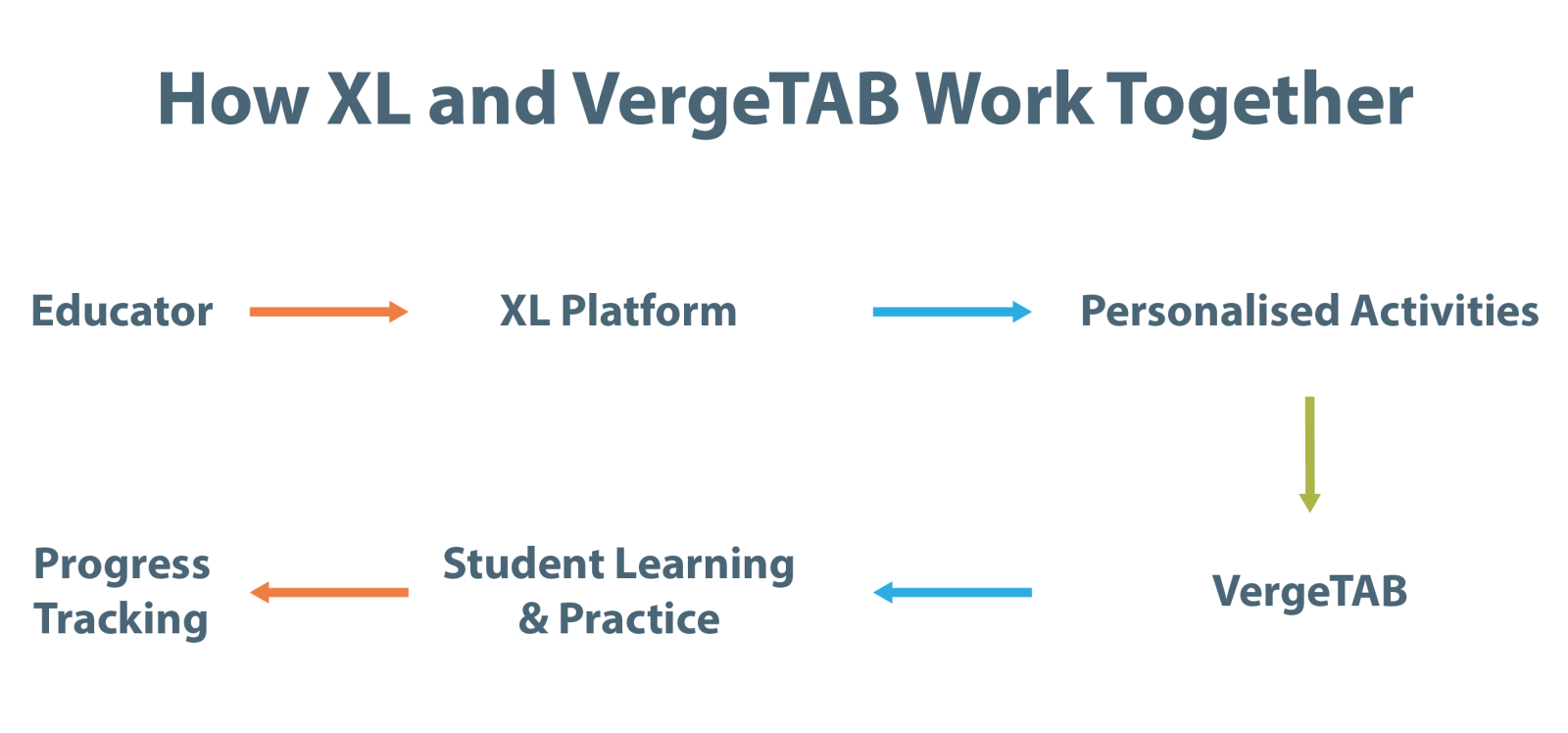
VergeTAB supports the consistency that many developmental programs require by helping children engage in structured motor, cognitive, and movement-based activities between therapy sessions. While core strength develops through a combination of movement, play, and therapeutic guidance, structured practice can help children stay engaged and reinforce skills introduced during therapy. For parents, this also brings a layer of visibility that’s often missing at home: instead of relying on memory to judge whether a child’s sitting tolerance or activity engagement is improving week to week, structured tracking can show that progress clearly over time — the same way it does for other developmental goals like communication or independence.
Used alongside an occupational therapist’s guidance, this kind of consistent, trackable home practice often makes the difference between a skill that’s introduced once in a session and one that genuinely becomes part of how a child moves, sits, and learns day to day.
Frequently Asked Questions
Is fidgeting always related to core strength, or could it be something else?
Not always. Fidgeting can stem from several different causes, including attention difficulties, sensory processing differences, or simple restlessness. Core strength is one possible contributing factor worth ruling in or out, especially when fidgeting appears alongside slouching, leaning, or quick fatigue during seated tasks.
At what age should I be concerned about poor posture?
Some postural inconsistency is normal in young children as their muscles continue developing. If slouching, leaning, or avoidance of floor-sitting persists past age five or six, or seems to worsen rather than improve over time, it’s worth raising with a pediatrician or occupational therapist.
Can core strength really affect handwriting?
Yes. Stable trunk muscles give the shoulders and hands a steady base to work from. Without that stability, children often compensate with excess pencil pressure, awkward grips, or early fatigue, all of which can affect both handwriting quality and stamina during longer writing tasks
How long does it typically take to see improvement?
This varies from child to child, but many parents and therapists notice gradual improvements in sitting tolerance and posture over a few months of consistent practice, rather than overnight.
Do I need a therapist to address this, or can activities at home be enough?
A therapist needs to assess the child first to provide tailored home activities. Home activities are valuable and can meaningfully support progress on their own. That said, a proper evaluation helps confirm what’s actually driving the behaviour and ensures the activities chosen are well matched to your child’s specific needs, rather than a generic guess.
What to Do Next
- Watch for the pattern. Use the checklist above for the next week and note how many signs show up consistently, not just once.
- Start small at home. Try two or three of the activities above for ten to fifteen minutes a few times a week.
- Loop in a specialist if it persists. If sitting tolerance and posture haven’t improved after a few weeks, or several signs are showing up together, a proper OT evaluation will give you clarity faster than guessing on your own.
Three months after Kabir started regular home practice alongside his therapy sessions, his teacher brought up something different at the next parent meeting. She wasn’t talking about posture anymore. She was talking about participation. He was staying seated longer, finishing more of his classroom work, and needing far fewer reminders to stay on task. The postural improvements were real, but for his parents, what mattered most was how much easier learning had become.
A Steadier Foundation for Learning
It’s easy to label a slouching, fidgeting child as simply distracted. The behaviour looks the same from the outside, whether the cause is attention, restlessness, or something more physical. But often, the real story is quieter and far more physical than it first appears: a body still learning to hold itself steady enough for the mind to do its work undisturbed.
Recognizing that distinction doesn’t just change how a parent responds in the moment — it changes the kind of support a child actually receives going forward. A few minutes of playful movement each day, paired with guidance from an occupational therapist, can build the kind of steady physical foundation that makes sitting, focusing, and learning feel less like an effort and more like something a child’s body simply knows how to do on its own.
Concerned About Your Child’s Posture or Focus?
Our team can help you understand whether posture, core strength, sensory processing, or other developmental factors may be affecting learning.