How VergeTAB Helps Reduce Learning Barriers in Children

Reading Time: 4 minutes
Written by Athira M K

Special Educator

Education is a fundamental right, yet not every child experiences learning in the same way. Some children grasp concepts quickly, while others need visual support, repeated practice, additional time, or a different way of engaging with material.

For children with learning, developmental, communication, attention, memory, or motor-related difficulties, the challenge is often not a lack of ability — it’s that the way learning is presented becomes a barrier.

Reducing learning barriers means creating more accessible and flexible opportunities for children to participate, understand, practise, and progress according to their individual needs. VergeTAB supports this by providing interactive, structured learning experiences that give children different ways to engage with educational content.

Understanding Learning Barriers

Learning barriers look different for every child. A child may:

  • Find it difficult to maintain attention during an activity
  • Need repeated practice to understand and remember a concept
  • Struggle to follow lengthy verbal instructions
  • Require additional time to complete tasks
  • Find traditional worksheets difficult or unengaging
  • Experience difficulty with hand-eye coordination
  • Lose interest when learning doesn’t match their level or needs

These challenges shouldn’t be viewed as limits on a child’s potential. Instead, they point to a more useful question: What is making learning difficult for this child, and what support could help reduce that barrier?

Sometimes a small change in how a concept is presented creates a much greater opportunity for participation and learning.

Every Child Learns Differently

Learning barriers don’t define a child’s ability. The right combination of visual support, interaction, repetition, time, and encouragement can create more opportunities for meaningful participation.

Different Barriers Need Different Approaches

There’s no single teaching method that works for every learner:

  • Attention challenges → Interactive, engaging activities encourage active participation where traditional formats fall short.
  • Memory and retention difficulties → Children may understand a concept in one session but struggle to recall it later. They benefit from repeated opportunities to revisit what they’ve learned.
  • Trouble following verbal instructions → Visual materials, demonstrations, and interactive activities make instructions easier to understand.
  • Coordination difficulties → Repeated, low-pressure opportunities to interact with materials help build controlled movement over time.
  • Different learning speeds → Being able to revisit activities at an appropriate pace reduces unnecessary pressure.

The goal isn’t to make every child learn the same way; it’s to give every child a meaningful path to learning.

How VergeTAB Helps Reduce Learning Barriers

Technology can’t remove every barrier on its own. But alongside appropriate teaching and support, it gives children more ways to access and engage with learning through:

  • Visual learning materials
  • Audio support
  • Touch-based activities
  • Interactive exercises
  • Matching and identification activities
  • Structured digital learning activities
  • Repeated practice

These features let children see, hear, touch, practise, and actively participate rather than simply listen or complete a static worksheet. Because activities can be revisited freely, children get structured opportunities to reinforce learning at their own pace, without pressure.

Different Ways to Engage with Learning

Learning NeedVergeTAB Support
AttentionInteractive activities
Memory and retentionRepeated practice
Verbal instructionVisual and audio support
Hand-eye coordinationTouch-based activities
Different learning paceActivities that can be revisited
Active participationInteractive exercises
How VergeTAB supports different learning needs through flexible, interactive activities.

A Real Experience from the Classroom

While working with children in a school environment, I observed some meaningful changes through VergeTAB.

Two children initially experienced significant difficulties with hand-eye coordination. Touching the correct option on the tablet and completing touch-based activities was challenging, so they required additional time and support.

Over weeks, they grew more comfortable with touch-based activities and showed gradual improvement in coordination. More encouraging was their increased willingness to participate. Activities that once felt difficult gradually became familiar, and the children showed greater interest and confidence during learning sessions.

This supported an important point: when a child gets repeated, engaging opportunities to practise, a barrier that once limited participation can gradually become manageable.

Teachers also noticed positive changes in:

  • Participation
  • Interest in learning activities
  • Engagement during sessions
  • Willingness to interact with materials
  • Overall learning progress

A Small Achievement That Made a Big Difference

One experience stood out in particular: a child learning to identify colours.

It took almost two months of consistent practice, but the child eventually learned to identify two or three colours. From the outside, that might look like a small step. For that child, it was a meaningful milestone.

Learning progress can’t always be measured through conventional academic benchmarks. Sometimes progress means identifying a new colour, remembering something learned earlier, completing an activity independently, or simply participating more actively in a session. Every small step can represent significant progress in a child’s individual journey.

Small Steps Are Meaningful Progress

Supporting Teachers, Not Replacing Them

Technology doesn’t replace teachers — it supports their efforts by offering different ways to present concepts, encourage participation, and provide repeated practice. VergeTAB provides teachers with opportunities to observe how children respond to different learning approaches, helping them understand individual needs and plan appropriate next steps. The tools are additional; the teacher’s guidance and encouragement remain essential.

Extending Learning Beyond the Classroom

Learning doesn’t stop when the school day ends. When activities can be reinforced at home, children have more opportunities to practise at their own pace, while consistency between school and home can further support their progress.

Building Independence and Confidence

Reducing barriers creates more opportunities for children to experience success. When a child completes or participates in an activity with less support than before, even a small win builds confidence and motivates them to attempt the next challenge.

Conclusion

Every child faces different barriers to learning, and meaningful support starts with understanding those barriers rather than focusing on limitations. VergeTAB gives children additional ways to access, practise, and engage with learning according to their individual needs. It works best when combined with skilled teaching, appropriate content, and consistent support at home.

When technology, teachers, and families work together, small steps become meaningful progress. Every child’s progress deserves to be recognised and celebrated.

Want to see how VergeTAB can support the learners in your classroom or at home?

Explore how interactive, structured activities can give children more opportunities to access, practise, and engage with learning at their own pace.


Beyond the Device: Why VergeTAB Is More Than Just an Educational Tablet

Reading Time: 6 minutes
Written By 

Anjana VS
Special Educator

Learning Needs More Than Just a Screen

Technology becomes meaningful when it creates engaging, personalized, and inclusive learning experiences—not simply when it adds another screen to the classroom.

Education has entered an era where technology is no longer a luxury—it is an essential part of the learning journey. Yet, not every digital device is designed to support meaningful learning outcomes. While tablets and laptops provide access to information, they often fall short when it comes to creating meaningful, engaging, and personalized learning experiences.

This is where VergeTAB stands apart.

VergeTAB is more than an educational tablet. Functioning as a structured Digital Activity Book, it has been purposefully developed to create engaging, structured, and learner-centred educational experiences that support diverse learning needs across classrooms, therapy settings, and home environments.

More importantly, when integrated with XceptionalLEARNING, VergeTAB becomes part of a complete hybrid learning ecosystem—one that extends learning beyond classrooms and empowers every learner, regardless of ability.

VergeTAB: More Than a Tablet, A Complete Learning Ecosystem

Many digital devices focus only on delivering content. VergeTAB focuses on delivering learning experiences.

Instead of functioning as just another screen, VergeTAB becomes an interactive educational environment where students can learn, practice, revise, and explore concepts independently.

It provides a structured learning space where education becomes:

  • Interactive instead of passive
  • Personalized instead of generalized
  • Accessible instead of restrictive
  • Continuous instead of classroom-dependent
VergeTAB transforms learning by making it

Interactive
Personalized
Accessible
Continuous

Every feature is designed with one purpose—to make learning simpler, smarter, and more enjoyable.

VergeTAB Makes Learning Interactive, Not Monotonous

Students understand concepts better when they actively participate in the learning process. VergeTAB encourages this through interactive educational experiences rather than one-way information delivery.

Interactive learning features include:

  • Digital flashcards
  • Educational games
  • Animated lessons
  • Visual storytelling
  • Audio-supported learning
  • Practice activities
  • Interactive quizzes
  • Skill-based exercises

These engaging resources stimulate curiosity, improve concentration, and encourage students to explore concepts at their own pace. Instead of memorizing facts, learners begin understanding ideas through experience.

Personalized Learning with VergeTAB

Every learner has a unique pace. Some students grasp concepts quickly, while others require additional practice and visual support. Traditional classrooms often struggle to accommodate these differences.

VergeTAB addresses this challenge through personalized learning experiences.

Students can:

  • Learn at their own speed
  • Repeat lessons whenever needed
  • Revisit difficult topics
  • Practice independently
  • Strengthen weak areas
  • Build confidence before moving ahead

This flexibility reduces the pressure of “keeping up” and encourages confident, continuous learning. Learning becomes student-centered rather than syllabus-centered.

VergeTAB Brings Learning Beyond Classroom Walls

Education should never stop when the school bell rings.

VergeTAB enables students to continue learning wherever they are.

Whether at:

  • Home
  • School
  • Therapy centres
  • Libraries
  • Learning support centres
  • During travel

This continuity helps reinforce concepts, reduce learning gaps, and encourage daily learning habits. Parents also become active participants by supporting children’s learning beyond school hours.

For example, a teacher can introduce a concept in the classroom using VergeTAB, assign related activities for home practice, and review the student’s progress during the next class. This continuous learning approach helps reinforce concepts while keeping parents actively involved in the learning journey.

Creating Inclusive Education Through VergeTAB

Modern education must be inclusive. Students learn differently, communicate differently, and require different kinds of support.

VergeTAB promotes inclusive learning by offering educational experiences suitable for diverse learners, including children with special educational needs.

Its learning environment supports:

  • Visual learners
  • Auditory learners
  • Kinaesthetic learners
  • Early learners
  • Students requiring repeated instruction
  • Learners who benefit from structured routines

Interactive multimedia resources make lessons easier to understand while reducing anxiety often associated with traditional learning methods. This creates opportunities for every learner to participate confidently.

Empowering Teachers with Smarter Digital Teaching

Technology should simplify teaching—not complicate it.

VergeTAB provides teachers with digital resources that help them create engaging classroom experiences without increasing their workload.

Teachers can:

  • Deliver multimedia lessons
  • Conduct interactive classroom activities
  • Demonstrate concepts visually
  • Monitor student participation
  • Encourage independent practice
  • Reinforce classroom learning using digital resources

Instead of spending valuable time preparing repetitive materials, educators can focus on what matters most—teaching and mentoring students. VergeTAB becomes an extension of the teacher rather than a replacement.

Technology should simplify teaching, not complicate it.

How VergeTAB Encourages Independent Learning

One of the greatest strengths of VergeTAB is its ability to promote self-directed learning. Students gradually become independent learners by exploring educational content on their own.

Benefits include:

  • Better problem-solving skills
  • Increased confidence
  • Improved decision-making
  • Stronger digital literacy
  • Greater responsibility for learning
  • Consistent practice habits

This independence prepares students not only for examinations but also for lifelong learning.

The Power of Hybrid Learning: How XceptionalLEARNING Completes the VergeTAB Experience

While VergeTAB provides the device and learning environment, XceptionalLEARNING transforms it into a comprehensive hybrid education ecosystem.

Hybrid learning combines the strengths of classroom teaching with the flexibility of digital learning, ensuring students receive continuous educational support regardless of where they are.

Through the integration of VergeTAB with XceptionalLEARNING, students experience learning that is:

Continuous

Learning no longer ends when school hours finish. Students can revise lessons, complete activities, and reinforce concepts at home using VergeTAB while staying connected to their educational journey.

Connected

Teachers, therapists, parents, and students remain connected through a shared learning ecosystem. Everyone involved can contribute to the student’s progress, creating a collaborative support system.

Personalized

XceptionalLEARNING provides structured digital content that complements classroom instruction. Combined with VergeTAB, learners receive activities suited to their pace, strengths, and individual learning needs.

Inclusive

The hybrid model is especially valuable for children with developmental disabilities and diverse learning requirements. Multimedia lessons, interactive activities, visual supports, and structured learning pathways help ensure every learner has equal opportunities to succeed.

Consistent

Whether students are learning from school, home, therapy sessions, or remote locations, VergeTAB ensures they have uninterrupted access to the same educational resources available through XceptionalLEARNING.

Together, VergeTAB and XceptionalLEARNING remove geographical barriers, reduce learning interruptions, and create a flexible educational environment where learning continues anytime and anywhere.

This partnership represents the future of education—where technology enhances human teaching rather than replacing it.

VergeTAB + XceptionalLEARNING create one continuous learning ecosystem connecting school, home, therapy, teachers, parents, and students.

Why VergeTAB Is Shaping the Future of Education

The future of education will not be defined by the number of devices in classrooms. It will be defined by how effectively those devices improve learning.

VergeTAB succeeds because it focuses on educational outcomes rather than technology alone. By integrating the intelligence and adaptability of the XceptionalLEARNING platform, VergeTAB transcends the limitations of conventional tablets to become a dynamic, responsive learning ecosystem.

Its strengths include:

  • Personalized Student-Centred Learning: Activities adapt to each learner’s abilities, pace, and goals for meaningful progress.
  • Interactive Educational Experiences: Gamified exercises and visual simulations transform abstract concepts into tangible experiences.
  • Hybrid Learning Support: Seamless continuity between classroom, home, and therapy sessions.
  • Inclusive Education: Built-in supports for children with developmental disabilities, speech delays, and cognitive differences.
  • Teacher Empowerment: Powerful tools for engaging lessons and progress monitoring without increasing workload.
  • Home-School Connectivity: Parents access activities, track progress, and reinforce learning at home.
  • Continuous Skill Development: Regular practice and reinforcement help learners build confidence and essential life skills.
  • Digital Accessibility: Offline functionality and durable, child-safe design for diverse settings.

By integrating modern technology with meaningful pedagogy through the XceptionalLEARNING platform, VergeTAB creates learning environments where students remain engaged, teachers feel empowered, and parents become active learning partners. It is not just shaping the future of education—it is redefining what is possible for every learner.

Conclusion: Beyond the Device Lies the Experience

Technology alone cannot transform education. What truly changes learning is how technology is designed, integrated, and used to support students, teachers, and families.

VergeTAB goes beyond being a digital learning device. It serves as a bridge between traditional education and the future of learning—making education interactive, inclusive, personalized, and accessible.

When combined with the hybrid learning ecosystem of XceptionalLEARNING, VergeTAB evolves into far more than a tablet. It becomes a powerful educational companion that supports learning across classrooms, homes, and therapy environments, ensuring that every learner has the opportunity to grow, explore, and succeed.

As education continues to evolve, the question is no longer whether technology belongs in learning. The real question is whether that technology can truly create meaningful educational experiences.

VergeTAB answers that question with confidence—not by offering another device, but by delivering a smarter, more connected, and more inclusive way to learn

Experience Learning Beyond the Device

VergeTAB is more than an educational tablet. When integrated with the XceptionalLEARNING platform, it creates a connected learning ecosystem that supports interactive, personalized, and inclusive education across classrooms, homes, and therapy environments.

Whether you’re a school, therapist, special educator, or parent, discover how VergeTAB can help create meaningful learning experiences for every learner.

How Hybrid Learning Helped Children Build Daily Living Skills at Ashakiran Special School 

Reading Time: 6 minutes

Written by

Anjuna.M

Special Educator

There is a kind of joy in special education that is difficult to put into words — the moment a child does something independently that they could not do before. I experienced one of those moments recently at Ashakiran Special School, Calicut, and it began with a very simple question: could our children prepare their own evening snack without someone guiding every step? 

This is the story of how that question was answered, and what it taught me about the real role of digital learning in the lives of children with special needs.

  • 5 students from the Vocational Class took part in a one-week hybrid learning intervention.
  • The skill taught was preparing aval (flattened rice mix), a real daily living task.
  • Hands-on sessions were combined with VergeTAB for repeated digital practice.
  • By the end of the week, all five students completed the activity independently.

The Objective: Building a Real-Life Skill 

As part of a daily living skills programme, the teachers at Ashakiran decided to teach students how to prepare aval — a traditional Kerala snack made from flattened rice, jaggery, cardamom, coconut, and water. The goal was straightforward: for children to be able to make this snack on their own, from memory, without adult assistance. 

The intervention involved five students from the Vocational Class and was conducted over the course of one week, using a structured hybrid learning approach that combined hands-on demonstration with digital practice. The intervention focused on helping students transfer classroom learning into an everyday life skill that could eventually be practised at home. 

The first session was hands-on. Teachers brought in the real ingredients, sat with the children, and walked them through the activity together. The children participated, mixed the ingredients in sequence, and completed the task with guidance. By all visible measures, the session was a success.

The Challenge: What Happened After the Session

Following the initial hands-on session, when teachers tried to revisit the activity, the gap became clear. 

Children could recognize the ingredients when shown physically, but they could not recall or correctly pronounce their names. They were unsure of the sequence, often adding ingredients in random order. The confidence from the first session had faded, and they needed step-by-step guidance all over again. 

This is a challenge many special educators know well. Hands-on activities are powerful, but they rely on memory and retention — and for children with special needs, a single session is rarely enough. Repeating the same real-world activity multiple times is the logical solution, but it is not always practical. Sourcing ingredients, preparing materials, and managing a classroom activity repeatedly puts real pressure on time and resources. 

The learning happened. What was missing was the repetition needed to make it stick.

The Turning Point: Introducing a Digital Version 

Around this time, I reflected on a digital Christmas cake mixing activity we had run earlier in the year through VergeTAB. The engagement during that session had been noticeably stronger — children were curious, attentive, and recalled details better afterward. 

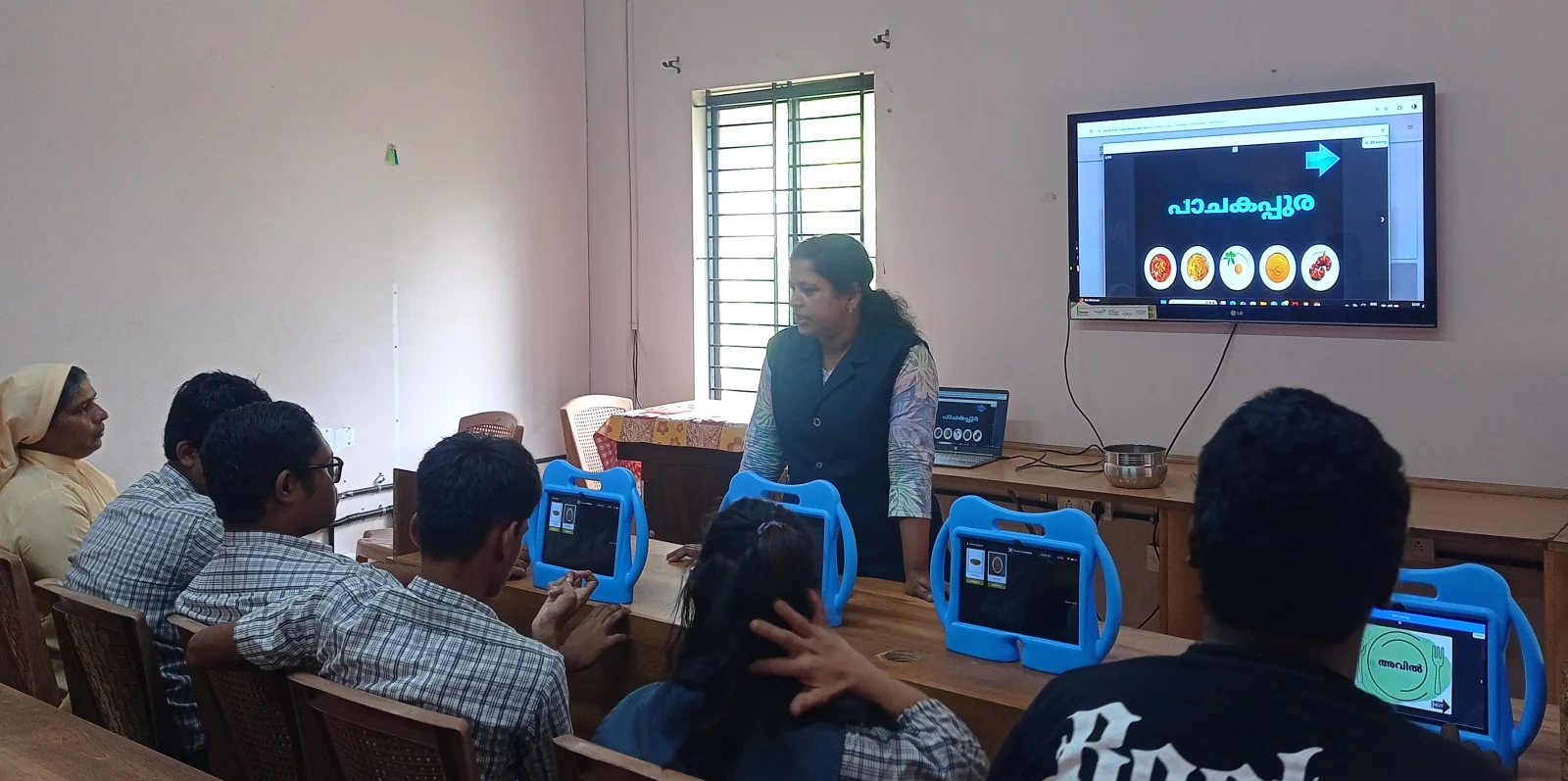
Inspired by this, I introduced a digital version of the aval mixing activity using VergeTAB, the Digital Activity Book. Over the week, the intervention alternated between hands-on sessions and digital-plus-hands-on sessions, giving children repeated exposure through both channels. 

Students practising the aval activity on VergeTAB, reinforcing ingredient identification and sequencing through interactive digital learning.

Each ingredient was presented with audio-visual content — children could see and hear each item clearly, with clear pronunciation of every ingredient name. The activity was structured so that children clicked to add ingredients to a virtual bowl in the correct sequence, with masking and sequencing built in to guide them through the right order every time. 

The most important difference from the real-world session was this: children could repeat the activity as many times as they needed, at their own pace, without any additional preparation or resources. The digital version gave them the repetition that the hands-on activity alone could not.

What Teachers Observed 

The change in engagement was visible. Children who had struggled to name the ingredients began identifying them confidently on screen. The audio cues helped anchor the visual memory. Students started anticipating which ingredient came next. Their curiosity and participation increased, and so did their focus. 

It became clear that the hands-on activity had introduced the concept well — but the digital activity was giving children the structured, repeatable practice space they needed to truly internalise it. 

Before-and-After: What Changed 

Observation AreaBefore Digital InterventionAfter Digital Intervention
Identification of ingredientsStudents could recognize ingredients but could not correctly name them.Students correctly identified and named each ingredient.
SequencingStudents added ingredients in random order.Students followed the correct sequence independently.
EngagementModerate interest; frequent teacher prompts required.High enthusiasm and active participation throughout.
UnderstandingRequired repeated demonstrations; took longer to understand.Demonstrated improved understanding through repeated audio-visual practice.
IndependenceUnable to complete the activity independently.Successfully completed the recipe with minimal assistance.
Memory RetentionLimited retention after practical sessions.Improved recall of ingredients and sequence during follow-up sessions.
Student progress before and after the one-week hybrid learning intervention.

The Moment That Mattered 

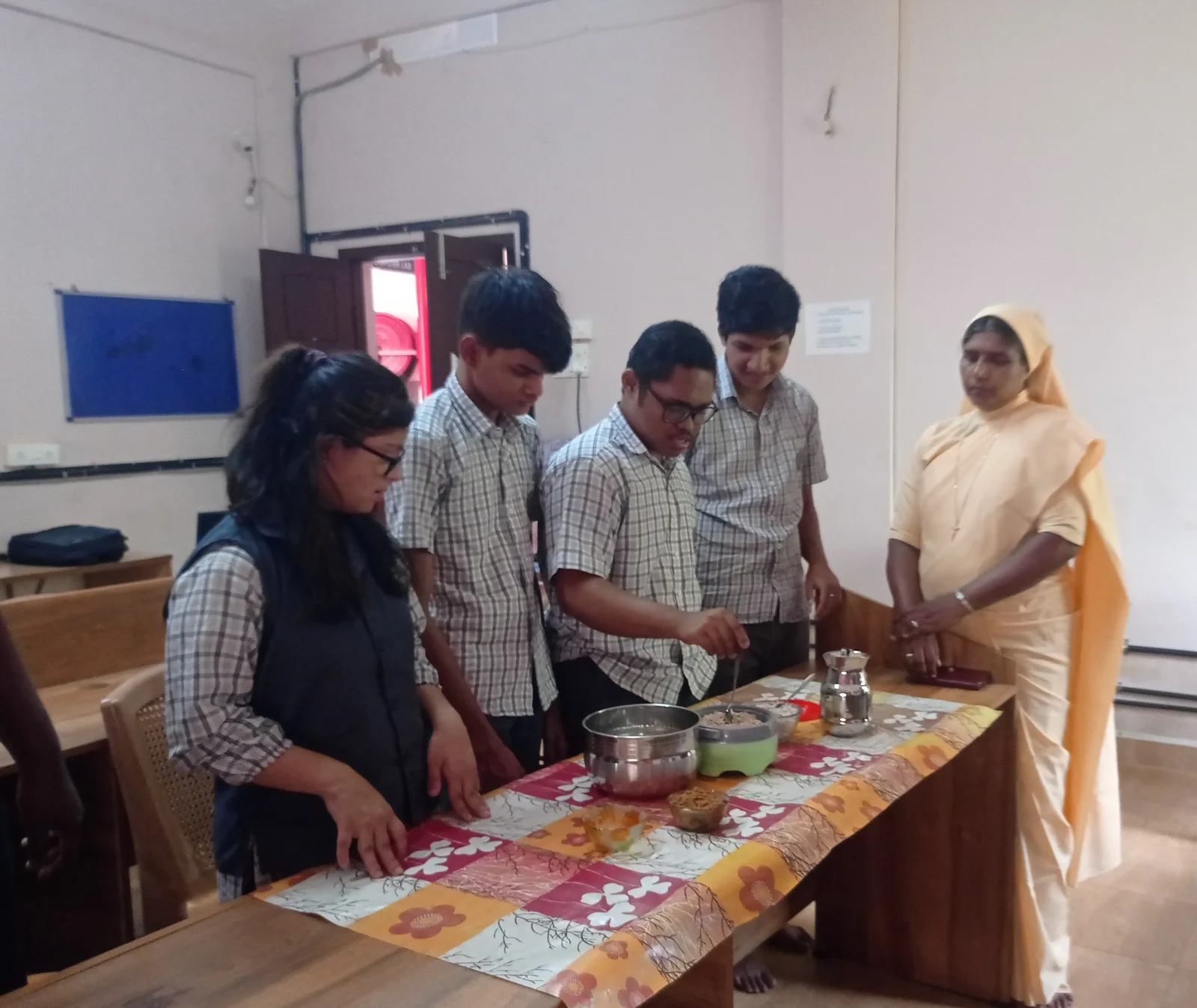
At the end of the one-week intervention, after sufficient practice on the digital platform, teachers organised the real-world activity again — this time as a practical assessment, in the presence of the school principal, Jeena Ma’am.

The improvement was clearly visible. All five students: 

  • Correctly identified the ingredients 
  • Named each ingredient confidently 
  • Added the ingredients in the proper order 
  • Successfully completed the aval mixing activity independently 
Students independently preparing aval during the final classroom activity after one week of hybrid learning.

The children walked through the task independently, without prompting. And then, to celebrate their achievement, they happily shared the snack they had made with their teachers — a gesture reflecting both their confidence and their sense of accomplishment. 

That small moment — children offering something they had prepared themselves — was the real measure of what had been achieved. Not a checklist or a test. Just children feeling genuinely capable, and wanting to share that feeling.

Jeena Ma’am was visibly moved by the transformation:

She also expressed her sincere gratitude to XceptionalLEARNING for providing a digital platform that meaningfully supports special education. 

What This Experience Confirms 

For children with special needs, neither traditional teaching nor digital learning alone is sufficient. Each serves a different purpose: 

  • Hands-on activities build real-world connection and sensory memory — they introduce the concept in a meaningful, physical way. 
  • Digital activities provide the structured repetition, audio-visual reinforcement, and sequencing support that make retention possible. 

Together, they create a hybrid learning experience that is more powerful than either approach could achieve on its own. Within just one week, the students at Ashakiran demonstrated improved recall, sequencing, and confidence. 

The aval activity at Ashakiran Special School is a clear example of what becomes possible when the right tools are used thoughtfully. Through VergeTAB and XceptionalLEARNING, this kind of structured digital support is made accessible to schools across the region — helping children build independence, one small step at a time. 

For me, as a Special Educator visiting schools like Ashakiran, moments like these are the reason this work matters. 

While this case study reflects the experience of one classroom, it demonstrates how thoughtfully combining hands-on teaching with structured digital practice can help children build meaningful daily living skills and greater independence.

Key Takeaways

  • Hands-on learning introduces the skill — real ingredients and physical practice give the concept meaning and context. 
  • Digital repetition makes it stick — VergeTAB gave children unlimited, self-paced practice that classroom sessions alone couldn’t provide. 
  • Audio-visual cues support memory — pairing sound and image helped children recall and pronounce ingredient names more confidently. 
  • Sequencing improved measurably — students moved from random ordering to correctly sequencing steps independently. 
  • Independence was the real outcome — all five students completed the activity unaided, and their principal noted visible gains in confidence within a single week. 
  • Hybrid, not either/or — neither traditional nor digital teaching alone achieved this outcome; the combination did.

Ready to Bring Hybrid Learning into Your Classroom?

See how VergeTAB helps schools combine classroom teaching with interactive digital learning to improve student engagement, independence, and real-life skill development.

Anjuna M is a Digital Specialist – Special Educator at XceptionalLEARNING, supporting special schools across the Calicut region. Ashakiran Special School is one of the institutions she works with as part of her field role.