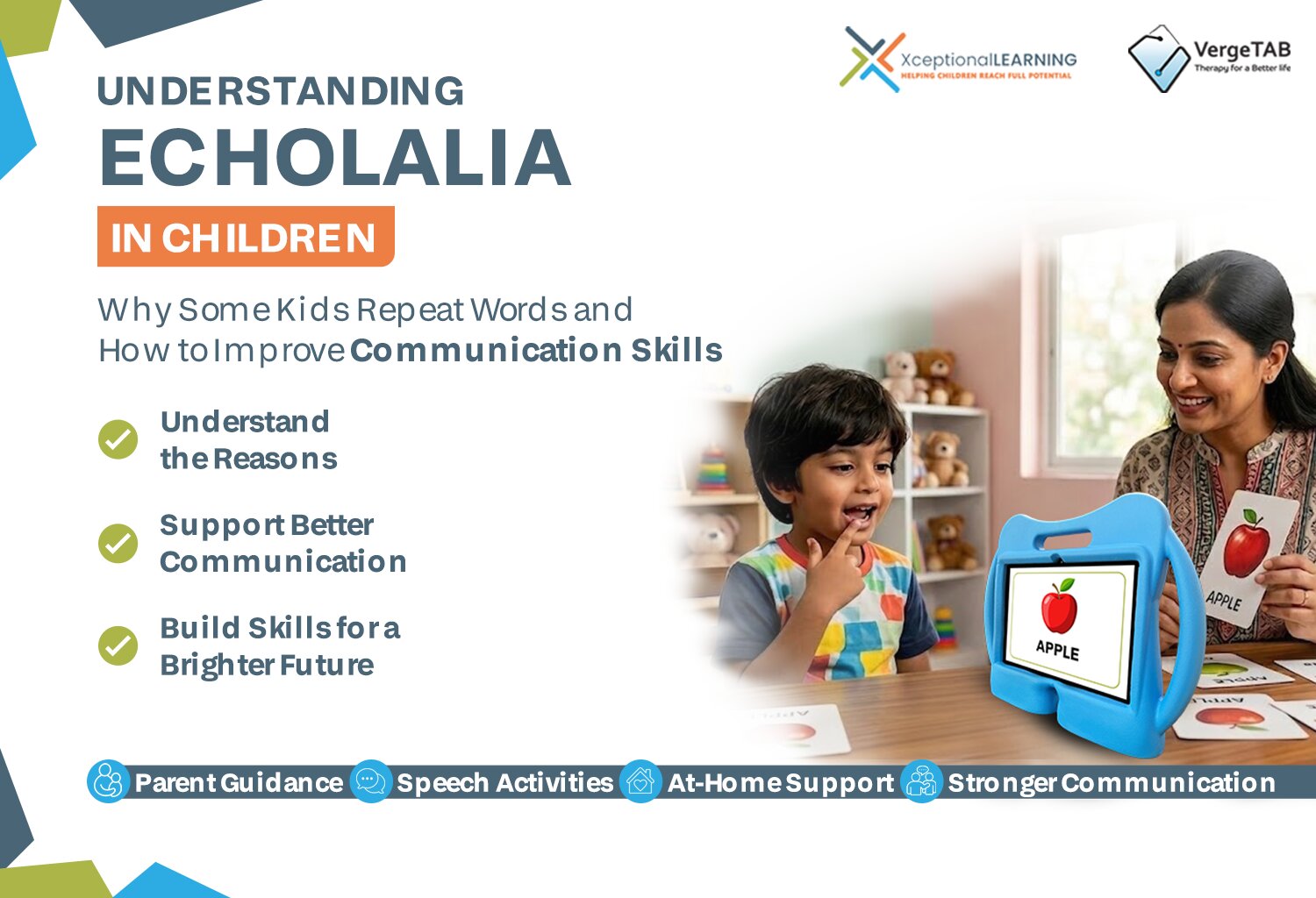
What Is Echolalia in Children? Why Some Kids Repeat Words and How to Improve Communication Skills
02 Jun 2026

Quick Summary
- Echolalia is when children repeat words, phrases, or questions they hear
- It is common in toddlers, autism, speech delays, and communication difficulties
- Some children repeat language to process information or express needs
- Echolalia is not always negative and can be part of language development
- Speech therapy, communication practice, and structured interaction can help children develop meaningful speech
What Is Echolalia?
Have you ever asked your child a question and noticed they repeat it back instead of answering?
For example:
Parent: “Do you want milk?”
Child: “Do you want milk?”
Some children may also repeat lines from cartoons, favourite YouTube videos, advertisements, songs, or even questions they hear throughout the day. Others may use the same sentence repeatedly in different situations.
This type of repetition is called echolalia.
Echolalia happens when a child repeats words, sounds, or phrases they hear from parents, teachers, TV shows, songs, or previous conversations. It is commonly seen during early language development and may also appear in children with autism spectrum disorder (ASD), speech delays, ADHD, or other communication difficulties.
For many children, echolalia is not simply random repetition. In therapy and everyday situations, repeated words or phrases can sometimes be a child’s way of processing language, expressing a need, or participating in communication before they are able to form their own responses independently.
Types of Echolalia in Children
Immediate Echolalia
This happens when a child repeats words or questions immediately after hearing them.
Example:
Parent: “Do you want water?”
Child: “Do you want water?”
Delayed Echolalia
Delayed echolalia occurs when children repeat phrases they heard earlier from videos, conversations, songs, classroom instructions, or daily routines.
For example, a child may repeat a cartoon dialogue, a phrase from YouTube, a classroom instruction, an advertisement, or a song lyric hours, days, or even weeks after first hearing it.
Both immediate and delayed echolalia can be part of language learning and communication development.
Why Does My Child Keep Repeating Words?
Many parents become concerned when their child repeats words or phrases frequently, especially when they find it difficult to answer questions independently. While the repetition can seem unusual, it often serves a purpose.
In many cases, echolalia is functional. Children may use repeated phrases to request something, answer a question, express frustration, comfort themselves, or participate in conversations when finding their own words is challenging.
One common reason for repetition is that some children need extra time to process spoken language. Repeating what they hear can help them understand the information and organize a response.
For other children, repeated phrases become a way to communicate. A child who says, “Time for snacks!” may not simply be repeating a familiar phrase—they may actually be trying to say, “I’m hungry.” Looking at the situation in which the phrase is used often provides clues about what the child is trying to express.
Repetition can also be comforting. When children feel excited, anxious, overwhelmed, or overstimulated, familiar words and phrases may help them feel more secure and in control of their environment.
Another reason is that children naturally learn language through imitation. Before they can create flexible, spontaneous sentences, many children repeat words and phrases they hear from parents, teachers, siblings, or favourite shows. This is often part of the language-learning process.
Some children also use repeated language as a way to join conversations and social interactions. Even when creating original responses feels difficult, repeating familiar phrases can help them participate and connect with others.
In our experience, children often become more engaged when communication practice feels interactive and enjoyable. Structured speech activities, guided communication exercises, and learning tools such as VergeTAB from XceptionalLEARNING can help create meaningful opportunities for communication both at home and during therapy sessions.
Is Echolalia Normal in Toddlers?
Yes. Echolalia can be a normal part of early language development.
Many toddlers repeat words and phrases between the ages of 1 and 3 as they learn speech patterns, vocabulary, and sentence structure. As their language skills develop, they typically begin using more independent responses and spontaneous speech.
While repetition alone is not usually a cause for concern, parents may benefit from professional guidance if echolalia continues for an extended period, communication remains very limited, speech development appears delayed, or the child has difficulty expressing needs, interacting socially, or participating in everyday conversations.
If you are unsure whether your child’s language development is progressing as expected, consulting a speech therapist can provide clarity and guidance tailored to your child’s individual needs.
Concerned About Your Child Repeating Words Frequently?
Early support and consistent communication practice can help children build stronger listening, speech, and social communication skills over time.
VergeTAB, powered by XceptionalLEARNING, offers interactive activities and communication-focused learning tools designed to support children with speech and language difficulties.
Echolalia and Autism
Echolalia is often associated with autism spectrum disorder (ASD), but it is important to remember that not every child who repeats words or phrases has autism.
For many autistic children, echolalia can serve a meaningful purpose. Creating spontaneous speech may feel difficult, processing spoken language can take longer, and familiar phrases are often easier to access than creating new responses. Repeated language can also provide a sense of comfort and predictability, particularly in unfamiliar or overwhelming situations.
Parents may notice their child repeating movie dialogues, classroom instructions, familiar routines, questions they have heard, or phrases from favourite videos and songs. While these repetitions may seem unrelated at first, they can sometimes reflect how a child is processing information or attempting to communicate.
The encouraging news is that many children gradually develop stronger communication skills with appropriate support, therapy strategies, and consistent opportunities to interact with others.
Related Read:
Speech Delay in Children: Causes, Signs and How VergeTAB Helps Your Child Speak Better
Signs Parents Should Observe
Every child develops differently, but there are certain signs that may indicate a need for additional communication support.
Parents may wish to seek guidance if their child frequently repeats phrases without using their own responses, struggles to answer questions independently, has limited back-and-forth conversations, finds it difficult to express needs clearly, becomes frustrated during communication, avoids social interaction, or relies heavily on memorized language in everyday situations.
Observing these patterns early can help families access appropriate support and create more opportunities for communication development.
What Speech Therapists Look for When Assessing Echolalia
Parents often focus on how frequently a child repeats words or phrases. Speech therapists, however, look beyond the repetition itself.
During an assessment, therapists observe when the repetition occurs, whether the child understands the language being used, and what purpose the repeated words may be serving. They also evaluate how a child understands instructions, expresses ideas, participates in conversations, engages in play, and interacts with others in different environments.
In addition, therapists consider factors such as listening skills, social communication, sensory preferences, and behavioural patterns that may influence how a child uses language.
Understanding why a child is repeating words is often the key to selecting effective communication strategies and therapy activities. The goal is not simply to reduce repetition but to help children use language more meaningfully, express their needs more independently, and participate more confidently in everyday interactions.
How to Improve Communication Skills in Children with Echolalia
Many children with echolalia make steady progress when they receive consistent support, meaningful communication opportunities, and guidance that matches their individual needs.
One helpful approach is to avoid constantly telling a child to “stop repeating.” Repeated correction can sometimes increase frustration or anxiety. Instead, try to understand what the child may be attempting to communicate through the repeated phrase.
Using short, clear sentences can also make communication easier. For example, instead of saying, “Would you like to finish your lunch before going outside?” a simpler instruction such as “Finish lunch. Then outside.” may be easier to understand and process.
Another effective strategy is modelling appropriate responses. If a child repeats a question rather than answering it, gently demonstrate the response they could use.
Example:
Adult: “Do you want juice?”
Child: “Do you want juice?”
Adult: “You can say, ‘Yes, I want juice.'”
Providing simple choices throughout the day can encourage independent communication. Questions such as “Apple or banana?” or “Blue shirt or red shirt?” help children practice making decisions and expressing preferences.
Many children also benefit from visual supports, including picture cards, communication boards, visual schedules, and activity-based learning tools. These supports can make language more understandable and reduce communication challenges.
Finally, predictable daily routines can create a strong foundation for communication. When children know what to expect, they often feel more comfortable participating in conversations and practicing new language skills.
Speech Therapy Activities for Children with Echolalia
Speech therapy activities can help children develop communication, listening, vocabulary, and social interaction skills in a way that feels engaging and meaningful.
One commonly used activity involves practicing WH questions such as who, what, where, when, and why. These questions help children better understand conversations and gradually become more confident in answering independently.
Picture naming activities are another valuable tool. By identifying and discussing pictures, children can build vocabulary, improve comprehension, strengthen object recognition skills, and develop expressive language.
Turn-taking games also play an important role in communication development. Simple activities such as rolling a ball, playing board games, or participating in question-and-answer games teach children how conversations naturally move back and forth between people.
Pretend play and role-play activities encourage children to use language in flexible ways. Through imaginative scenarios, children can practice expressing ideas, engaging in social interaction, and developing more spontaneous communication skills.
Story sequencing activities can also be helpful. Arranging events in the correct order helps children understand sentence structure, event organization, and the flow of communication, all of which support language development.
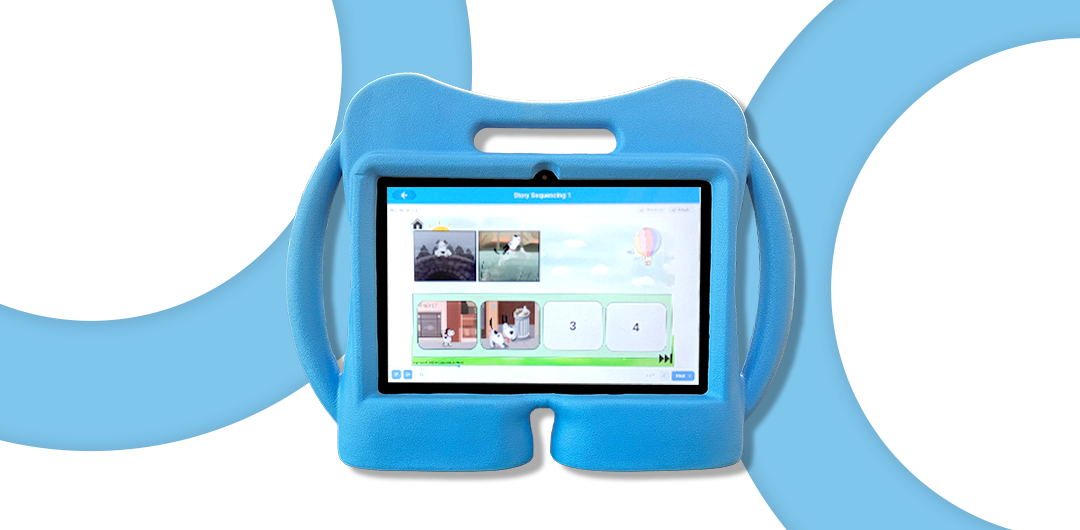
Communication Through Interactive Learning
Many children with autism and speech delays learn best when communication practice is engaging, interactive, and structured.
Digital therapy solutions from XceptionalLEARNING, including VergeTAB, provide opportunities for therapists, parents, and special educators to incorporate communication practice into both therapy sessions and home routines. Interactive activities can help maintain attention, encourage participation, and create more opportunities for meaningful communication.
Structured digital learning tools can support speech practice, expressive communication, guided interaction, autism-friendly learning experiences, and consistent engagement across different environments.
Related Guide:
Building Communication Skills Through Digital Tools: A Guide for Parents and Therapists
Therapist Recommendations for Supporting Communication
Speech therapists often emphasize the importance of creating regular opportunities for communication throughout the day. Consistent interaction, engaging speech activities, distraction-free learning environments, and structured communication opportunities can all support language development.
In practice, many children with echolalia respond best when activities are visually engaging, interactive, predictable, and motivating. When communication feels enjoyable rather than demanding, children are often more willing to participate and practice new skills.
Digital tools such as VergeTAB can help parents and therapists create communication activities that feel engaging while supporting learning goals in a structured way.
Looking for Simple Ways to Support Communication at Home?
Daily interaction, visual supports, and consistent communication practice can help children strengthen their listening, speech, and social communication skills over time.
VergeTAB offers interactive learning activities designed to support communication development in a child-friendly and engaging format.
Can Echolalia Improve Over Time?
Yes. Many children gradually develop stronger communication skills with the right support and opportunities to practice.
Speech therapy, structured learning activities, guided interaction, predictable routines, and early intervention can all contribute to progress. While improvement may happen gradually, consistent support and meaningful communication opportunities can make a significant difference over time.
When Should Parents Seek Professional Help?
Parents may benefit from consulting a professional if speech development appears delayed, repetitive speech begins interfering with communication, social interaction becomes challenging, or communication difficulties affect everyday activities.
Seeking guidance does not automatically mean something is wrong. Instead, it provides an opportunity to better understand a child’s communication needs and determine whether additional support may be helpful.
A speech therapist or developmental specialist can evaluate communication skills and recommend strategies that match the child’s individual strengths and challenges.
Important Note
Every child develops communication skills at their own pace. This article is intended for educational purposes only and should not replace professional medical advice, diagnosis, or speech-language evaluation.
Supporting Communication at Home
Communication practice does not need to happen only during therapy sessions. Many of the most valuable learning opportunities occur during everyday routines at home.
Simple activities such as reading together, offering choices, talking about daily activities, playing turn-taking games, and encouraging conversations during meals can help children practice communication in a natural and comfortable environment.
Parents do not need complicated strategies to make a difference. Small moments of interaction throughout the day can help children build confidence, strengthen language skills, and become more comfortable expressing their thoughts and needs.
Consistency is often more important than the activity itself. Regular opportunities to listen, respond, and communicate can support steady progress and help children develop stronger communication skills over time.
Frequently Asked Questions About Echolalia
Final Thoughts
Hearing your child repeat words or phrases instead of answering questions can sometimes leave parents feeling confused or concerned. However, echolalia is often much more than simple repetition.
For many children, repeated language is part of how they learn, process information, and participate in communication before they are able to express themselves more independently. Understanding the purpose behind those repeated words can provide valuable insight into what a child may be trying to communicate.
With patience, appropriate support, and regular opportunities to practice communication, many children develop stronger language and social interaction skills. Small, consistent steps can make a meaningful difference in helping children communicate with greater confidence.
Support Your Child’s Communication Journey with Confidence
When communication practice is engaging, structured, and easy to incorporate into everyday routines, children often become more willing to participate and learn.
VergeTAB combines interactive activities, autism-friendly learning experiences, and therapist-guided practice to help parents, educators, and therapists create meaningful communication opportunities both at home and during therapy sessions.