
Empowering Special Educators Through Personalised Digital Learning

Reading Time: 4 minutes
Written By

Ashnamol P S
Special Educator

Introduction  

Every special educator walks into the classroom with one goal: to help each learner grow and reach their potential. But no two learners are the same. In a single classroom, one child may need visual support, another needs repeated practice, and a third needs extra prompts or a different pace entirely.

That’s why personalised learning is so important in special education.

Alongside teaching, educators are also responsible for lesson planning, creating individualised materials, tracking progress, documenting achievements, and staying in sync with parents and therapists. Balancing all of that while making sure every learner gets the right support is genuinely hard, and it’s where the right digital tools can make a real difference in day to day classrooms.

The Everyday Reality of a Special Education Classroom  

Special education teachers navigate a moving target every day. One student may be working on identifying basic concepts while another is building communication skills or working towards greater independence, often in the same room, during the same hour.

That means constant adaptation: different activities, varying levels of support, repeated instructions, and individual progress monitored over time, all without losing the rest of the class. Preparing separate materials for each learner, keeping everyone engaged, managing behaviour, and maintaining accurate records take real time and effort, time that often gets pulled away from direct teaching and one to one interaction.

In practice, this can mean preparing multiple versions of the same activity, checking where each learner left off, and adjusting the next task before the lesson even begins.

Every Learner Has Different Needs

Different learning speeds, support levels, communication abilities, and learning goals require educators to adapt activities and instruction.

Making Personalised Learning Practical  

Personalised learning means recognising that each learner needs a different approach, pace, and level of support, and putting that into practice every day, not just in theory.

This is easier when teachers have the right tools to organise and deliver instruction. The XceptionalLEARNING (XL) Platform is designed to help educators build learning experiences around each student’s individual goals, abilities, and pace. Teachers can organise resources, assign activities, and manage content from one place — making it more practical to offer repeated practice, choose suitable materials, and plan around individual needs, rather than building every resource from scratch.

Creating More Engaging Learning Experiences  

Keeping every learner engaged is its own challenge. Children respond differently to traditional teaching methods, and many do better with visual, interactive, activity-based learning.

Through VergeTAB, students can access the activities their teacher has assigned in a structured, distraction-free environment. Interactive pictures, videos, animations, and activity based lessons are designed to encourage participation and support understanding, and because the content is selected and assigned by the teacher, it stays focused on what that learner actually needs, without the pull of unrelated apps.
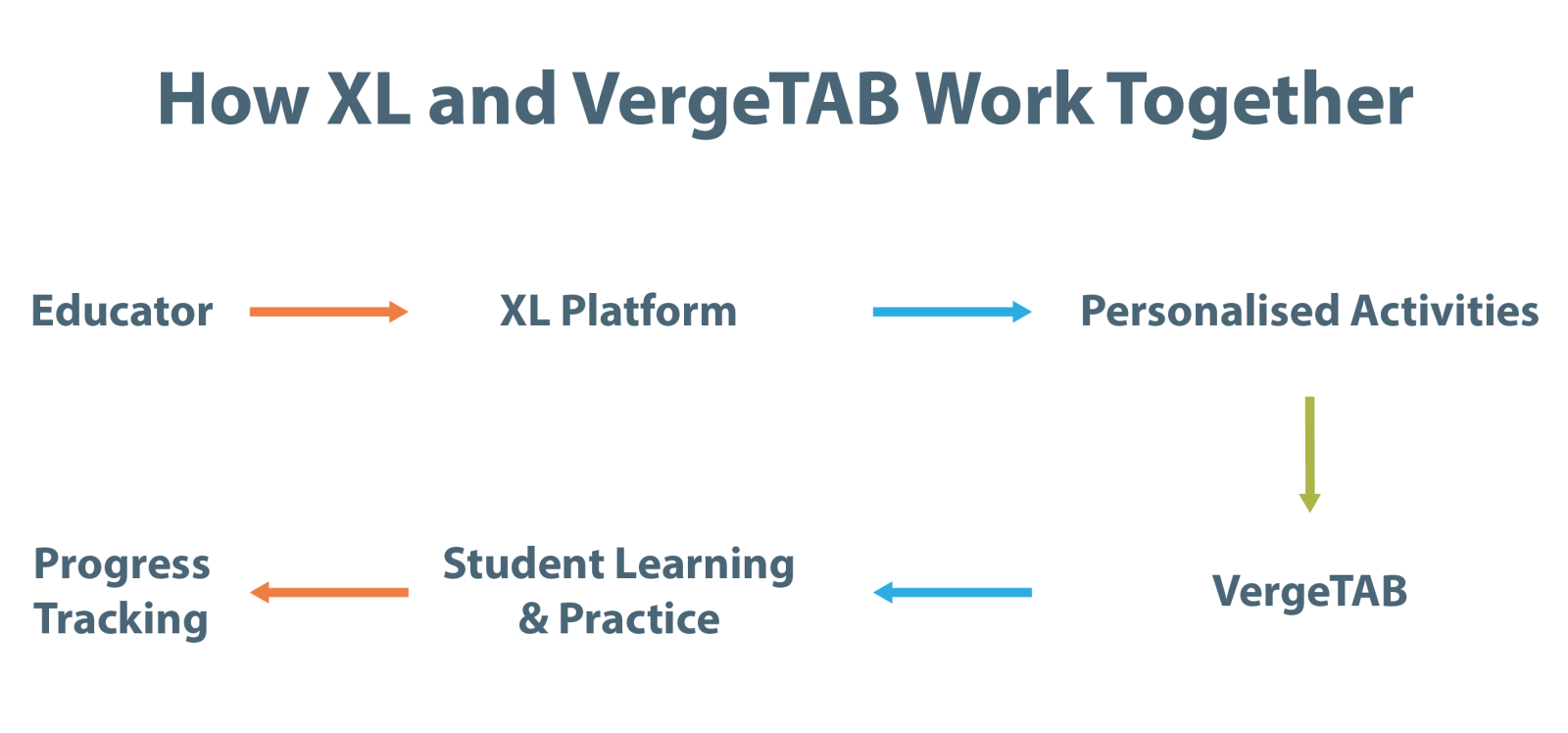
How XL and VergeTAB Work Together
XL helps educators personalise and track learning, while VergeTAB delivers those assigned activities in a focused learning environment.

Supporting Better Educational Decisions Through Progress Tracking  

In special education, progress often shows up in small, easy-to-miss changes: a learner needing fewer prompts, staying engaged longer, completing a task more independently, or applying a learned skill in a new situation.

Keeping track of these changes is what makes it possible to know what’s working and what needs to shift. The XL Platform helps teachers keep organised progress records, making it easier to review achievements, spot learning gaps, and plan next steps. Clear, well-organised documentation can also be a useful input into Individualised Education Planning (IEP) discussions, alongside the educator’s own clinical and professional judgement.

Building Stronger Partnerships with Parents and Therapists  

A learner’s development doesn’t rest on one person. Teachers, parents, and therapists all play a role, and consistency across those environments strengthens learning.

When progress information lives in one organised place, conversations between school, home, and therapy become more concrete and productive. Clear documentation helps everyone stay aligned on a learner’s strengths, current challenges, and next goals.

Technology as a Support for Educators  

Technology cannot replace the knowledge, patience, and compassion of a special educator. Its role is to support them, simplifying routine tasks and freeing up more time for teaching and direct student interaction.

Together, the XL Platform and VergeTAB offer practical tools for lesson management, engagement, progress tracking, and collaboration. The goal isn’t to make teaching dependent on technology — it’s to make personalised education a little easier to organise and deliver, every day.

Conclusion  

Each learner deserves an education built around their unique abilities and potential. That’s easiest to deliver when educators have tools that simplify planning, support engagement, and offer real insight into student progress, without adding to their workload.

By reducing administrative load and making personalisation more manageable, the XL Platform and VergeTAB give educators more room to do what matters most: help students build confidence, independence, and the foundation for lifelong success.

Ready to Make Personalised Learning More Manageable?

If you’re a special educator, school leader, or therapist looking to make personalised learning easier to plan, deliver, and track, connect with the XceptionalLEARNING team.

How Digital Transformation is Changing Special Education in Schools

Reading Time: 3 minutes

Written By

Jasna K

Special Educator

Introduction: Special Education in a Changing World

Special schools today are no longer limited to traditional teaching methods. With rising therapy needs and increasing parental expectations, digital transformation in special education is becoming essential for delivering structured and measurable outcomes.

For both educators and parents, the goal remains the same—ensuring that every child receives meaningful, structured, and effective learning opportunities.

Today, special schools are evolving by integrating digital therapy platforms and special education technology to support not just academic growth, but also independence, communication, and life skills.

Changing Social Needs and Educational Expectations

There has been a significant shift in how society understands disability and education. Increased awareness of inclusion and disability rights has raised expectations from both schools and parents.

Modern special education schools now focus on:

  • Life skills development
  • Social interaction
  • Communication abilities
  • Vocational readiness

This shift requires individualized special education programs that adapt to each child’s unique needs.

Digital Transformation in Special Education: Why It Matters for Special Schools

Technology is no longer optional—it is becoming essential.

Digital tools in special education help:

  • Simplify complex concepts through visual learning
  • Provide structured and repeated practice
  • Support multiple learning styles (visual, auditory, activity-based)

For educators, special education software and digital systems improve lesson planning and progress tracking.
For parents, these platforms offer better visibility into their child’s learning journey.

Traditional vs Digital Special Education: What’s Changing?

Traditional ApproachDigital Approach
Manual progress trackingReal-time tracking and reports
Limited engagementInteractive, activity-based learning
One-size-fits-all teachingIndividualized learning programs
Paper-based materialsDigital activity-based content
How Digital Transformation Improves Therapy Outcomes

How Digital Learning Improves Engagement in Special Education

Children with special needs respond better to learning that is interactive, structured, and engaging.

Digital methods such as:

  • Animated lessons
  • Interactive exercises
  • Activity-based digital learning

help improve:

  • Attention span
  • Participation
  • Confidence

This leads to more consistent and meaningful learning outcomes.

See Real Classroom Impact: How Digital Learning Improves Engagement

Watch how digital learning is transforming special education classrooms in real-life settings:

How VergeTAB Is Transforming Learning for Children with Special Needs | A Special School Perspective

Want to implement this in your school?

Digitalizing Education in Special Schools (DESS): A Transformative Initiative

To address the growing need for effective and inclusive learning, initiatives like the Digitalizing Education in Special Schools (DESS) project by XceptionalLEARNING are bringing meaningful transformation to classrooms.

DESS introduces a hybrid learning model, combining traditional teaching with digital solutions to create a balanced and effective learning experience.

At the core of this model is VergeTAB, a digital activity book designed to enhance structured learning.

Within this approach:

  • Each student uses an individual device for focused engagement
  • Lessons are delivered through structured, interactive content
  • Teachers can guide, monitor, and manage activities in real time

For educators, this enables better classroom management and personalized instruction.
For parents, it ensures that learning is structured, monitored, and meaningful.

By combining teacher-led instruction with digital support, DESS creates a more inclusive and adaptive learning environment.

The Evolving Role of Teachers

Despite rapid technological advancement, teachers remain central to a child’s learning journey.

Today, educators are:

  • Facilitators of interactive learning
  • Guides for individualized learning paths
  • Users of digital tools to enhance understanding

Ongoing training and professional development are essential to help teachers effectively integrate technology into their teaching practices.

Challenges in the Transition

While digital transformation offers many benefits, schools may face challenges such as:

  • Limited infrastructure
  • Need for training and technical support
  • Adjustment to new teaching methods

With proper planning and collaboration between educators and parents, these challenges can be effectively managed.

The Future of Special Schools

The future of special education lies in combining traditional teaching strengths with digital innovation.

Special schools will continue to focus on:

  • Building independence and life skills
  • Enhancing social and communication abilities
  • Preparing children for real-world participation

With advancements in assistive and digital technologies, the potential to support children will continue to grow.

Conclusion

Special schools are evolving by integrating traditional teaching approaches with digital innovation to create more structured and effective learning environments.

Initiatives like DESS highlight how combining teacher-led instruction with tools like VergeTAB can significantly improve engagement, consistency, and learning outcomes.

By working together—educators, parents, and organizations—special schools can create empowering environments that support independence, confidence, and long-term development for children with special needs.

Frequently Asked Questions

Need help choosing the right digital solution for your school or child?