Digital Storytelling with VergeTAB: Supporting Language and Communication Skills

Reading Time: 6 minutes
Written By Keerthy Joselin C

Special Educator

Quick Summary

Digital storytelling can be more than presenting a story through pictures, audio, and a screen. When used purposefully, it can create structured opportunities for children to communicate.

Using VergeTAB, a special educator can build communication moments into a story that encourage learners to choose, request, reject, ask for help, comment, initiate, and respond. Participation does not always have to be verbal — depending on the learner’s abilities, it may happen through words, gestures, pointing, pictures, or augmentative and alternative communication (AAC).

The important question is not simply, “Did the child understand the story?” It is:

“Did the story give the child a meaningful reason to communicate?”

What Is VergeTAB?

VergeTAB is a structured digital learning and therapy device designed to support educators, therapists, and caregivers in delivering purposeful digital activities for children. When integrated with the XceptionalLEARNING platform, VergeTAB can be used with structured visual and interactive activities that support individual learning and communication goals. During a session, the educator or therapist controls the pace, pauses at meaningful moments, observes the learner’s response, and provides support based on the learner’s needs.

A Story Is Playing—but Is the Child Communicating?

During a small-group session in a special school, an educator presents a digital story using VergeTAB. Instead of moving quickly from one page to the next, she pauses at meaningful moments and gives the learners time to respond.

When a school bag and a toy appear on the screen, she asks, “What does he need?” One learner answers verbally, another points to the school bag, and a learner with limited speech touches the correct picture. Later, when the character cannot open a door, the educator pauses and waits. One learner says, “Help,” while another uses a gesture.

Their responses are different, but each learner is actively participating. The story is no longer something they simply watch. It becomes a meaningful communication experience.

What Makes Digital Storytelling Interactive?

Animation and audio alone do not make a story interactive. A child can watch an entire animated story without communicating once.

For digital storytelling to support communication, learners need opportunities to respond to or influence what is happening. A story can intentionally create moments for:

  • Requesting — Asking for something they want
  • Rejecting — Expressing “no,” “stop,” or “not that”
  • Choice-making — Selecting between meaningful options
  • Asking for help — Seeking assistance when a problem occurs
  • Commenting — Sharing a reaction or observation
  • Initiating — Communicating without first being questioned
  • Responding — Answering another person’s communication

These are functional reasons people communicate in everyday life. The story provides a structured context for practicing different communication functions, rather than guaranteeing that any single skill will develop.

Start With the Communication Goal, Not the Story

Before choosing a story, the educator should identify the communication skill to be encouraged:

  • For requesting, create a situation in which a character needs an object.
  • For choice-making, present two meaningful options.
  • For asking for help, include a simple problem the character cannot solve alone.
  • For rejecting, offer both a preferred and an unsuitable option.

This approach makes the activity purposeful. The story is not the final learning goal — it becomes the context in which communication can happen naturally.

One Story, Different Communication Opportunities

A short VergeTAB story about a child visiting a juice shop can support several of the communication functions above, without changing the story itself:

Moment in storyCommunication function targeted
Show two drinks, learner selects oneChoice-making
Keep the chosen drink visible, waitRequesting
Offer the wrong drinkRejecting
Show a bottle that won’t open, pauseAsking for help
Introduce an unexpected event (e.g., spilled juice) and wait for the learner to communicateCommenting / Initiating

One simple story can therefore provide several meaningful reasons to communicate, without requiring every learner to respond in the same way.

Why Pausing and Giving Time Matter

Some children need additional time to understand a situation, decide what they want to communicate, and choose how to respond. Repeating questions or providing immediate prompts can interrupt this process.

A simple interaction sequence can help:

01 Create → 02 Pause → 03 Wait → 04 Observe → 05 Respond

  1. Create — Introduce a meaningful situation that encourages communication.
  2. Pause — Avoid completing the interaction for the learner.
  3. Wait — Give the learner enough processing time.
  4. Observe — Notice words, gestures, pointing, eye gaze, pictures, or AAC responses.
  5. Respond — Acknowledge and naturally expand the learner’s message.

For example, if a learner says “Help,” the educator can respond, “You need help. I’ll help you.” This demonstrates that the learner’s communication has been noticed, understood, and responded to.

Educators should avoid immediately repeating questions or adding unnecessary prompts. Additional support, such as a visual choice, verbal model, or gesture cue, can be introduced only when needed. The aim is to provide the minimum support required and gradually reduce prompts as the learner becomes more independent.

This approach is consistent with broader principles of responsive and naturalistic communication teaching, including providing meaningful communication opportunities, allowing processing time, and responding to learner-initiated communication.

One Goal, Different Ways to Respond

Learners in a special school may express the same message in different ways. When asking for help, a learner may:

  • Say, “Can you help me?”
  • Use a single word such as “Help.”
  • Point toward the educator
  • Hand over a HELP picture
  • Select HELP using an AAC device

Although these responses look different, they serve the same communication purpose. The goal is not to expect every learner to produce the same sentence, but to recognize and understand each learner’s message — then gradually expand the response according to their individual communication goals.

How VergeTAB Supports Interaction

VergeTAB provides a structured digital environment in which educators can present selected visuals, audio, prompts, and response opportunities while observing learner participation.

For example, when a picture shows a child unable to reach a toy:

  1. The image creates the situation.
  2. The educator’s pause creates the opportunity.
  3. The learner responds through speech, a gesture, a picture, pointing, or AAC.
  4. The educator acknowledges the response and gives it meaning.

VergeTAB supports the activity, but meaningful communication develops through the educator’s guidance. The special educator remains essential in deciding when to pause, how much support to provide, and how to respond.

Explore VergeTAB Solutions

See how VergeTAB can support structured digital activities across special education, therapy, and intervention settings.

Special Schools
Speech & Language Therapy
Occupational & BehaviourTherapy

Digital Storytelling in Speech and Communication Activities

Digital storytelling with VergeTAB can be incorporated into structured speech and communication activities planned by speech-language professionals and special educators. Depending on the learner’s individual goals, a story may provide opportunities to practice functional vocabulary, requesting, choice-making, responding, commenting, turn-taking, following directions, or initiating communication.

The activity can be adjusted according to the learner’s communication level, with responses accepted through speech, gestures, pointing, pictures, or AAC. The educator or therapist can then observe how independently the learner communicates and adjust prompts and support accordingly.

Story Completion vs. Communication Opportunity

The success of a digital storytelling session should not be measured only by the number of pages completed.

Story-completion focus
Did the learner finish the activity?
How many questions were answered correctly?
Did the learner follow every page?
Was the expected verbal answer produced?
How quickly was the story completed?
Communication-opportunity focus
Did the learner communicate meaningfully?
How many independent communication attempts occurred?
Did the learner initiate, request, reject, choose, or ask for help?
Was the learner’s individual communication mode recognized?
How much support did the learner require?

A learner may complete many screens with continuous prompting but still require significant communication support. In contrast, a learner who independently says “Help” or communicates a meaningful choice may demonstrate an important communication skill — even if fewer pages are completed.

What Can the Special Educator Observe?

During interactive digital storytelling, educators can observe:

  • Initiation — Does the learner communicate without being directly asked?
  • Choice-making — Can the learner show a clear preference?
  • Requesting — Does the learner ask for something they want?
  • Rejection — Can the learner appropriately express “no” or “stop”?
  • Help-seeking — Does the learner ask for assistance when needed?
  • Response mode — Does the learner use speech, gestures, pictures, pointing, or AAC?
  • Prompt dependence — How much support is required?

These observations show not only what learners understand, but also how independently and effectively they communicate.

A Practical Planning Checklist

Before beginning a VergeTAB digital story, educators can use this checklist:

☐ Choose one communication goal (requesting, rejecting, choosing, or asking for help)

☐ Create a meaningful situation that naturally encourages the learner to communicate

☐ Accept different response modes (speech, gestures, pointing, pictures, AAC)

☐ Plan suitable pause points and allow enough processing time

☐ Use the minimum support required (visual choice, verbal model, gesture cue)

☐ Respond naturally so the learner experiences a meaningful result from communicating

☐ Gradually reduce prompts as the learner becomes more independent

This keeps the session focused on meaningful interaction rather than simply completing the story.

Frequently Asked Questions

Conclusion: Design the Opportunity, Not Just the Story

The most useful question in interactive digital storytelling is:

“What reason will this story give the learner to communicate?”

VergeTAB provides a structured environment for presenting the story, while the special educator creates meaningful opportunities by knowing when to pause, wait, support, and listen.

Through these interactions, learners discover that they can make choices, reject unwanted options, ask for help, express their needs, and receive a meaningful response from others. This is what transforms a digital story from screen-based content into a practical strategy for developing functional and independent communication.

See VergeTAB in Action

Explore how VergeTAB can support structured digital activities for communication, language, and special education. See how educators and therapists can use purposeful digital content to create meaningful learning and communication opportunities.

Best Autism Therapy Activities at Home That Improve Daily Living Skills

Reading Time: 7 minutes

Clinically Reviewed by

Minnu Mini Mathew

Occupational Therapist

Quick Summary

  • Discover why most autism therapy activities at home fail to create real progress 
  • Learn structured autism home therapy methods that improve daily living skills 
  • Follow a simple 7-day autism therapy routine for home practice 
  • Improve attention, communication, independence, and instruction-following naturally 
  • Turn therapy into real-life learning—not just session-based progress 

A Real Morning That Explains the Problem

It’s 8:30 AM.

You ask your child to:

  •  Wear shoes 
  •  Sit for breakfast 
  •  Get ready for the day 

Instead:

  •  They walk away 
  •  Avoid eye contact 
  •  Get distracted 

You repeat the same instructions again and again.
By the end of the day, you feel exhausted.
And despite all the effort… nothing really changes.

This is where many parents of children with autism feel stuck.

Not because their child cannot learn.
But because therapy skills are not transferring into real daily life.

And that is the real issue most families are never taught how to solve.

The Truth Most Parents Are Never Told About Autism Therapy

Many children with autism can:

  •  perform well during therapy sessions 
  •  identify objects correctly 
  •  respond to therapists 
  •  complete structured tasks 

But once they return home:

  • the instructions stop working 
  • routines become difficult 
  • behaviour becomes inconsistent 
  • independence decreases 

Why?

Autism therapy activities only work when skills are practiced consistently in real-life situations.

That’s the difference between:

  •  temporary session success
    vs 
  •  meaningful daily progress 

Why Most Autism Therapy Activities at Home Fail

Before trying more therapy activities, parents need to understand what usually goes wrong.

Mistake 1: Teaching Without Real-Life Context

Many parents teach:

  •  colours 
  •  shapes 
  •  flashcards 

But children struggle to use those skills in everyday situations.

For example:
Instead of teaching “red colour” separately,
teach:

  •  “Bring the red cup.” 
  •  “Find the red shoe.” 

This creates functional learning.

Mistake 2: No Structured Routine

Random autism activities without consistency create confusion.

Children with autism learn best through:

  •  repetition 
  •  predictability 
  •  step-by-step structure 

Without structure:

  •  attention drops 
  •  resistance increases 
  •  learning slows down

Mistake 3: Sessions Are Too Long

Long therapy sessions at home often create:

  •  frustration 
  •  sensory overload 
  •  emotional resistance 

Short structured activities work far better.

Especially for:

  •  autism attention training 
  •  communication building 
  •  daily living skill development

Parents exploring structured sensory-friendly activities may also find this helpful: How VergeTAB Supports Sensory Integration Through Daily Structured Routines

Mistake 4: Therapy Stops After the Session

This is the biggest problem.

Therapy cannot remain isolated.

Real progress happens when autism therapy activities continue throughout:

  •  meals 
  •  dressing 
  •  play 
  •  transitions 
  •  routines 
  •  daily tasks 

That’s how children begin applying skills naturally.

What Actually Works for Autism Therapy at Home

Instead of only teaching skills…

Focus on using skills during real-life activities.

That is where:

  •  independence develops 
  •  communication improves 
  •  attention increases 
  •  confidence grows 

The goal is not just:
“finishing therapy”

The goal is helping children apply those skills naturally during daily life.

Children with autism often learn better through predictable routines, repetition, and step-by-step guidance. Structured learning reduces confusion and helps therapy skills transfer into real-life situations more effectively.

Parents can also explore: Structured Learning Made Simple with VergeTAB in Applied Behaviour Analysis (ABA) and Task Analysis

Need Help Creating Better Therapy Routines at Home?

5 Proven Autism Therapy Activities at Home

These therapist-backed autism activities help improve:

  •  attention 
  •  communication 
  •  participation 
  •  independence 
  •  daily living skills

1. Routine Chaining for Autism Daily Living Skills

Many children with autism struggle with sequencing, not ability.

What To Do

Break tasks into small, predictable steps.

Example:

Brushing Routine
  1.  Pick toothbrush 
  2.  Apply toothpaste 
  3.  Brush teeth 
  4.  Rinse mouth 
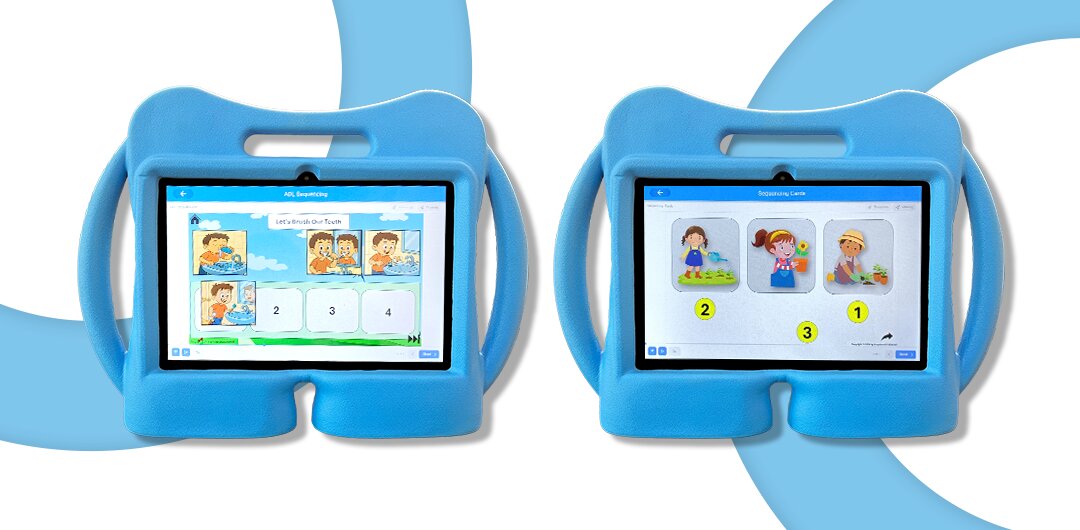
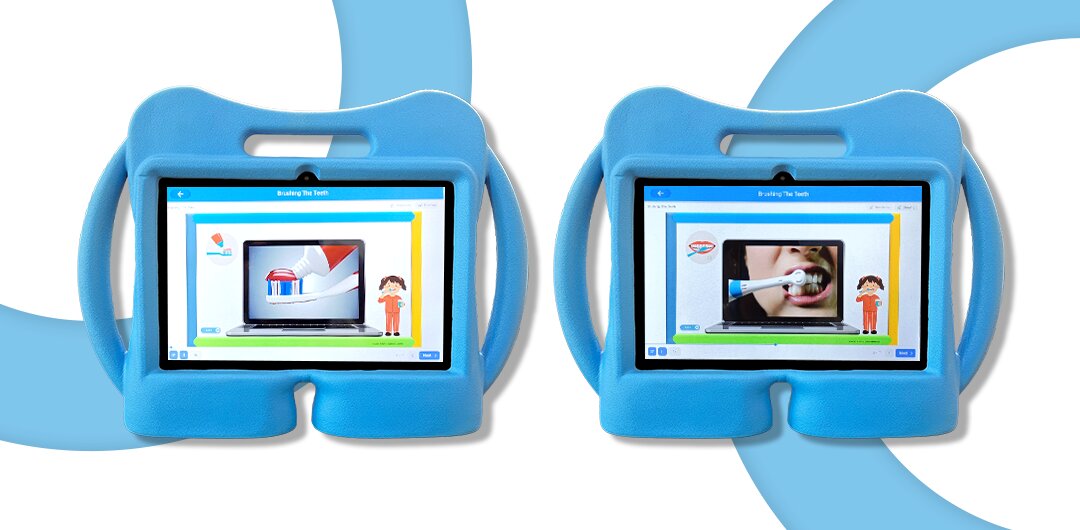
 Step-by-step brushing routine activity on VergeTAB designed to improve independence and daily living skills.

Use the same order every day.

Keep practice:

  •  short 
  •  visual 
  •  repetitive 

Start with:
5–10 minutes only.

This improves:

  •  independence 
  •  routine participation 
  •  instruction following

Parents looking for more guided home-based activities can also explore: Occupational Therapy Activities for Kids at Home Using VergeTAB to Improve Daily Skills

2. Choice-Based Communication Activities

If speech is limited, do not force verbal responses immediately.

Instead, encourage functional communication first.

Try Simple Choices

Offer:

  •  water or juice 
  •  toy or book
  •  apple or biscuit 

Allow the child to:

  •  point 
  •  look 
  •  select 
  •  gesture 

This reduces frustration while improving communication confidence.
It is one of the most effective autism communication activities at home.

3. The 2-Minute Attention Builder

Many parents believe longer sessions create better learning.

Usually, the opposite happens.

Start with:
just 2 minutes.

Try:
  •  puzzles 
  •  matching games 
  •  stacking activities 
  •  sorting objects 
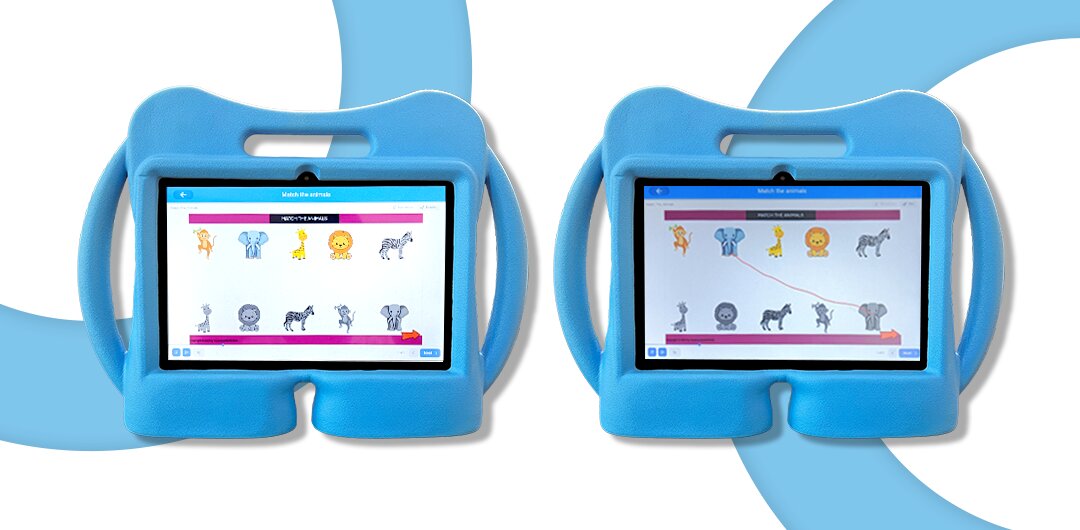
Attention-building activities on VergeTAB help improve focus, task completion, and learning participation.

Then stop before frustration begins.

Gradually increase time.

This improves:

  •  focus 
  •  sitting tolerance 
  •  task completion 
  •  therapy participation 

without creating resistance.

Attention-building activities also strengthen visual memory, visual discrimination, and learning readiness—important skills for following instructions and completing daily tasks independently. 

Parents may also find this helpful: What Are Visual Discrimination Skills? How VergeTAB Activities Strengthen Them

4. Imitation Activities for Autism Learning

Imitation is one of the foundational autism learning skills.

Before children communicate verbally, they often learn through copying.

Try:
  •  clapping 
  •  tapping table 
  •  waving 
  •  smiling 
  •  simple actions 

Then pause and wait.

This improves:

  •  engagement 
  •  interaction 
  •  learning readiness 
  •  social participation

5. Real-Life Skill Practice (Where Real Progress Happens)

This is where therapy becomes meaningful.

Do not teach skills in isolation.

Instead of:
“learn colours”

Use:

  •  “Bring the blue towel.” 
  •  “Put the spoon on the table.” 
  •  “Find your shoes.” 

This helps children use skills naturally in daily life.
That is how independence develops.

Real-life structured activities help children apply therapy skills naturally during everyday routines.

See How Structured Guidance Builds Real-Life Skills

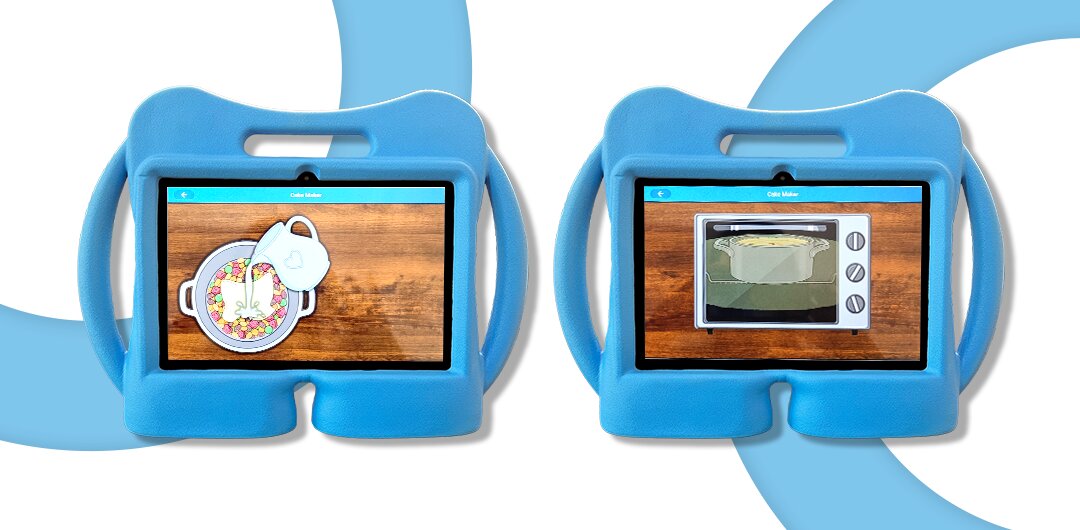
Simple real-world activities like cooking, mixing, and following step-by-step instructions can improve:

  •  attention 
  •  sequencing 
  •  confidence 
  •  participation 
  •  independence 
Watch how structured guidance on VergeTAB helped build engagement during a real-life activity:
Dwitheeya’s Cake Mixing Experience | How Structured Guidance Builds Confidence

Want Activities Like This for Your Child?

Structured real-life activities can help improve:

  •  attention 
  •  participation 
  •  confidence 
  •  independence 
  •  daily living skills 

Get guidance from our therapy team and explore structured home-based learning with VergeTAB.

Why These Autism Therapy Activities Actually Work

Because they follow 3 core therapy principles:

Repetition

Builds memory and familiarity

Structure

Reduces confusion and anxiety

Real-Life Integration

Creates practical independence

Without these three things, even good therapy activities often fail to create lasting progress.

Structured visual-motor activities support coordination, sequencing, and daily living skill development.

Visual-motor coordination also plays an important role in instruction following, writing readiness, task participation, and daily living skills.
Parents can also explore: How VergeTAB Helps Children Master Visual-Motor, Sensory, and Daily Living Skills

What Happens If You Don’t Change the Approach

If therapy continues like this:

Session → Stop → Repeat

You may continue seeing:

  •  slow progress 
  •  inconsistent behaviour 
  •  poor generalization 
  •  daily struggles 

But when therapy becomes:

Session → Home → Daily Life

That’s when progress becomes visible.

You Don’t Need to Become a Therapist

Your child does not need perfect therapy at home.

What matters most is:

  •  consistency 
  •  repetition 
  •  structured interaction 
  •  small daily wins 

Even 10–15 minutes of structured autism therapy activities at home can create meaningful long-term improvement.

The goal is not perfection.
The goal is steady progress.

7-Day Autism Therapy Starter Plan for Home

Day 1

2-minute attention activity

Day 2

Introduce 2 simple choices

Day 3

Practice imitation activities

Day 4

Teach one routine step

Day 5

Practice real-life instructions

Day 6

Combine 2 activities together

Day 7

Practice a full mini routine

This creates momentum without making the child feel stressed.

The Missing Piece Most Parents Overlook

Progress does not come from:

  •  more pressure 
  •  more worksheets 
  •  longer sessions 

It comes from:

Consistency + Structure + Daily Integration

That is the difference between trying therapy…
and seeing real-life improvement.

Real Progress: What Parents Begin to Notice

With structured autism therapy activities, many families begin noticing:

  •  better attention 
  •  improved instruction following 
  •  reduced frustration 
  •  increased participation 
  •  stronger communication 
  •  improved daily routines 
  •  growing independence 

Read a real transformation story here:
From Touch to Transformation: A Special Child’s Journey With Digital Learning

Why Structured Tools Like VergeTAB Help

Children with autism often learn better through:

  •  visual structure 
  •  guided repetition 
  •  predictable routines 
  •  distraction-free learning 

That’s why structured therapy tools like VergeTAB, powered by XceptionalLEARNING, help families continue meaningful therapy practice even beyond regular sessions.

VergeTAB supports:

  •  step-by-step learning 
  •  therapy-based activities 
  •  progress tracking 
  •  daily living skill development 
  •  home-based therapy consistency

Features such as visual interaction, auditory input, and haptic touch feedback may help create more engaging structured learning experiences during therapy activities.

With regular practice, structured home support may gradually help children improve:

  •  independence 
  •  communication 
  •  attention 
  •  participation during routines

Need Help Creating Structured Therapy Routines at Home?

Small daily activities can create meaningful long-term progress when done consistently.

Frequently Asked Questions

How can I do autism therapy at home?

Start with simple structured routines like brushing, dressing, and choice-based communication. Keep it consistent daily.

How long should therapy activities be?

Start with 2–5 minutes. Increase gradually based on your child’s comfort.

What activities improve daily living skills?

Routine-based activities, imitation, and real-life task practice are the most effective.

Can parents improve autism skills at home?

Yes. Parents play a major role in helping children apply therapy skills during everyday routines. Small structured daily interactions create powerful long-term improvement.

Final Thought

Therapy does not fail.

It simply stops too early—inside the session.

When autism therapy becomes part of:

  •  home routines 
  •  communication 
  •  play 
  •  daily living activities 

That is when real progress begins.

Ready to Build Real-Life Independence?

Stop guessing.
Start structured autism therapy that fits into everyday life.