In today’s digital landscape, the concept of “screen time” is a constant topic of discussion for parents. With a myriad of apps and devices vying for children’s attention, many parents seek effective ways to manage and monitor their child’s digital interactions. Popular parental control solutions like Qustodio, Norton Family, and Google Family Link offer a range of features, from setting daily time limits to filtering web content and blocking apps. These tools are invaluable in helping families navigate the complexities of digital boundaries and foster healthy tech habits.
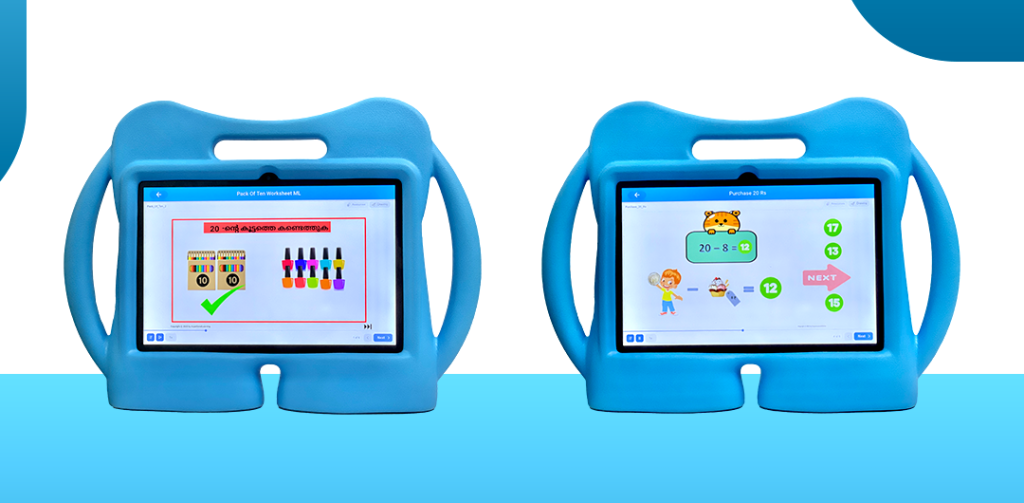
At XceptionalLEARNING, we’ve always been committed to providing innovative solutions that support the unique learning needs of children with speech delays, developmental challenges, and diverse learning requirements. Our flagship product, VergeTAB, is a testament to this commitment. More than just a tablet, VergeTAB is a specially designed digital activity book that transforms learning into an engaging and playful experience for every child’s individual use, under parental observation.
VergeTAB’s core strengths:
Meticulously curated content – a rich library of games, puzzles, and digital worksheets that are purpose-built to address targeted therapy goals
Child-friendly interface that ensures comfort, privacy, and ease of use, making it an inviting and unintimidating learning companion
Custom-designed operating system purely for therapeutic purposes, deliberately excluding access to other online content
Intrinsic design that mitigates the common concern of increased “unproductive” screen time often associated with general-purpose tablets
Offline functionality that ensures uninterrupted therapy sessions, even in the absence of internet access
New Feature: individual tab management through the XL Connect app.
This highlight feature empowers caregivers to manage their child’s VergeTAB experience with purpose, directly from their mobile devices.
Scenario 1
Imagine this scenario: your child is deeply engrossed in a particular activity on their VergeTAB, but you feel it’s time for a change, or perhaps the activity is becoming overstimulating. Traditionally, physical intervention might lead to tears and tantrums. From the XL Connect App on your phone, you can seamlessly hide that single activity from their access, without visibly disturbing your child’s activity on the VergeTAB. When the time is right, you can just as easily unhide it. This discreet control means you can guide your child’s engagement without direct confrontation.
Scenario 2
If you are a therapist, you may face a situation where your client becomes adept at navigating the VergeTAB’s menu, causing distraction within the session, making it difficult for you to manage the session properly. The XL Connect App allows you to hide the menu bar itself, ensuring they remain focused on the pre-approved, therapeutically beneficial content.
Way Forward
This enhanced management features on VergeTAB, powered by the XL Connect app, is a game-changer. It not only reinforces our commitment to providing a safe and focused learning environment for children with special needs but also gives parents the ultimate flexibility and control they need to optimize their child’s digital therapy journey. VergeTAB, already designed to be a tool for purposeful engagement rather than mindless scrolling, now offers an even more robust and responsive way for parents to actively shape their child’s digital learning experience.
*** *** ***
In a Nutshell
VergeTAB is digital activity book, with a custom-designed operating system and purpose-built content, intentionally excluding other online content to reduce “unproductive” screen time.
Now integrated with the XL Connect app for mobile devices, it gives caregivers and therapists precise control over their child’s VergeTAB experience. This seamless, remote activity management includes:
discreetly hide or unhide specific activities from their phone to guide their child’s engagement without direct confrontation or the risk of tantrums
skillfully hide the menu bar on the VergeTAB, ensuring children stay focused on their pre-approved therapeutic content.
This new feature gives caregivers the flexibility and control they need to shape and optimize the child’s digital therapy journey.
About the Author
Maria Teres Sebastian (formerly Rehab Program Strategist, XceptionalLEARNING) Her insights and expertise continue to inspire our work. XceptionalLEARNING remains committed to advancing innovative digital therapy solutions like VergeTAB—empowering therapists, engaging parents, and enabling meaningful progress for children.
In therapy sessions and special education classrooms, therapists and educators often notice that children struggle to learn independently. Many children wait for constant instructions, lose focus quickly, or depend heavily on adult guidance to complete even simple tasks.
Traditional worksheets and generic learning apps do not effectively build self-directed learning because they lack structure, guided progression, and measurable reinforcement.
VergeTAB, used together with the XceptionalLEARNING platform, is implemented in schools and therapy clinics to deliver distraction-free, goal-based digital activities that help children gradually develop self-directed learning skills through structured practice and guided independence. Talk to our team on WhatsApp
Why Self-Directed Learning is Essential for Children
The traditional teacher-centered approach often limits children’s ability to engage meaningfully with learning materials. In contrast, self-directed learning empowers children to:
Take ownership of their learning
Build decision-making and problem-solving skills
Enhance curiosity and a love for learning
Develop confidence and self-reliance
Reflect on progress and self-evaluate
Research in child development shows that children who engage in SDL are more likely to demonstrate better academic performance, improved social skills, and enhanced emotional regulation. SDL prepares children not just for classroom success, but for everyday challenges.
VergeTAB: The Ideal Tool for Self-Directed Learning
VergeTAB, combined with the XceptionalLEARNING platform, offers a unique, streamlined learning environment that eliminates common distractions found on traditional tablets. It provides:
Customizable therapy activities tailored to individual needs
Real-time progress tracking and feedback
Limits how long and how often a child can do each activity.
Goal-setting and achievement markers.
No access to other apps and websites.
Integration with Individualized Education Programs (IEPs)
By shifting from an instructor-led approach to a child-led experience, VergeTAB transforms therapy sessions into interactive, self-paced, and rewarding learning journeys. Chat with our team on WhatsApp for guidance
Innovative Self-Directed Learning Activities with VergeTAB
1. Challenge Wheel: Spin and Learn
In this fun and spontaneous activity, children spin a virtual challenge wheel to select from a variety of tasks such as language puzzles, fine motor challenges, memory games, or academic exercises. The randomness of the wheel adds excitement and unpredictability to learning.
Skills Developed:
Spontaneous decision-making
Adaptability and flexibility
Self-motivation
Therapist Tip: Customize the sections of the wheel according to the child’s developmental goals, making it versatile for different therapy domains.
2. Skill Adventure Maps
Children use an adventure map where they can click or tap on fun places like Memory Mountain or Language Lake. Each place has different games or challenges just for them, making learning playful and easy to follow.
Skills Developed:
Sequential planning
Long-term goal setting
Self-paced progression
Bonus: Children earn virtual badges as they complete challenges, encouraging them to seek continuous improvement.
3. Build-Your-Day Planners
Children manage their own therapy schedule by choosing activities like speech tasks, occupational exercises, academic games, and sensory breaks. They decide how much time to spend on each, giving them control over their daily learning routine
Skills Developed:
Time management
Self-organization
Responsibility for personal routines
Parental Involvement: This activity can be extended to home routines, helping children plan their daily activities independently.
4. Choice-Based Story Adventures
In this activity, children help guide a story by making choices for the characters at important moments. For example, they might decide if a character helps a friend or finishes a task first, and the story changes based on what they pick
Skills Developed:
Consequential thinking
Moral reasoning
Empathy development
Therapist Tip: Engage children in post-story discussions, encouraging them to reflect on their choices and outcomes.
5. Do-It-Yourself Reward Designer
Children create their personalized reward system by choosing their virtual incentives, such as activating new themes, customizing avatars, or accessing fun mini-games after completing goals.
Skills Developed:
Personal goal ownership
Motivation reinforcement
Delayed gratification
Therapist Tip: Guide children to set realistic, achievable goals and select meaningful rewards that align with their interests.
6. Independent Exploration Zones
VergeTAB provides open-ended exploration areas where children can engage in unstructured learning activities like digital drawing, sound exploration, or sensory interactions. These zones encourage curiosity and creativity.
Skills Developed:
Creative expression
Exploratory learning
Independent engagement
Parental Use: Parents can use these zones during free play at home to promote autonomous exploration.
7. Self-Paced Mastery Levels
Children work through progressively challenging levels within a specific skill set, such as phonics, sequencing, or maths facts. They determine when they are ready to advance to the next level, promoting self-assessment.
Skills Developed:
Self-evaluation
Confidence in skill mastery
Personal goal progression
Bonus Feature: Reflection checkpoints encourage children to articulate their readiness to advance, promoting metacognitive skills.
8. Reflection Galleries
Children compile a digital portfolio showcasing their proud moments, favourite tasks, and successful completions. This gallery can include screenshots, audio clips, and drawings.
Skills Developed:
Self-recognition
Reflective thinking
Confidence boosting
Therapist Tip: Review the Reflection Gallery periodically to celebrate progress and set new targets.
In real therapy and classroom environments, these skills are practiced using VergeTAB in a controlled, distraction-free setup designed specifically for special education and therapy use. Schools and clinics use VergeTAB along with XceptionalLEARNING to ensure structured skill development and measurable progress. See how VergeTAB works in real sessions
Extending Self-Directed Learning Beyond Therapy
The skills children develop through SDL activities on VergeTAB translate seamlessly into real-life situations:
Academic Skills: Children transfer time management and planning to school assignments.
Daily Routines: Self-planning and sequencing skills help with morning routines and household chores.
Social Development: Choice-making and reflective thinking improve interpersonal relationships.
Families and educators can use VergeTAB to foster consistency across home, school, and therapy settings, ensuring that children apply SDL strategies in multiple environments.
The Therapist’s Role: Guiding, Not Directing
In the SDL model, therapists shift from traditional directive roles to facilitators of learning. They:
Guide children through goal-setting
Offer choices and encourage autonomy
Prompt self-reflection and self-monitoring
Celebrate child-led achievements
This approach increases therapy engagement, reduces frustration, and empowers children to take charge of their progress.
Conclusion
Therapy becomes more meaningful when children lead the way. If your school or clinic is looking for a practical way to build self-directed learning skills using a dedicated therapy device, VergeTAB provides a safe, guided, and distraction-free digital environment built specifically for special education and therapy. Request a VergeTAB Demo Talk to our team on WhatsApp for institutional enquiries
In classrooms and therapy sessions, many children struggle to understand algebra because it feels abstract, symbolic, and disconnected from real-life meaning. Letters, variables, and equations can easily confuse learners, especially those with learning difficulties.
Traditional teaching methods often rely on memorization rather than helping children see how algebra works, which leads to frustration and low confidence.
VergeTAB, used together with the XceptionalLEARNING platform, is implemented in schools and therapy centers to provide distraction-free, goal-based digital activities that make algebra visual, interactive, and easier to understand through guided practice. Talk to our team on WhatsApp
Why Algebra Matters
Builds reasoning by helping children understand relationships between numbers.
Encourages problem-solving through breaking complex problems into steps.
Supports higher learning and real-world applications.
Develops abstract thinking beyond counting to working with unknowns.
Below, we explore how algebraic concepts can be taught step by step, moving from traditional problem-solving methods to VergeTAB’s unique visual approach, thus ensuring children not only solve problems but also understand and apply concepts in daily life.
Why Visualization Matters in Special Education Mathematics
Children with special needs often process information differently. Visualizationhelps them connect concepts, repeat learning safely, and gain confidence.
Makes abstract concrete
Numbers and symbols become stories, objects, and interactive activities.
Patterns appear as colourful sequences that children can move, hear, or build.
Algebra shifts into balance puzzles rather than intimidating equations.
Reduces mathematical-related anxiety
Learning feels like discovery and play instead of pressure.
Mistakes are reframed as learning opportunities, not failures.
Supports therapy goals
Strengthens attention, sequencing, memory, and problem-solving.
Builds confidence in parallel with academic skills.
Skills likeattention to detail, conceptual understanding, confidence with abstract ideas, step-by-step reasoning, and growing independence are strengthened through this process.
Why VergeTAB Stands Out
Blank Tablet, Focused Learning: No distractions, only therapy-based activities.
Therapy-First Design: Integrates with XceptionalLEARNING platform, aligned with developmental goals.
Safe Environment: Children learn at their own pace, gaining confidence with instant visual feedback.
With VergeTAB, children can approach and solve algebraic problems more effectively and independently, supported by visualization and therapy-aligned design. Chat with our team on WhatsApp for guidance
1. Understanding Algebraic Thinking Through Patterns
Standard Mathematical Approach (Paper Method)
Complete the sequence 3, 6, 9, __, 15.
Step A — Observe: Difference between terms is +3.
Step B — Rule Formation: Each number increases by 3.
Step C — Solve: 9 + 3 = 12. The missing term is 12.
Problem: Tom has 10 balloons, gives away y, now he has 6. How many did he give away?
Paper method: 10 – y = 6 → y = 4.
On VergeTAB: Balloons disappear one by one until 6 remain; the child fills in the missing value.
Complex Problem (10–12 yrs):
Problem: A toy costs 25. You pay with a 50 note. How much change do you get? Represent with algebra.
Paper method: 50 – x = 25 → x = 25.
On VergeTAB:
Coins animate dropping into slots.
Child drags “25” as the missing change.
Skills Developed: bridges real-life problem-solving with algebra, strengthens symbolic thinking, and builds practical independence.
4. Building Multi-Step Algebraic Reasoning
Standard Mathematical Approach (Paper Method)
Solve 2x + 3 = 9.
Step A: Subtract 3 → 2x = 6.
Step B: Divide by 2 → x = 3.
How VergeTAB Makes It Visual
Initial Presentation:
Shows two baskets + 3 =9 total.
Audio: “What number in each basket makes this true?”
Scaffolding:
Model: Visual objects split across two baskets + extras.
Guided Attempt: Options for x (2, 3, 4). Wrong = mismatch.
Self-Correction: Correct = x = 3, animation confirms.
Generalization Example:
Solve 3x + 2 = 11.
Paper method: 3x = 9 → x = 3.
On VergeTAB:
Three baskets + 2 extra = 11.
The child distributes objects equally.
Complex Problem (10–12 yrs):
Solve 4x – 5 = 15.
Paper method: 4x = 20 → x = 5.
On VergeTAB:
The visual shows 4 groups with 5 removed.
Child adjusts until balanced at 15.
Skills Developed: multi-step reasoning, abstract manipulation, and confidence with symbolic equations.
In real therapy and classroom environments, algebra concepts are practiced using VergeTAB in a controlled, distraction-free setup designed specifically for special education and therapy use. Schools and clinics use VergeTAB along with XceptionalLEARNING to ensure structured skill development and measurable progress. See how VergeTAB works in real sessions
Real-Life Applications of Algebra for Children with Special Needs
Budgeting: Counting how much money is needed if an item costs x and they already have some money.
Time Management: Solving “If school starts in 30 minutes and it takes y minutes to get ready, how much time is left?”
Social Skills: Predicting outcomes like “If three friends each bring x toys, how many toys are there in total?”
Daily Routines: Understanding sequences: “If brushing takes 5 minutes and breakfast takes x minutes, the total is 20. How long is breakfast?”
Makes algebra functional by connecting problem-solving to everyday independence, confidence, and adaptive skills.
Practical Tips for Parents, Educators, and Therapists
Start small, progress gradually.
Begin with colours, shapes, or toys before introducing numbers and letters.
Use VergeTAB daily in short sessions.
10–15 minutes of focused activity every day is more effective than occasional long sessions.
Encourage exploration over correctness.
Mistakes are valuable learning opportunities. VergeTAB’s feedback is gentle and non-judgmental.
Blend offline and digital.
Reinforce skills with real-life objects like blocks, fruits, or beads alongside VergeTAB activities.
Collaborate with therapists
The XceptionalLEARNING Platform ensures that progress can be shared and tracked by professionals, making therapy more effective.
Why This Matters for Special Needs Learners
Children with developmental delays often need multiple ways to understand the same idea.
By solving the problem first with real-life objects or verbal reasoning, and then visualizing it on VergeTAB, they link thinking to doing.
This not only makes mathematics easier but also reduces frustration and builds confidence.
A Tool for Therapists, Educators, and Parents
VergeTAB does not replace human teaching—it enhances it.
For Therapists: Activities are therapy-aligned, reinforcing goals in occupational, speech, or developmental sessions.
For Educators: Mathematics lessons come alive, making classroom participation easier for children with delays.
For Parents: Families can use VergeTAB at home to practice what was learned in therapy, turning daily life into a learning opportunity.
With XceptionalLEARNING integration, everyone stays connected—progress can be tracked, shared, and celebrated across home, school, and therapy sessions.
Conclusion
Algebra is more than solving equations—it is a way of seeing patterns, balancing relationships, and making sense of the world. If your school or clinic is looking for a practical way to help children understand algebra using a dedicated therapy device, VergeTAB provides a safe, guided, and distraction-free digital environment built specifically for special education and therapy. Request a VergeTAB Demo Talk to our team on WhatsApp for institutional enquiries
Many therapists and educators notice that children — especially those with special needs — struggle with fine motor skills like pencil grip, hand-eye coordination, and dexterity, which are essential for school success and daily living activities.
Traditional activities like worksheets, playdough, or manual manipulatives can help, but they often lack structure, engagement, and measurable progress tracking in real classroom or therapy settings.
VergeTAB, used together with the XceptionalLEARNING platform, allows therapists and schools to deliver distraction-free, goal-based digital activities specifically designed to strengthen fine motor dexterity and coordination. This structured digital environment helps children build confidence and motor control through progressive tasks with clear feedback. Talk to our team on WhatsApp
Understanding Fine Motor Skills
Fine motor skills are the small, controlled movements made with the hands, fingers, and wrists. They include:
Grasping: Holding objects like a bead, crayon, or spoon
Manipulation: Twisting, turning, pinching, and moving small items
In-hand coordination: Moving an object within one hand (e.g., transferring a coin from palm to fingertips)
Bilateral coordination: Using both hands together (one stabilizes while the other works)
Eye–hand coordination: Coordinating what the eyes see with how the hands move (e.g., tracing or reaching for a target)
These skills develop through play and practice from infancy through early school years and continue to be refined after that.
Why do Fine Motor Skills Matter?
Strong fine motor skills are essential for everyday independence and school success. Children with weak fine motor skills may struggle with dressing (buttons, zippers, shoelaces), eating with utensils, handwriting, drawing, using scissors, managing classroom tools (glue sticks, rulers), or navigating touchscreens (taps, swipes, drag-and-drop). Beyond practical tasks, developing fine motor skills also boosts confidence, self-care, and participation in classroom and play activities.
If your child struggles with hand coordination or daily motor tasks, VergeTAB offers structured activities that improve fine motor skills and confidence. Chat with our team on WhatsApp for guidance
How VergeTAB + XceptionalLEARNING Helps
VergeTAB is a blank, controlled tablet that runs only on the XceptionalLEARNING platform, creating a safe, focused space for practice. Its benefits include:
Therapist-guided content: Activities target specific skills and keep practice focused.
Adjustable difficulty: Tasks can be tailored to each child’s level.
Progress tracking: Accuracy, speed, and repetitions are logged for monitoring improvement.
Interactive practice: Touchscreen gestures like tapping, dragging, and tracing a map to real-world skills.
Engaging and safe: Game-like activities motivate children without ads or unrelated apps.
Tablet Practice
Many parents wonder how practicing on a tablet can help with real tasks like buttoning or handwriting. If activities are carefully chosen and paired with real-world practice, it transfers into visible results:
Touchscreen activities train the same hand-eye coordination and precision needed for everyday tasks.
Tracing shapes digitally improves visual-motor control used in handwriting.
Drag-and-drop and tapping refine finger isolation and timing.
Repetitive, graded practice strengthens neural pathways and muscle control.
Important: Tablet practice should complement, not replace, real-world practice like grasping objects, using scissors, or threading beads. Combining digital and hands-on tasks gives the best results.
Practical VergeTAB activities for building fine motor skills
Below are concrete, easy-to-follow activities you can use on VergeTAB (via the XceptionalLEARNING platform) and how to pair them with physical tasks.
1. Tracing shapes and lines
What it trains: Pencil control, eye–hand coordination, wrist stability.
Tablet task: Trace increasingly complex lines and shapes (straight lines → curves → letters). The platform can show a ghost line and provide graded assistance.
Real-world pairing: Paper tracing with a crayon or marker; air-drawing letters while saying the letter name.
2. Dot-to-dot and connect-the-dots
What it trains: Precision tapping, sequence planning.
Tablet task: Tap numbered dots to reveal a picture. Timing and accuracy are measured.
Real-world pairing: Paper dot-to-dots, bead-stringing in number order, or sticker sequencing.
3. Drag-and-drop sorting
What it trains: Pincer grasp, controlled release, bilateral coordination.
Tablet task: Drag items into categories (colours, shapes, sizes). Difficulty can increase with smaller targets and time limits.
Real-world pairing: Sorting coins, buttons, or coloured blocks into containers.
4. Pinch and zoom refinement
What it trains: Thumb–index pinch strength and control (useful for scooping and pinching objects).
Tablet task: Pinch to zoom puzzles or to pick up tiny virtual objects.
Real-world pairing: Picking up small items like beads, using tweezers, or practicing clothespin transfers.
5. Virtual finger mazes
What it trains: Steady fingertip pressure, wrist control, and visual tracking.
Tablet task: Move a virtual object slowly through a maze without touching the edges. The platform can detect and log touches.
Real-world pairing: Trace a finger through a raised-line maze on cardboard or follow a path with a stylus on paper.
6. Fast-finger games (timed tapping)
What it trains: Reaction time, controlled tapping, sequencing.
Tablet task: Tap targets that appear quickly in different places. Adjust speed and size.
Real-world pairing: Clap patterns, tapping rhythms on a table, or flashcard quick picks.
7. In-hand manipulation drills (virtual)
What it trains: Moving objects within one hand (palm → fingertips).
Tablet task: Rotate and position an object using taps and gestures that require switching fingers.
Real-world pairing: Manipulate coins, move small erasers from palm to fingertips, or practice flipping a pencil end-to-end.
8. Bilateral coordination activities
What it trains: Using both hands together (stabilize + manipulate).
Tablet task: One side of the screen requires holding a virtual object steady while the other side performs tasks.
Real-world pairing: Holding paper with one hand while cutting with scissors; stabilizing a jar while unscrewing a lid.
9. Handwriting warm-ups
What it trains: Pre-writing strokes & letter formation.
Real-world pairing: Warm-up with playdough rolling, finger painting strokes, or chalk drawing.
10. Simulated daily tasks
What it trains: Transferable skills for ADLs (activities of daily living).
Tablet task: Simulated dressing board or button task where the child must sequence steps to dress a character.
Real-world pairing: Practice buttoning a shirt or zipping jackets on a doll or self.
In real therapy and classroom environments, fine motor dexterity and coordination skills are practiced using VergeTAB in a controlled, distraction-free setup designed specifically for special education and therapy use. Schools and clinics use VergeTAB along with XceptionalLEARNING to ensure structured skill development and measurable progress. See how VergeTAB works in real sessions
Structuring a Practice Session
Total session: 15–20 minutes
Frequency: Daily or 4–5 sessions per week for steady progress
Short, focused, fun sessions work best. Here’s an easy structure:
Set a clear goal (30 seconds)
Example: “Trace circles for 2 minutes.”
Warm-up (2–3 minutes)
Example: tracing large shapes or finger mazes.
Targeted practice (6–10 minutes)
Focus on 1–2 activities just above the child’s level.
Real-world transfer (5–7 minutes)
Pair tablet practice with a physical task.
Cool-down and praise (1–2 minutes)
Celebrate effort and set a simple goal for next time.
Integrating VergeTAB into IEP goals
VergeTAB pairs smoothly with therapy plans and school goals:
The therapist assigns activities that match IEP goals (e.g., improve pencil grasp, increase handwriting legibility).
Data-driven decisions: Use the platform’s progress data to adjust difficulty or change strategies.
Home-school connection: Therapists can share activity lists or suggested real-world practice with parents and teachers so everyone uses the same approach.
Goal examples:
Increase accuracy when tracing lines from 50% → 80% in 8 weeks.
Grip: Encourage a relaxed fingertip touch, not a death grip.
Breaks: Use the 5–10 minute break rule for every 20–30 minutes of focused screen use.
Screen-time guidance
Keep practice sessions short (10–20 minutes). Multiple short sessions are better than one long one.
Prioritize active, purpose-driven screen use (therapeutic activities) over passive watching.
Balance tablet time with hands-on play: playdough, blocks, arts, puzzles, and outdoor play.
Device Care
Clean the touchscreen regularly with child-safe wipes.
Use a durable case to avoid breakage during play.
Measuring Progress
VergeTAB + XceptionalLEARNING make progress easy to track, but parents can also monitor at home:
Observable improvements:
Better control in handwriting/drawing
Faster buttoning/zipping
Increased independence in self-care
Improved scissors and utensil use
Parent-friendly tracking:
Keep a weekly log (activity, difficulty, repetitions, notes)
Take monthly handwriting photos for comparison
Review platform reports for accuracy, speed, and levels achieved
Reassess if: No improvement after 8–10 weeks of consistent practice — adjust activities, difficulty, or increase hands-on practice.
Build Practice into Daily Routines
Morning: Finger stretches while brushing teeth + 5-min VergeTAB warm-up
Snack time: Open containers and transfer small snacks to improve grip
Art time: After tablet session, 10 min of drawing or bead stringing
Bedtime: Gentle hand play (playdough, finger tracing) as a calming practice
Small, repeated opportunities help children develop skills naturally throughout the day.
Conclusion — small steps, steady gains
Building fine motor dexterity and coordination takes small, consistent practice over time. VergeTAB, paired with the XceptionalLEARNING platform, provides a focused, safe, and measurable environment for children to develop essential skills. When tablet-based practice is combined with real-world activities and positive encouragement, children gain independence, confidence, and school readiness. Start small: set a tiny goal (e.g., trace circles for two minutes), follow it with a real-world task (like crayon tracing), and celebrate every effort. Over weeks, these small wins become everyday skills — tying shoes, writing, and self-feeding.
If your school or clinic is looking for a practical way to improve fine motor skills like pencil grip, hand coordination, and dexterity using a dedicated therapy device, VergeTAB provides a safe, guided, and distraction-free digital environment built specifically for special education and therapy.
When parents and educators introduce new digital tools like VergeTAB into a child’s learning and therapy routine, the first 90 days are crucial. This period sets the foundation for comfort, engagement, skill development, and eventually independent use. Designed to support children with developmental delays, learning differences, and special needs, VergeTAB offers a structured, engaging, and personalized approach to therapy.
This guide will walk you through a step-by-step 90-day plan, broken into three phases, to ensure that children maximize the benefits of VergeTAB while building real, measurable skills.
Real-Life Application: Skills transfer from digital to everyday activities.
In conclusion, the first 90 days with VergeTAB are not just about learning how to use a device—it’s about building the foundation for growth, independence, and lifelong skills. By following this structured roadmap, parents and educators can ensure children develop focus, communication, problem-solving, and emotional regulation in a supportive, step-by-step way. VergeTAB transforms screen time into skill time, helping children progress confidently at their own pace.
For more insights, explore our blogs and videos to learn how interactive therapy transforms learning, see real-life success stories, and discover practical strategies for parents and educators.
In classrooms and therapy sessions, educators and therapists often notice that children with autism and social communication challenges struggle to understand what others think, feel, or intend — skills known as perspective-taking and theory of mind.
Traditional social skills activities, role-plays, or paper-based scenarios can be inconsistent and hard to track, especially when trying to generalize learning across contexts.
VergeTAB, used together with the XceptionalLEARNING platform, allows schools and therapists to deliver distraction-free, structured digital activities designed specifically to build perspective-taking and theory of mind. This goal-based environment helps children interact with visual social scenarios in a way that strengthens understanding of emotions, intentions, and social responses over time.
This makes VergeTAB a powerful tool for social skill development in special education and autism therapy. Talk to our team on WhatsApp
Core Skills Developed Through VergeTAB
VergeTAB focuses on practical skill-building. Every activity is designed to target a cognitive function that serves as a building block for perspective-taking. Through guided exercises, children practice the following core competencies:
Empathy and Emotional Recognition
Recognizing emotions through facial expressions, gestures, and tone.
Connecting actions with emotional consequences.
Predictive Thinking
Anticipating others’ reactions in social situations.
Considering multiple possible responses and outcomes.
Sequencing and Cause-Effect Reasoning
Understanding the order of events in social interactions.
Linking actions to emotional or social outcomes.
Abstract and Symbolic Thinking
Interpreting gestures, body language, and subtle social gestures.
Understanding that symbols or expressions can represent thoughts and feelings.
Decision-Making and Problem-Solving
Choosing socially appropriate responses.
Adapting actions based on context.
Communication Skills
Expressing understanding of others’ perspectives verbally.
Building vocabulary for thoughts, emotions, and intentions.
These competencies form the foundation of Theory of Mind and prepare children for meaningful, confident participation in social life.
Have questions about your child’s social perspective-taking or understanding others’ emotions?
Using Social Scenarios to Teach Perspective-Taking
VergeTAB’s greatest strength lies in its use of social scenarios—digital stories and exercises where children interact with characters, predict outcomes, and practice reasoning. Below are structured activity types, each designed to build a different cognitive skill required for perspective-taking.
1. Observing and Interpreting Social Cues
Objective:
Help children identify and understand others’ thoughts and emotions from verbal and non-verbal signs, such as tone, gestures, and facial expressions.
Sample Activity:
Animated story: “Riya accidentally bumps into Maya at school.”
Prompts:
“How does Maya feel?”
“What could Riya do to make her feel better?”
Children can select options, drag-and-drop responses, or type their answers.
Practical Tip: After the digital activity, role-play similar situations in real life. For example: “What happens if someone accidentally knocks over your blocks?” Encourage children to observe classmates’ reactions and describe what they notice.
Skills Developed: Children learn to recognize others’ emotions, understand their perspective, and reason about social situations.
Therapies and Interventions:
Occupational Therapy (OT): Builds social participation and self-regulation.
Speech and Language Therapy (SLT): Practices labelling emotions and expressing thoughts.
Social Skills Groups: Reinforces interpreting others’ reactions in social settings.
2. Predicting Thoughts and Feelings
Objective:
Teach children to anticipate others’ reactions and consider multiple possibilities before responding.
Sample Activity:
Scenario: “Anna refuses to share her colouring pencils.”
Prompts:
“Why might Anna not want to share?”
“What are three ways to solve the problem?”
Children select or sequence logical or empathetic solutions.
Practical Tip: Encourage children to verbalize their reasoning: “I think Anna didn’t share because she wanted to finish first, so she might feel proud when she completes the picture.” Reinforce predictions in daily life, e.g., “How might your friend feel if you don’t take turns?”
Skills Developed: Children practice anticipating reactions, making empathetic decisions, and solving social problems.
Therapies and Interventions:
Cognitive Behavioural Therapy (CBT): Strengthens awareness of cause-and-effect and builds balancing strategies.
Applied Behaviour Analysis (ABA): Promotes predicting and responding appropriately through structured practice.
Social and Emotional Learning (SEL): Builds group-based empathy and perspective awareness.
3. Sequencing and Understanding Cause-Effect
Objective:
Help children understand the order of social events and link actions to their consequences.
Sample Activity:
Story: “A character spills juice, apologizes, and cleans up.”
Tasks:
Drag-and-drop steps in the correct order.
Match each step to the character’s emotion.
Discuss how earlier actions influence later outcomes.
Practical Tip: Use daily routines (like brushing teeth or packing school bags) to practice sequencing. Strengthens learning with visual schedules or storyboards.
Skills Developed: Children strengthen logical organization, cause-and-effect reasoning, and social planning.
Therapies and Interventions:
Occupational Therapy (OT): Improves executive functioning and sequencing.
Cognitive Therapy: Enhances logical reasoning.
Speech Therapy: Builds verbal explanation of cause and effect.
4. Abstract and Symbolic Reasoning
Objective:
Enable children to recognize subtle social cues and understand that gestures, expressions, or symbols represent internal states.
Sample Activity:
Scenario: “A character crosses arms and frowns when asked to share a toy.”
Tasks:
Identify the character’s feeling: annoyed or frustrated.
Infer the likely thought: “I don’t want to give this away yet.”
Suggest possible resolutions: offering a trade, asking for a turn, or expressing feelings.
Practical Tip: Practice interpreting body language in daily life. Use emoji cards, gesture games, or drawing activities to reinforce abstract reasoning.
Skills Developed: Children learn to interpret subtle cues, connect symbols to feelings, and understand hidden intentions.
In real therapy and classroom environments, perspective-taking and theory of mind skills are practiced using VergeTAB in a controlled, distraction-free setup designed specifically for special education and autism support. Schools and clinics use VergeTAB along with XceptionalLEARNING to ensure structured skill development, repeated practice, and measurable progress in social understanding. See how VergeTAB works in real sessions
Therapies and Interventions:
Social Skills Training (SST): Builds awareness of peer cues.
CBT: Connects internal states with observable behaviour.
SLT: Develops vocabulary for describing abstract emotions.
Play Therapy: Encourages symbolic exploration in safe play contexts.
Enhancing Engagement on VergeTAB
VergeTAB is designed to ensure children not only complete activities, but also remain engaged and motivated throughout therapy.
Sensory-Friendly Design
Gentle animations and audio hints prevent sensory overload.
Calm interface ensures focus and sustained learning.
Adaptive Difficulty and Personalization
Activities adjust to each child’s skill level.
Encourage safe exploration of multiple responses without frustration.
Visual and Audio Reinforcement
Animated sequences and sound cues strengthen understanding of social outcomes.
Supports vocabulary building and abstract concept comprehension.
This ensures therapy remains structured, measurable, and personalized.
Additional Notes for Parents, Therapists, and Educators
Pair digital with real-life practice: Skills become meaningful when practiced both on VergeTAB and in everyday life.
Encourage reflection: Ask children to explain why they chose an answer. This builds reasoning and verbal communication.
Leverage progress reports: Use XL’s data insights to identify gaps in sequencing, predicting, or abstract reasoning.
Integrate therapies: A multi-disciplinary approach, including Occupational Therapy (OT), Speech and Language Therapy (SLT), Cognitive Behavioural Therapy (CBT), Applied Behaviour Analysis (ABA), and Social and Emotional Learning (SEL), ensures skills are reinforced across contexts.
Conclusion
Teaching Perspective-Taking and Theory of Mind is not just about showing children what to do—it’s about nurturing their ability to think, reason, and empathize. If your school or clinic is looking for a practical way to strengthen social understanding, perspective-taking, and theory of mind in children with autism or social communication needs, VergeTAB provides a safe, guided, and distraction-free digital environment built specifically for special education and therapy.
In classrooms and therapy sessions, educators and therapists often notice that children struggle with error detection and self-correction skills — the ability to notice their own mistakes and fix them independently. These skills are a vital part of learning, problem-solving, and academic confidence.
Traditional methods like paper drills or generic apps do not consistently help children recognize, evaluate, and correct errors in a way that can be measured and reinforced.
VergeTAB, used together with the XceptionalLEARNING platform, allows schools and therapists to deliver distraction-free, structured digital activities designed specifically to build error detection and self-correction skills. This goal-oriented environment helps children recognize patterns, learn from mistakes, and build confidence through guided practice and measurable outcomes. Talk to our team on WhatsApp
Self-Correction in Therapy
Error detection and correction has multiple benefits for children:
Boosts confidence by allowing children to realize their progress.
Reduces dependency on adults during academic and everyday tasks.
Builds resilience by teaching kids to handle mistakes positively.
Encourages logical reasoning and reflective thinking.
Self-Correction with VergeTAB
Unlike traditional exercises, VergeTAB’s interactive, fun, and visual-based activities make error correction feel like a rewarding challenge, not a punishment.
Structured therapy sessions tailored to each child’s developmental goals.
Interactive digital exercises like sequencing, visual corrections, and social reasoning games.
Real-time progress tracking, which provides immediate feedback.
Customizable learning flows, adaptable for therapists, special educators, or parents.
VergeTAB’s strength lies in its flexibility: whether in one-on-one therapy, classroom settings, or home routines, it adapts to meet the child’s individual needs. Chat with our team on WhatsApp for guidance
10 Practical Self-Correction Activities Using VergeTAB
OT/Psychology: Builds resilience through positive reinforcement.
In real therapy and classroom environments, real-life concepts observed in nature are reinforced using VergeTAB in a controlled, distraction-free setup designed specifically for special education and therapy use. Schools and clinics use VergeTAB along with XceptionalLEARNING to ensure structured skill development and measurable progress. See how VergeTAB works in real sessions
Suggested Session Flow Using VergeTAB
A structured session on VergeTAB can follow this format:
Warm-Up (5 minutes): Quick visual or auditory spotting games.
Core Session (30 minutes): Main activities targeting self-correction, selected based on therapy goals.
Cool-Down Reflection (5 minutes): My Fix-It Journal with emotional reflection.
Progress Tracking: Weekly reviews through XceptionalLEARNING dashboards to monitor growth in accuracy and independence.
Conclusion: Building Lifelong Independence Through Self-Correction
In therapy, progress is not just measured by correct answers but by the ability to identify and fix mistakes independently. If your school or clinic is looking for a practical way to help children build error detection and self-correction skills using a dedicated therapy device, VergeTAB provides a safe, guided, and distraction-free digital environment built specifically for special education and therapy.
Consultant Speech Swallow pathologist, Digital practitioner -SLP
Meet Anaya, an 8-year-old girl with a bright imagination and curious mind. She loves drawing, storytelling, and exploring ideas, but finds it hard to express herself clearly, follow routines, and interact confidently with peers.
This is a common dilemma faced by the parents of differently-abled children. Many parents notice their child can answer questions like “What’s your favourite colour?” However, they may struggle to tell a simple story, follow multi-step instructions, or join in with friends during play. These gaps can affect confidence, friendships, and learning.
In this article, we will be following Anaya’s journey to explore how children can strengthen key communication skills—like storytelling, social interaction, and language use—VergeTAB, used together with the XceptionalLEARNING platform, is implemented in schools and therapy clinics to deliver distraction-free, goal-based language activities specifically designed to strengthen social communication and storytelling abilities in children. Talk to our team on WhatsApp
Chapter 1: Listening – The Gateway to Understanding
Why Listening Matters:Listening is the first building block for communication. Children who listen effectively can follow instructions, understand social signals, and respond appropriately, which builds confidence and independence.
Scenario: Morning Chores
Anaya often forgot little things—like whether she had packed her pencil case or left her water bottle behind. Her mother would give three-step instructions like: “Pack your notebook, take your tiffin, and don’t forget your bottle.” But halfway through, Anaya would get distracted or mix things up.
What makes this hard for many kids like Anaya?
Multi-step directions can be overwhelming
Important parts are forgotten
They rely a lot on reminders from adults
VergeTAB in Action:
With VergeTAB, Anaya started with simple listening games—like tapping a red apple when she heard it. Gradually, the steps got harder: “Tap the red apple, then the green balloon.” Because there are no distracting apps, she could focus better and build listening and memory skills, one step at a time.
Try This at Home or School
At Home
Use everyday routines (brushing teeth, packing bags) to give short, clear steps
Repeat instructions together before starting
In School
Break tasks into steps
Encourage the child to repeat steps out loud to help them remember
What Changed for Anaya?
Anaya strengthened her active listening, improved her working memory for multi-step instructions, and increased independence in daily routines. One day, after getting ready all on her own, she proudly said:“I did it all by myself!”
Chapter 2: Expanding Vocabulary Through Listening
Why Vocabulary Matters:Vocabulary is essential for expressing thoughts, understanding others, and engaging in meaningful conversation. A rich vocabulary improves comprehension, storytelling, and emotional expression.
Scenario: Mealtime and Story time
Anaya would say things like: “The soup… good… umm… hot.” She knew what she wanted to say—but didn’t always have the words.
What makes this hard for many kids like Anaya?
Struggle to express thoughts clearly
Difficulty understanding synonyms or context-based words
Limited conversational depth
VergeTAB in Action:
On VergeTAB, Anaya starts by practicing word-to-picture matching: when she hears “giraffe,” she taps the giraffe image. The XL platform slowly introduces synonyms and categories: “Which is another word for happy?” → cheerful, glad, joyful. Gradually, VergeTAB moves to context-based listening: “The farmer put milk in a…?” (barn, bucket, river).
Try This at Home or School
At Home
Introduce new words naturally at meals: “This pasta is spicy. Can you think of another word for spicy?”
Read stories and pause: “What does this word mean?”
In School
Encourage person-to-person word games
Connect vocabulary to classroom objects or tasks
What Changed for Anaya?
Anaya expanded her vocabulary, improved comprehension and expression, and communicated more effectively with teammates. One day, after trying something new, she beamed and said: “I know another word for yummy—it’s delicious!”
Chapter 3: Pragmatic Language and Social Communication
Why Pragmatic Language Matters:Pragmatic language is how we use words socially—tone, timing, politeness, and turn-taking. It allows children to form friendships, participate in conversations, and navigate social settings successfully.
Scenario: Playground Interaction
Anaya could speak clearly, but playground time was tricky. She wanted to join in a game but didn’t know how to ask. She stood nearby, unsure, and missed her chance.
What Makes This Hard?
Kids may talk well, but still struggle socially
They may miss tone, body language, or speak out of turn
It’s not just what they say—but how and when
How VergeTAB Helps
VergeTAB uses guided, real-life role-plays to help kids like Anaya:
Anaya practices conversation role-plays, like ordering at a shop, where VergeTAB guides her responses and gently corrects missing polite words.
She engages in group interaction simulations with animated characters, learning turn-taking and choosing relevant sentences confidently.
The blank-tab + XL platform keeps her practice focused and distraction-free, reinforcing skills consistently for real-life application.
Try This at Home or School
At Home
Model polite requests and thank-yous
Role-play playdate conversations
In School
Encourage turn-taking in group discussions
Use “social scripts” for common interactions
What Changed for Anaya?
Anaya improved her pragmatic language, increased social confidence, and mastered better conversation flow. One day, she smiled and said:“I made a new friend today because I waited for my turn!”
Chapter 4: Storytelling Foundations
Why Storytelling Matters:Storytellingenhances imagination, sequencing, memory, and expressive language. It allows children to communicate experiences, entertain, and connect with peers.
Scenario: Show-and-Tell at School
During show-and-tell, Anaya stood up and said: “I went to the park. Played. Came home.” She knew what happened—but her story was short, choppy, and hard to follow.
Why This Is Tough for Many Kids
Disorganized or short stories
Limited use of descriptive vocabulary
Trouble remembering story sequence
How VergeTAB Helps
Anaya starts with picture sequencing: three images (boy wakes up, brushes teeth, goes to school). She arranges them in order. VergeTAB then asks her to tell the story aloud: “First… then… finally…” Gradually, stories grow from 3 to 6 to 10 steps, improving her narrative structure.
Try This at Home or School
At Home
Bedtime stories: “What happened first? What came next?”
Create simple photo albums for storytelling
In School
Encourage classmates to listen and ask questions
Practice sequencing during classroom projects
What Changed for Anaya?
Anaya developed structured storytelling, enhanced vocabulary, and improved sequencing and expressive language. One day, after sharing confidently in class, she said: “I told the story without skipping a part!”
Chapter 5: Emotional Storytelling and Reflection
Why Emotional Expression Matters: Understanding and expressing emotions helps children develop empathy, connect with others, and reflect on their own experiences, leading to stronger relationships.
Scenario: Puppet Theatre at Home
During a puppet play, Anaya tried to act out a scene with a sad kitten. She paused and said: “The kitten… umm… cry?” She wasn’t sure how to describe what the kitten felt—or what to say next.
Why This Can Be Hard
Difficulty expressing feelings
Limited empathy for peers
Trouble reflecting on personal experiences
How VergeTAB Helps
VergeTAB shows scenes with emotions (child dropping ice cream, winning a race). Anaya labels feelings: sad, excited, and nervous.
XL prompts: “What would you say if this happened to you?” → She practices empathetic responses.
She also learns reflection: “How did you feel when your friend shared a toy?”
Try This at Home or School
At Home
Discuss daily events and feelings
Introduce emotion vocabulary gradually
In School
Encourage peer discussions about feelings
Model empathetic reflection
What Changed for Anaya?
Anaya gained empathy, emotional awareness, and the ability to reflect on personal experiences. With a big smile one day, she shared: “I can tell how others feel now!”
Chapter 6: Gamification, Home-to-School Transfer, and Daily Routines
Why Daily Routines and Transfer Matter: Skills must be practiced across environments to generalize learning. Consistent routines and gamified motivation help children retain and apply communication skills effectively.
Scenario: Daily Life Integration
Anaya enjoyed VergeTAB but needed to apply skills at home, school, and playdates. She sometimes forgot polite phrases or the sequence of steps outside the application.
Why This is Difficult
Skills learned digitally may not generalize
Children may lose motivation without rewards
Routine practice is essential
How VergeTAB Helps
Anaya earns stars and animations directly within the XL platform after completing tasks, keeping motivation tied to learning outcomes rather than unrelated videos.
Custom activities aligned with school topics, like science facts or history stories, also reinforce daily routines such as morning tasks, hygiene, and scheduling, linking learning to real-life habits.
Teachers track her progress through reports, and parents reinforce the same skills at home, ensuring consistent practice and smooth transfer between school and home environments.
Try This at Home or School
Mini-Activities at Home
Greetings Practice → “Hi,” “Good morning,” “See you tomorrow.”
Two-Step Instructions → “Bring your shoes and close the door.”
Storytime Sequencing → “What happened first in the story?”
Emotion Reflection → “How did you feel when we visited Grandma?”
Playdate Scripts → “Can I join you?” before playdates
At School: Track progress; reinforce skills in classroom activities
What Changed for Anaya?
Anaya successfully transferred her skills across home, school, and social settings, built consistent confidence, and used polite, sequenced, and emotionally aware communication, joyfully stating, “I feel proud because everyone understands me now!”
Realistic Expectations: What VergeTAB Can Do vs. What Needs Guidance
Skills Requiring Adult Guidance for Generalization:
Using polite phrases during real playground or classroom interactions
Narrating personal stories to schoolmates or family
Applying turn-taking and perspective-taking in group settings
Practicing greetings, two-step instructions, and emotion reflection outside the app
Key Insight:
VergeTAB provides a structured, distraction-free foundation. Parents, teachers, and therapists are essential to bridge practice from the digital platform to everyday life, ensuring children like Anaya apply and retain skills confidently.
Conclusion: Anaya’s Journey to Confident Communication
Anaya’s story shows that progress in communication is not about quick fixes but about small, meaningful steps practiced daily. With VergeTAB, she learned to listen carefully, follow instructions independently, join conversations with confidence, and transform her imagination into structured stories. Most importantly, she discovered how to reflect on her feelings and adapt her communication for different situations.
For parents, therapists, and educators, the message is clear: children need consistent opportunities to practice, reflect, and express. VergeTAB provides the structured foundation, while family, teachers, and therapists bring those skills to life. Together, they create a learning circle where children like Anaya don’t just practice words — they discover the joy of being understood, included, and celebrated.
If your school or clinic is looking for a practical way to build pragmatic language and social communication skills using a dedicated therapy device, VergeTAB provides a safe, guided, and distraction-free digital environment built specifically for special education and therapy. Request a VergeTAB Demo Talk to our team on WhatsApp for institutional enquiries
Outdoor learning excites children. A walk through the garden, observing leaves, insects, shadows, and soil can spark curiosity in ways a classroom sometimes cannot. But for many children—especially those with learning challenges—the experience stays as a moment of enjoyment rather than turning into retained understanding.
The real challenge for schools and therapists is this: How do you convert what a child sees in nature into concepts they can recognize, recall, and apply later inside the classroom?
This is where VergeTAB becomes part of the learning process. After nature-based activities, schools use VergeTAB with XceptionalLEARNING to guide children through structured, visual activities that reconnect those real-life observations to classroom concepts in a focused, distraction-free environment. Talk to our team on WhatsApp
Nature + VergeTAB: Real-Life Learning
1. Mathematics
Nature is a natural classroom for numeracy. Therapists and educators can use outdoor exploration to introduce mathematical concepts in a meaningful, hands-on way—and then reinforce them digitally using VergeTAB.
Step 1: Nature Exploration
Children can explore numbers and patterns through the world around them:
Counting & Quantities: Count petals on a flower, stones in a collection jar, or the number of steps from one tree to another. These activities also build spatial awareness and early arithmetic skills.
Sorting & Grouping: Group leaves or flowers by color, size, or texture. Then compare—Which group has more? Which has less?
Patterns & Sequences in Nature: Identify repeating patterns in leaf veins, petal arrangements, or bark textures. Explore sequences, such as ordering stones from smallest to largest or tracking the stages of a plant’s growth (seed → sprout → flower).
Measurement & Estimation: Compare the length of sticks or leaves, estimate the distance between two trees, or measure the length of shadows throughout the day. Children can also make predictions—like which plant will grow taller over the week—and record daily growth.
Step 2: Digital Reinforcement on VergeTAB
VergeTAB allows therapists to extend these real-life experiences into structured learning:
Photo-Based Activities: Use the child’s own photos of nature objects to create number-matching games or visual math problems.
Interactive Sorting: Drag and drop pictures of leaves or stones collected outdoors into categories (by size, shape, or color).
Pattern Recognition: Build digital replicas of patterns seen in nature using interactive tiles or drawing tools.
Measurement Logs: Children can record measurements they took outdoors (like plant height or shadow length) and track changes over time using charts or digital journals.
By grounding math concepts in the real world, VergeTAB helps children internalize abstract ideas through concrete experiences—bridging exploration and learning in a way that’s both intuitive and enjoyable. Chat with our team on WhatsApp for guidance
2. Science
Science begins with curiosity—and nature provides endless opportunities to spark it. Children naturally observe, question, and explore when they’re outdoors. With gentle guidance, these spontaneous discoveries can lead to foundational scientific thinking.
Step 1: Nature Exploration
Outdoor science activities help children develop observation, inquiry, and reasoning skills:
Observation & Recording: Watch a caterpillar crawl, follow an ant trail, or notice how leaves change color. Children can take photos or make simple sketches to track changes in size, shape, or position over time.
Tracking Changes: Measure plant growth each day, observe shadow movement, or monitor how rain affects soil or puddles. Children begin to notice patterns and cycles in the natural world.
Cause & Effect: Compare plant growth in sunlight vs. shade. Water one plant and leave another dry. Talk about why one grows faster—building an early understanding of scientific reasoning.
Environmental Awareness: Observe how animals react to sound, how weather affects behavior, or how plants change with the seasons—nurturing awareness of interconnected systems.
Step 2: Digital Reinforcement on VergeTAB
VergeTAB helps turn field observations into structured, meaningful learning:
Sequencing with Personal Media: Use photos taken by the child to arrange life cycles (e.g., seed → sprout → plant → flower) or daily changes in a tracked plant.
Categorization Activities: Sort leaves, insects, or rocks by type, color, or texture using interactive drag-and-drop tools based on what the child collected or observed.
Reflection & Review: Rewatch videos of insect behavior or time-lapse recordings of plant growth. Add voice notes to describe what was seen—encouraging expressive language and reasoning.
Scientific Journaling: Children can maintain a digital nature journal—adding photos, short captions, and drawings to document and reflect on their discoveries.
Prediction & Hypothesis Practice: Engage in guided activities that ask, “What do you think will happen next?” based on their past outdoor observations.
With VergeTAB, science is not limited to a textbook—it becomes a cycle of seeing, thinking, recording, and reflecting, all grounded in the child’s lived experiences in nature.
3. Language & Communication
Nature is full of language opportunities—if we know how to pause and listen. Outdoor experiences naturally spark conversations, storytelling, and non-verbal communication, making them an ideal environment for building language skills.
Step 1: Nature Exploration
In a natural setting, children are surrounded by rich sensory input that fuels vocabulary development and expressive language:
Learning Environmental Words: Identify and name things like birds, trees, clouds, flowers, and textures (“soft leaf,” “smooth rock,” “buzzing bee”).
Describing Sensory Experiences: Talk about what they hear, see, and feel—“The bird is chirping,” “The wind is strong,” or “The water is cold.”
Labeling & Expressing Preferences: During play or walks, children can label what they collect (“This is a red flower”) and express likes/dislikes (“I like the tall tree”).
Asking Questions & Storytelling: Encourage children to ask and answer questions about their surroundings—“Why is the leaf brown?”—or build simple nature-based stories.
Non-Verbal & Gestural Communication: Pointing, signing, imitating animal sounds, or using facial expressions to show surprise or joy all contribute to early communication, especially for children with limited verbal skills.
Step 2: Digital Reinforcement on VergeTAB
VergeTAB builds on these natural language moments by turning them into interactive, personalized learning tools:
AAC Support (Augmentative & Alternative Communication): For children with limited verbal skills, VergeTAB supports image-based communication. Children can match symbols to real-life objects they saw outside, or build short phrases like “big red flower” using voice-output tools.
Photo-Prompted Vocabulary Practice: Use the child’s own photos from outdoor exploration to label objects, describe settings, and practice new words—making vocabulary learning meaningful and contextual.
Story Creation Tools: Build simple digital storybooks using pictures or videos taken during nature walks. Children can narrate or caption their experiences (“First, I found a leaf. Then I saw a butterfly.”).
Sentence Building Activities: With therapist-guided prompts, children can practice constructing descriptive or sequential sentences using real-life visuals (“The ant is crawling under the leaf”).
Reflective Language Practice: Children can revisit their nature experiences through voice recordings or written reflections, strengthening memory, comprehension, and expressive language.
By anchoring language learning in real-world exploration and reinforcing it digitally, VergeTAB helps children build communication skills that are functional, expressive, and rooted in personal experience—not just rote vocabulary.
4. Life Skills
Outdoor environments offer the perfect setting for children to practice everyday responsibilities in a low-pressure, engaging way. These real-life tasks help children develop independence, self-regulation, and confidence—especially when reinforced consistently across settings.
Step 1: Practical Outdoor Tasks
Simple daily activities in nature can become powerful learning experiences:
Gardening & Plant Care: Watering plants, weeding, or harvesting herbs teaches responsibility and routine.
Outdoor Clean-Up: Tidying up after play—returning toys, collecting litter, or putting tools away—builds organization and task completion.
Safety Skills: Learning to stay on paths, avoid hazards, or follow directions in a park reinforces safety awareness.
Routine Awareness: Activities like taking turns on a swing or waiting during group walks encourage patience and social cooperation.
Sorting & Organizing: Grouping collected leaves, stones, or sticks by size or color fosters categorization, planning, and attention to detail.
Step 2: Digital Support on VergeTAB
VergeTAB helps children track and reinforce these real-world life skills through structured, visual tools:
Visual Schedules & Checklists: Use customizable visual guides to help children follow multi-step outdoor routines (e.g., “Water plants → Wipe hands → Put away tools”).
Task Logging & Reflection: After completing a task, children (or adults with them) can log it using photos or icons—creating a digital record of consistency and effort.
Motivational Tools: Award stars, badges, or visual tokens for milestones like completing a full garden routine or following safety rules independently.
Therapist & Caregiver Prompts: Professionals can set up reminders, rewards, or step-by-step visual aids to encourage repetition and support mastery over time.
Progress Tracking: Over days and weeks, both caregivers and children can look back at completed tasks, reinforcing a sense of achievement and routine.
With VergeTAB, life skills become visible, repeatable, and rewarding—bridging the gap between doing something once outdoors and making it part of a consistent daily habit.
5. Social & Emotional Learning (SEL)
Nature naturally creates moments that help children understand themselves and others. Whether it’s sharing a discovery, waiting for a turn, or feeling joy at spotting a butterfly—these moments are opportunities to build social and emotional skills that last.
Step 1: Peer Interaction & Emotional Awareness in Nature
Outdoor play provides space for social learning in a relaxed and less structured setting:
Sharing & Cooperation: Children can collect leaves or stones together, take turns in nature games, or help each other on uneven ground—fostering teamwork and collaboration.
Reading Emotions: In open play, children begin to notice and respond to peers’ facial expressions, body language, and tone of voice—learning social cues naturally.
Conflict Resolution: Disagreements over toys or turns offer chances to practice expressing needs, using calming strategies, or asking for help.
Self-Awareness & Regulation: Children may recognize their own emotional triggers (e.g., feeling overwhelmed by noise or excited by discovery) and use nature’s calming elements—like listening to birds or watching leaves move—to self-soothe.
Empathy & Perspective-Taking: Watching a friend struggle or succeed allows children to practice responding kindly and understand how actions affect others.
Step 2: Digital Reinforcement on VergeTAB
VergeTAB offers gentle, structured ways to reflect on and reinforce these emotional and social experiences:
Mood Journals with Visual Aids: Children can log how they felt during specific moments outdoors using emojis, colors, or simple icons. A photo of the moment (e.g., sharing a toy) can be paired with a feeling word (“happy,” “calm,” “frustrated”).
Reflective Storytelling: Use videos or photos from outdoor activities to talk about what happened, how it made them feel, and how they responded—encouraging self-awareness and emotional expression.
Guided Prompts for Social Skills: Therapists or caregivers can create digital prompts tied to real events—“What did you do when your friend was sad?” or “How did you feel when you had to wait your turn?”
Empathy-Building Activities: Role-play scenarios or emotion-matching games using images from actual peer interactions help reinforce understanding of others’ feelings.
Calming Strategy Libraries: Build a personalized collection of nature-based strategies (e.g., “look at the sky,” “deep breaths near the tree,” “sit quietly and listen to birds”) that children can access anytime as part of their self-regulation toolkit.
Through this blend of natural exploration and digital reflection, children develop not only the language to talk about their emotions but also the tools to manage them—and connect more meaningfully with others.
6. Creative Arts: Expression Through Nature
Nature fuels imagination. For children with special needs, outdoor play isn’t just a break from routine—it’s a chance to explore creativity through touch, sound, movement, and storytelling.
Step 1: Creative Exploration in Nature
Natural materials and open spaces invite artistic expression in organic, unstructured ways:
Imaginative Play: Children can collect leaves, stones, or flowers to create characters, props, or settings. Mimicking bird calls or the sound of the wind can evolve into stories or dramatic play.
Sensory Engagement: Nature offers a rich palette of colors, textures, and sounds. Children can trace leaves in dirt, sort petals by color, or arrange stones into shapes—stimulating fine motor skills and sensory processing.
Storytelling through Movement: Children can act out scenes with found objects, perform spontaneous skits, or even use natural elements to inspire movement-based expression like dance or rhythm play.
Step 2: Digital Art & Storytelling on VergeTAB
VergeTAB allows children to capture, reflect on, and expand their creative experiences through multimedia expression:
Nature-Inspired Drawing & Sketching: Using a stylus or finger, children can sketch the leaves or objects they collected outside, or recreate scenes from their imaginative play. Colors and textures from nature become digital art prompts.
Digital Storybooks & Comics: Children can build simple storyboards or visual narratives using their own photos from outdoor adventures—adding drawings, captions, or voice recordings to tell their story.
Environmental Sound Collages: Record bird songs, rustling leaves, or water dripping from plants. Children can combine these with images or drawings to create sensory-rich digital collages or music clips.
Therapist-Guided Creative Prompts: Therapists can assign storytelling themes like “A Day in the Forest” or “My Leaf Collection’s Adventure,” helping children express thoughts, feelings, and ideas in an imaginative context.
Through VergeTAB, creative expression becomes more than a moment of play—it becomes a structured, meaningful part of therapy. Children explore language, emotion, motor coordination, and storytelling in a way that’s uniquely their own, supported by both nature and technology.
Nature + VergeTAB Integration: Daily Plan
This simple daily routine blends outdoor exploration with digital reinforcement, making therapy feel natural, engaging, and continuous.
Morning Exploration
Head outdoors to collect leaves, stones, or flowers. This builds sensory tolerance, sparks curiosity, and provides the foundation for later learning.
Digital Sorting
Take photos of collected objects and sort them on VergeTAB by size, color, or type—reinforcing math, organization, and visual discrimination.
Language Practice
Encourage the child to record a sentence about what they found (e.g., “This is a big green leaf”)—supporting vocabulary development and sentence building.
Creative Expression
Use digital tools to trace, color, or draw the collected objects—building fine motor skills and creative confidence.
Social-Emotional Reflection
Use emojis or simple icons to log how the child felt during the activity—enhancing emotional awareness and self-regulation.
Nature + VergeTAB Integration: Weekly Plan
A week-long schedule helps create rhythm and consistency in learning while keeping each day fresh and varied.
Monday: Math & Counting
Count stones or leaves during a nature walk → Practice addition or comparison on VergeTAB using photos.
Tuesday: Science Observation
Watch a caterpillar or plant grow → Log observations and create a digital growth timeline.
Wednesday: Language Building
Look up at the sky and describe what you see → Record voice notes to build descriptive language.
Thursday: Life Skills
Water the garden or clean up after outdoor play → Use a digital checklist to mark completed tasks.
Friday: Social-Emotional Learning
Play with peers or siblings outdoors → Use VergeTAB’s Mood Journal to reflect on feelings and interactions.
Saturday: Creative Arts
Choose a leaf, flower, or stone to sketch → Create a digital art project inspired by nature.
In a Nutshell
Children with special needs thrive on meaningful, hands-on experiences—but for progress to last, those experiences need structure, consistency, and reinforcement. This is exactly where the Nature + VergeTAB model excels.
Therapy feels natural: Outdoor experiences provide motivation and variety; VergeTAB turns them into guided learning opportunities.
Consistency matters: Whether at home, school, or in therapy, the same goals are reinforced across settings.
IEP goals stay central: Every digital activity can be tailored to support the child’s individualized learning plan.
Engagement stays high: Nature stimulates curiosity; VergeTAB helps channel it into meaningful tasks.
Progress is visible: Parents, teachers, and therapists can track development over time—making learning transparent and measurable.
Instead of separating play from therapy, this approach blends them—turning everyday moments into stepping stones for communication, regulation, cognition, and creativity. With the right support, every day becomes an opportunity—not just to learn, but to grow with confidence.
By combining outdoor experiences with VergeTAB’s focused digital activities, schools and therapy centers ensure that children don’t just enjoy real-world exploration—they understand it, remember it, and apply it in academic and daily life skills.
In classrooms and therapy settings, educators often find that children struggle to grasp 2D and 3D geometry concepts — like distinguishing shapes, understanding spatial relationships, and visualizing objects from different angles. These geometric skills are essential for math success, but traditional worksheets and manipulatives don’t always help every learner consistently.
Generic tablet apps and print drills can lack focus or engagement, especially for children with learning differences or special needs.
VergeTAB, used together with the XceptionalLEARNING platform, allows therapists and schools to deliver distraction-free, structured digital activities designed specifically to build understanding of 2D and 3D geometry concepts. This goal-oriented environment helps children interact with shapes, patterns, and spatial reasoning problems in a way that builds confidence and measurable progress. Talk to our team on WhatsApp
Understanding the Basics
What Are 2D and 3D Geometry Concepts?
2D Geometry involves flat shapes such as triangles, squares, and circles. These shapes have length and width but no depth.
3D Geometry includes solid figures like cubes, cones, and spheres, which add the element of depth, offering a realistic view of how objects exist in space.
How Do These Concepts Help in Therapy?
Visual-Spatial Awareness: Builds a child’s ability to understand how objects relate in space and mentally rotate or reposition them.
Motor Coordination: Drawing or tracing shapes boosts fine motor skills, especially in occupational therapy.
Cognitive Growth: Enhances planning, logic, sequencing, and memory—key in cognitive therapy goals.
Language & Communication: Discussing shapes and positions (e.g., “above,” “next to”) promotes expressive language development in speech therapy.
Emotional Regulation: Step-by-step shape-based tasks improve focus and promote calm, goal-directed behavior, especially effective in sessions with children with autism or ADHD.
Struggling to help your child understand shapes, space, or 3D thinking?
Teaching 2D and 3D Geometry Concepts with VergeTAB
VergeTAB, a secure, distraction-free tablet powered by the XceptionalLEARNING platform, makes 2D and 3D geometry learning interesting through structured, interactive tasks. The hands-on activities available in the vast content library boost spatial awareness, motor planning, and visual reasoning, making therapy sessions both fun and skill-building. In addition, they equip the students to understand the world around them and interact with intent.
VergeTAB makes numbers and problem-solving fun and engaging for learners
But the more important factor is that, as a distraction-free Digital Therapy Tablet, VergeTAB allows children to learn these tasks without the risk of excess screen exposure. Therapists can customize content, track progress, and engage children in developmentally appropriate tasks through the XceptionalLEARNING platform. This ensures that the assigned activities are aligned with therapy goals and IEPs, making sessions efficient, measurable, and enjoyable.
In real therapy and classroom environments, geometry skills like shape recognition and spatial reasoning are practiced using VergeTAB in a controlled, distraction-free setup designed specifically for special education and math learning. Schools and clinics use VergeTAB along with XceptionalLEARNING to ensure structured skill development and measurable progress in geometry understanding. See how VergeTAB works in real sessions
10 Super-fun Interactive Activities on VergeTAB to learn Geometry Easily
1. Shape Builder Puzzle (2D Focus)
Goal: Complete half-built 2D shapes using matching digital puzzle pieces.
Steps:
Step 1: Show an incomplete triangle, square, or pentagon on screen.
Step 2: Provide draggable shape pieces alongside.
Step 3: Guide the child to rotate and place the correct segments.
Step 4: Offer visual/audio feedback for each match.
Step 5: Add time limits as the challenge increases.
Skills Developed:
Shape identification
Mental rotation
Sequencing
Visual discrimination
Used In:
Occupational Therapy (OT) – for visual-motor integration
Cognitive Therapy – for sequencing and planning
2. Shape Transformation Tracker
Goal: Understand how shapes change when rotated, flipped, or resized.
Steps:
Step 1: Present a 2D shape (e.g., rectangle).
Step 2: Show its rotated or flipped version.
Step 3: Ask the child to match the original and transformed shapes.
Step 4: Provide guided animation for difficult transitions.
Skills Developed:
Transformation logic
Spatial visualization
Directional awareness
Used In:
Cognitive Therapy – for mental flexibility
Special Education – for conceptual understanding
3. Geometry Sorting Grid
Goal: Sort a variety of 2D and 3D shapes based on attributes like edges, faces, and corners.
Steps:
Step 1: Provide a variety of mixed shapes (e.g., circle, square, cube, cone, etc.).
Step 2: Display sorting categories (2D/3D, number of sides, corners).
Step 3: Drag shapes into the correct bins.
Step 4: Offer prompts or visual hints for corrections.
Skills Developed:
Categorization
Visual memory
Logical grouping
Used In:
Cognitive Therapy – for classification
Maths Readiness Programs – for early geometry
4. Tangram Challenge
Goal: Reconstruct a complete shape using multiple small 2D pieces (Tangram style).
Steps:
Step 1: Present a silhouette (e.g., house, cat).
Step 2: Provide small shapes (triangles, squares, parallelograms).
Step 3: Child rotates and fits pieces into silhouette.
Step 4: Feedback confirms correct placement.
Skills Developed:
Problem solving
Visual closure
Fine motor control
Used In:
Occupational Therapy (OT) – for manual dexterity
Cognitive Therapy – for puzzle-based logic
5. 3D Shape Explorer
Goal: Identify and interact with 3D shapes (cube, sphere, cone, pyramid) digitally.
Steps:
Step 1: Show rotatable 3D shapes on VergeTAB.
Step 2: Tap to reveal labels: faces, edges, vertices.
Step 4: Apply to real-world visuals like boxes or balls.
Skills Developed:
Measurement awareness
Visual comparison
Descriptive language
Used In:
Speech Therapy – for language development
Maths Skill Building
10. Shape Story Sequencer
Goal: Arrange events or characters using shapes to form a story (circle is the sun, triangle is a tree, etc.).
Steps:
Step 1: Show a storyline using geometric icons.
Step 2: Ask the child to sequence the story shapes in order.
Step 3: Narrate the scene based on their arrangement.
Step 4: Encourage alternative endings using new shapes.
Skills Developed:
Creative thinking
Sequencing
Symbolic representation
Used In:
Speech Therapy – for narrative building
Special Education – for visual storytelling
Conclusion
Teaching 2D and 3D geometry through VergeTAB helps children go beyond abstract learning. It empowers them to develop critical visual-motor and cognitive skills in a structured, therapeutic setting. Each activity is a stepping stone to real-world learning—made possible by the smart integration of therapy and technology. If your school or clinic is looking for a practical way to help children understand 2D and 3D geometry using a dedicated therapy device, VergeTAB provides a safe, guided, and distraction-free digital environment built specifically for special education and math skill development.