
Why Science Feels Abstract in Special Education — And How VergeTAB Makes It Real and Visual

Reading Time: 6 minutes

Clinically Reviewed by

Meha P Parekh

Special Educator, Digital Practitioner – SPED

In many special education classrooms, science becomes difficult not because children lack interest, but because the concepts feel invisible. Ideas like evaporation, force, magnetism, plant growth, or states of matter are often explained through words or pictures that children cannot directly relate to their own experiences.

As a result, students may memorize facts for a lesson but struggle to truly understand what is happening or why it happens.

This is where VergeTAB becomes part of science learning in therapy and special education environments. Schools and therapists use VergeTAB with the XceptionalLEARNING platform to provide distraction-free, visual, and interactive activities that help children observe cause-and-effect relationships and understand science concepts in a concrete way.
Talk to our team on WhatsApp

The Importance of Science in Special Education

Understanding science is not just about memorizing facts. It equips children with skills essential for problem-solving, critical thinking, and understanding the world around them. For children in special education:

  • Hands-on learning matters: Physical engagement improves comprehension and memory retention.
  • Visual and interactive tools are critical: Many children benefit from multisensory approaches.
  • Science connects to daily life: Concepts like parts of plants, or simple machines part become more meaningful when experienced practically.

Key benefits for special education learners:

  • Develops curiosity and observation skills
  • Encourages independent exploration and experimentation
  • Strengthens critical thinking and reasoning abilities
  • Enhances language, vocabulary, and communication skills related to scientific concepts

How VergeTAB Makes Science Accessible

VergeTAB is a versatile tool designed to provide personalized, interactive learning experiences for children in special education. Unlike traditional tablets or worksheets, VergeTAB focuses on:

  • Single-child, personalized interaction — Each learner engages with tailored content that matches their abilities and pace.
  • Hands-on simulations with sensory-friendly tools — Combines touch, visuals, and sound to make scientific concepts easy to experience and understand.
  • Integration with the XceptionalLEARNING Platform — Enables monitoring, activity customization, and smooth coordination between therapy and classroom learning.

Core features for science learning:

  • Interactive simulations of real-world science phenomena
  • Visual step-by-step demonstrations of experiments
  • Engaging digital activities for practice and reflection
  • Simple analytics for educators and therapists to track growth
Struggling to help your child connect science concepts to real life?

VergeTAB offers structured visual activities that make science understanding easier and more engaging.
Chat with our team on WhatsApp for guidance

Key Science Topics for Special Education Learners

Science topics need to be presented in ways that emphasize relevance and interaction. VergeTAB enables the teaching of multiple science domains effectively:

1. Human Body & Health  

Key Concepts  

  • Five Senses: Sight, hearing, touch, taste, smell
  • Major Organs: Heart, lungs, brain, stomach, liver
  • Hygiene: Hand washing, dental care, personal cleanliness
  • Nutrition: Balanced diet, importance of fruits, vegetables, and water

Why it Matters  

Understanding the human body and practicing health awareness helps children in special education:

  • Build independence: Children learn to take care of themselves.
  • Enhance safety awareness: Knowing body parts and functions promotes safety.
  • Encourage healthy habits: Awareness of hygiene and nutrition supports long-term well-being.

VergeTAB Activities  

  • Interactive Body Map:
    • Drag and drop organs to their correct positions in a digital body.
    • Learn organ functions through touch and visual cues.
  • Five Senses Matching Game:
    • Match each sense to its corresponding stimulus (e.g., eyes → seeing, ears → hearing).
    • Reinforces sensory awareness and vocabulary.
  • Hygiene Routines Simulation:
    • Choose healthy habits for daily tasks like brushing teeth or washing hands.
    • Practice sequencing steps in routines.

Impact: These activities combine visual, tactile, and auditory learning, making abstract concepts real and visible. Children can observe, interact, and practice healthy routines in a safe digital environment.

2. Plants and Animals  
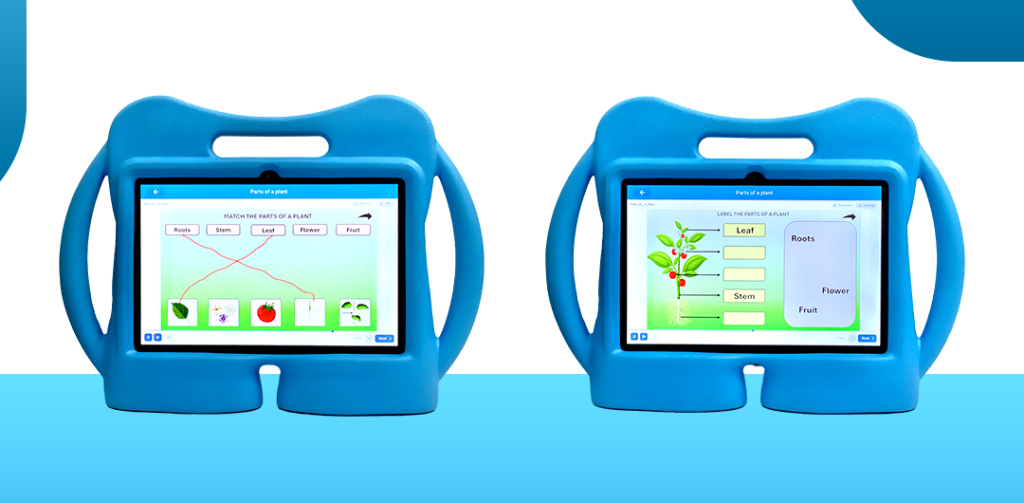
Interactive plant-learning activity on VergeTAB – designed for hands-on, distraction-free learning.

Key Concepts  

  • Life Cycles: Seed → Plant → Flower → Seed
  • Basic Needs: Sunlight, water, air, food
  • Habitats: Forests, deserts, oceans, grasslands

Why it Matters  

Studying plants and animals helps children:

  • Develop responsibility: Caring for plants or observing animals teaches nurturing.
  • Enhance observation skills: Tracking growth and behaviour promotes attention to detail.
  • Understand environmental awareness: Introduces children to ecosystems and conservation.

VergeTAB Activities  

  • Life Cycle Sequencing:
    • Arrange images of seed → sprout → plant → flower in order.
    • Strengthens understanding of growth and progression.
  • Habitat Match:
    • Drag animals to their correct habitats (e.g., camel → desert, fish → ocean).
    • Connects animal behaviour with environmental context.
  • Food Chain Puzzles:
    • Identify connections between plants, herbivores, and predators.
    • Enhances critical thinking and cause-and-effect understanding.

Impact: Children learn the relationships between living things, build vocabulary, and develop observation and analytical skills in a playful, interactive manner.

3. Water & Weather  

Key Concepts  

  • Water Cycle: Evaporation, condensation, precipitation
  • Rain, Clouds, Temperature: Understanding patterns in nature
  • Seasons: Hot, cold, rainy, dry

Why it Matters  

Understanding water and weather concepts helps children:

  • Comprehend daily life: Recognize how the weather affects routines.
  • Promote water conservation: Learn the importance of protecting natural resources.
  • Develop observation skills: Encourage noticing changes in the environment.

VergeTAB Activities  

  • Water Cycle Simulation:
    • Interactive digital cycle showing evaporation, condensation, and precipitation.
    • Students observe transformations in real-time.
  • Weather Matching:
    • Match weather icons (sun, clouds, rain) to real-life situations.
    • Reinforces comprehension and vocabulary.
  • Temperature Sorting:
    • Sort objects or days into hot vs. cold categories.
    • Develops cause-and-effect reasoning and classification skills.

Impact: These activities make abstract meteorological concepts understandable, promote environmental awareness, and improve cognitive reasoning.

4. Materials and Their Properties  

Key Concepts  

  • Physical Properties: Hard vs soft, rough vs smooth
  • Functional Properties: Waterproof vs absorbent, heavy vs light

Why it Matters  

Exploring materials helps children:

  • Make practical decisions: Recognize which materials are safe or useful.
  • Enhance tactile learning: Hands-on interaction improves sensory processing.
  • Support safety awareness: Understanding properties helps prevent accidents.

VergeTAB Activities  

  • Material Sorting Game:
    • Classify objects based on texture, hardness, or durability.
    • Encourages categorization and observation skills.
  • Waterproof Test Simulation:
    • Test objects digitally to see which float, absorb water, or resist moisture.
    • Builds understanding of cause-and-effect and experimentation.
  • Everyday Object Classification:
    • Relate materials to common household items (e.g., cotton → soft, metal → hard).
    • Encourages real-life application of concepts.

Impact: Children can safely explore materials’ properties and understand practical applications, enhancing both cognitive and sensory development.

5. Forces, Motion, Light, and Sound  

Key Concepts  

  • Forces: Push, pull, gravity
  • Motion: Direction, speed, cause-and-effect relationships
  • Light: Reflection, shadows
  • Sound: Vibrations, pitch, source identification

Why it Matters  

Understanding these concepts helps children:

  • Develop cause-and-effect reasoning: Recognize how actions produce results.
  • Enhance movement understanding: Explore physical interaction with objects.
  • Increase sensory awareness: Engage sight, sound, and touch in learning.

VergeTAB Activities  

  • Push and Pull Experiments:
    • Drag objects to see effects of force and motion.
    • Observe how mass and surface affect movement.
  • Light and Shadow Game:
    • Match objects to their shadows or reflect light with mirrors.
    • Teaches basic optics and observation skills.
  • Sound Identification:
    • Match vibrating sources (e.g., drum, string, bell) to their sounds.
    • Enhances auditory discrimination and attention skills.

Impact: These activities give children opportunities to explore physics concepts in a fun, safe, and interactive environment. They boost analytical thinking, sensory processing, and problem-solving.

In real classroom and therapy environments, science concepts are reinforced using VergeTAB in a controlled, distraction-free setup designed specifically for special education and therapy use. Schools and clinics use VergeTAB along with XceptionalLEARNING to help children repeatedly observe, interact with, and understand scientific ideas through guided visual activities.
See how VergeTAB works in real sessions

Overcoming Challenges in Teaching Science to Special Education Learners  

Teaching science to children with special needs comes with unique challenges:

  • Short Attention Spans: Use brief, engaging activities; alternate hands-on experiments with digital simulations.
  • Abstract Thinking Difficulties: Make concepts concrete and visual using real-life examples and VergeTAB.
  • Limited Fine Motor Skills: Adapt experiments for larger movements; use digital tools to reduce manual handling.
  • Varied Learning Paces: Provide individualized, self-paced activities on VergeTAB for mastery before moving forward.

Tips for Educators and Therapists  

To maximize the benefits of VergeTAB in teaching science:

  • Plan: Prepare a sequence of topics and experiments
  • Start simple: Introduce one concept at a time
  • Incorporate visuals and digital tools: Combine hands-on and VergeTAB simulations
  • Encourage exploration: Allow children to experiment freely within structured guidance
  • Track progress: Use the Platform’s analytics to track progress and skill development

Conclusion

Science is all around us—from the water we drink to the air we breathe and the plants that grow in our gardens. For children in special education, understanding these concepts can feel daunting without the right tools. VergeTAB, a Digital Therapy Activity Device integrated with the interactive platform XceptionalLEARNING, transforms abstract concepts into hands-on, engaging, and meaningful learning experiences.

By combining:

  • Multisensory approaches
  • Personalized digital activities
  • Gamified learning
  • Real-life applications

educators and therapists can make science accessible, enjoyable, and memorable for every child. Science is no longer a distant subject; it has become a part of daily exploration, wonder, and discovery. 

Empower every child in special education to experience science like never before — real, interactive, and uniquely theirs with VergeTAB.

If your school or clinic is looking for a practical way to make science concepts easier to understand using a dedicated therapy device, VergeTAB provides a safe, guided, and distraction-free digital environment built specifically for special education and therapy.
Request a VergeTAB Demo
Talk to our team on WhatsApp for institutional enquiries


Child Struggling to Read? How VergeTAB Improves Decoding, Blending, and Sight Words

Reading Time: 4 minutes

Clinically Reviewed by

Rakshitha S

Consultant Speech Swallow pathologist, Digital practitioner -SLP

Many parents and educators notice that children struggle with decoding, blending, and sight word recognition, which are foundational skills for early reading success.

Traditional worksheets or generic reading apps often lack engagement, structure, and consistent feedback, making it hard for learners — especially those with reading difficulties — to build these skills confidently.

VergeTAB, used together with the XceptionalLEARNING platform, allows therapists and schools to deliver distraction-free, goal-based language activities specifically designed to support decoding, blending, and sight word practice. This structured environment helps children interact with sounds and words repeatedly in meaningful ways that boost reading fluency and confidence.
Talk to our team on WhatsApp

SECTION 1: Strengthening Decoding Skills Using VergeTAB  

Decoding helps children turn written letters into spoken sounds. Without strong decoding, reading becomes slow and effortful. VergeTAB makes decoding clear and structured, allowing children to practise letter–sound relationships in small, manageable steps.

1.1 Letter–Sound Matching on VergeTAB

Children tap a letter, hear its sound, and match it to a picture or word part. The clean, simple interface keeps the focus on learning.

Practical Activities on VergeTAB

a) Tap-to-Hear Letter Sounds

  • Display a set of letters on the screen.
  • The child taps a letter and hears its sound immediately.
  • Repeat until the child responds automatically without hesitation.

What it builds:

  • Quick recall
  • Sound awareness
  • Confidence in identifying letters

b) Letter–Sound Sorting Game

  • Create two or three sound groups—e.g., /m/, /s/, /t/
  • Provide multiple picture icons (mouse, sock, tiger, mango, sun).
  • The child drags each picture to the correct sound group.

Skills built:

  • Beginning sound recognition
  • Categorisation
  • Early phonemic awareness

c) Identify the Odd Sound

  • Display three letters/sounds on VergeTAB.
  • The child taps the sound that does not belong.

Example:
/m/
/s/
/t/

Therapist: “Find the sound that doesn’t belong in the /m/ family.”
Correct Answer:
The child should choose /s/ or /t/ because they are not part of the /m/ sound family.

Benefits:

  • Improves sound discrimination
  • Strengthens phonemic awareness
  • Supports sound categorisation
  • Enhances listening accuracy
  • Reduces confusion between similar sounds

1.2 Decoding Activities: Step-by-Step Word Building

Once basic sounds are familiar, VergeTAB introduces decoding tasks that help children read simple words with confidence.

Practical Activities

a) Sound–to–Word Matching

  • The child listens to the audio prompt.
  • Selects the correct written word.

Example:
VergeTAB plays: /p/ – /i/ – /n/
Words shown: pin | pan | pen
Child taps “pin.”

Useful for:

  • Building sound–symbol connection
  • Improving listening skills
  • Preventing guessing while reading

b) CVC Builder = Consonant–Vowel–Consonant Word Builder

  • The child arranges the letters in the correct order.

Example:
Letters displayed: c – a – t
Child builds “cat.”

Useful for:

  • Understanding how sounds form words
  • Improving decoding accuracy
  • Strengthening left-to-right reading

c) Digital Word Ladder

  • Start with a basic CVC word.
  • Change one letter at a time.

Example:
pan → man → mat → cat

Great for:

  • Flexible thinking
  • Sequential decoding
  • Visual tracking

SECTION 2: Strengthening Blending Skills Using VergeTAB

Blending joins individual sounds to form a whole word. Many children struggle with this step, but VergeTAB makes blending visual, interactive, and child-friendly.

2.1 Blending Exercises on VergeTAB

a) Sliding Sound Bar

  • Display sounds: /s/ — /a/ — /t/
  • As the child slides across, the sounds merge.

Benefits:

  • Visual movement supports smooth blending
  • Helps children understand continuous vs. stop sounds

b) Touch-to-Blend Boxes

  • Three sound boxes appear.
  • Child taps each: /b/ → /e/ → /d/
  • Taps Blend, VergeTAB says: “bed.”

Skills built:

  • Automatic blending
  • Sound sequencing
  • Word accuracy

c) Blending Race
Using Digital Activity Book:

  • Mix 10 CVC words
  • Run a 1-minute timer
  • The child reads as many as possible

Why it works:

  • Builds fluency
  • Encourages quick blending
  • Adds a fun challenge

d) Blend the Picture

  • Show images (sun, fan, bus).
  • Display the sound sequence.
  • The child blends and matches the picture.

Outcome:

  • Strong sound-to-meaning connection

SECTION 3: Strengthening Sight Word Skills Using VergeTAB

Sight words help children read faster, smoothly, and with more confidence.

3.1 Sight Word Flashcards on VergeTAB

Digital flashcards make sight word learning structured, simple, and repeatable.

3.2 Practical Flashcard Activities

a) Tap–Read–Match

  • Show a sight word (e.g., come)
  • Show three pictures
  • The child taps the picture that matches

b) Missing Letter Sight Word Task
Display:

  • _he → she
  • t_e → the
  • _nd → and

Child drags the missing letter into each blank.

Skills improved:

  • Visual memory
  • Attention to detail
  • Word shape recognition

c) Use in Simple Sentences
Example:The dog will come.
The child reads aloud and highlights the sight word.

Purpose:

  • Supports contextual learning
  • Develops reading fluency

SECTION 4: A Smooth, Consistent Learning Flow

In real therapy and classroom environments, decoding, blending, and sight word practice are implemented using VergeTAB in a controlled, distraction-free setup designed specifically for special education and language development. Schools and clinics use VergeTAB along with XceptionalLEARNING to ensure structured skill development and measurable progress.
See how VergeTAB works in real sessions

Outcome: A structured, distraction-free reading session.

SECTION 5: Why VergeTAB Works So Well for Phonics and Reading

5.1 Distraction-Free and Purpose-Built

No social media, no ads, no random games. The child’s focus stays on reading from start to finish.

5.2 Suitable for Schools, Clinics, and Home Practice

  • Therapists: Smooth sessions with quick-loading activities.
  • Teachers: Works for both group and one-to-one learning.
  • Parents: Structured therapy at home with a safe device.

VergeTAB adapts beautifully to every learning environment.

SECTION 6: Sample Weekly Plan With VergeTAB

A simple weekly rhythm keeps reading practice consistent and enjoyable. Here is a practical plan anyone can follow:

  • Monday – Decoding: Letter–sound practice + simple word building.
  • Tuesday – Blending: Sliding sound bar + blend-and-match.
  • Wednesday – Sight Words: Flashcards + short sight-word sentences.
  • Thursday – Mixed Phonics: Read phonics words + learn 3 sight words.
  • Friday – Reading Practice: Short passage reading + highlight sight words.

This balanced routine builds reading fluency step by step.

SECTION 7: Real-Life Scenario – Small Wins That Build Big Confidence

Imagine a child who knows sounds but still guesses words like “bat.” On VergeTAB, the Sliding Sound Bar guides the child from /b/ → /a/ → /t/ until they hear the complete word. With daily practice, guessing reduces, confidence improves, and the child begins to experience real reading success.

These small victories — repeated steadily — are what change a child’s reading journey.

Conclusion: VergeTAB Helps Children Read With Clarity and Confidence

Strengthening decoding, blending, and sight word recognition doesn’t require complexity—just structure, consistency, and distraction-free tools. If your school or clinic is looking for a practical way to improve early reading skills — including decoding, blending, and sight word recognition — using a dedicated therapy device, VergeTAB provides a safe, guided, and distraction-free digital environment built specifically for special education and therapy.

Used together with XceptionalLEARNING, VergeTAB helps professionals deliver measurable, goal-oriented digital therapy and learning sessions.
Request a VergeTAB Demo
Talk to our team on WhatsApp for institutional enquiries

Child Lacks Patience and Control? Activities That Build Precision and Self-Regulation Using VergeTAB

Reading Time: 6 minutes

Clinically Reviewed by

Ann Mary Jose

Special Educator

In classrooms and therapy sessions, educators and therapists often notice children who lack patience, rush through tasks, and struggle to control their actions. These difficulties affect precision, learning quality, and the child’s ability to complete activities calmly and accurately.

Traditional worksheets or general learning apps do not provide the structured, guided practice needed to help children slow down, focus, and build self-regulation in a measurable way.

VergeTAB, used together with the XceptionalLEARNING platform, is implemented in schools and therapy clinics to deliver distraction-free, goal-based digital activities specifically designed to improve precision, patience, and self-control in children.
Talk to our team on WhatsApp

Understanding the Core Skills

Before exploring the activities, let’s understand why these three skills matter:

Patience: Helps children wait, observe, and plan their actions instead of reacting immediately.
Control: Encourages careful movement, steady hands, and awareness of body motion.
Precision: Improves accuracy, spatial awareness, and fine motor coordination.

Together, these skills form the foundation for daily routines—from eating and dressing to writing and problem-solving.

Challenges in Developing These Skills

Children with developmental delays often face challenges that make patience, control, and precision harder to cultivate:

  • Short attention span: Maintaining focus can be difficult.
  • Impulsivity: Acting without thinking or rushing tasks.
  • Motor control difficulties: Fine motor skills may be underdeveloped, making precision tasks frustrating.
  • Emotional regulation: Children may become easily irritated or anxious with complex tasks.

Traditional tools may not provide enough engagement for repeated practice, which is why technology-based interventions like VergeTAB can be transformative.

Struggling to help your child develop patience, self-control, or precision?

VergeTAB offers structured activities that strengthen focus and task accuracy.
Chat with our team on WhatsApp for guidance

I. Patience: Learning to Wait, Observe, and Plan

Children often want instant results. But patience is the key to handling frustration, completing multi-step tasks, and following structured routines. VergeTAB includes interactive activities that make waiting rewarding and observation exciting.

1. The Slow Build Challenge

Objective: Teach children how to wait, observe, and act only when it’s time.

How It Works:

  • The screen displays a blank structure, such as a garden or tower.
  • Pieces appear one by one after a few seconds.
  • The child must patiently wait for each new piece before placing it.
  • If they rush, the structure resets or the bonus points decrease.

Therapeutic Focus:
Encourages delayed gratification, attention span, and planning skills.

Why It Works on VergeTAB:
Visual cues, slow-paced animations, and soft sound feedback make the waiting process calm, enjoyable, and engaging — ideal for children who need structured sensory experiences.

Age/Skill-Level Suggestions:
4+
Stepwise Simplification: Reduce the number of pieces and increase wait times for younger children or those with severe delays.

2. Drip Collection Challenge

Objective: Build focus and timing control through anticipation.

How It Works:

  • Droplets fall at irregular intervals into a virtual container.
  • Children must tap only when the droplet reaches a certain height.
  • Early or late taps result in missed points, encouraging accurate timing.

Therapeutic Focus:
Develops patience, rhythm, and hand-eye coordination.

Why It Works on VergeTAB:
The platform adapts droplet speed according to performance, helping children practice timing while receiving immediate feedback, which reduces frustration.

Age/Skill-Level Suggestions:
4–6
Stepwise Simplification: Slower droplet speed and fewer drops for beginners.

3. Story Sequencer Pause

Objective: Teach patience through gradual story completion.

How It Works:

  • A short story appears panel by panel.
  • Each panel opens after a set wait time.
  • The child must arrange each new scene correctly before moving on.

Therapeutic Focus:
Enhances sequencing, attention to order, and comprehension.

Why It Works on VergeTAB:
The slow unfolding of stories allows therapists to observe the child’s reaction to delay, helping reinforce calm responses and anticipation control.

Age/Skill-Level Suggestions:
5+
Stepwise Simplification: Use shorter stories or fewer panels for younger children or severe delays.

II. Control: Building Steadiness and Awareness

Control is not just physical — it’s emotional and mental, too. VergeTAB helps children learn how to manage movement, apply steady pressure, and maintain focus even under gentle challenges.

1. Fine-Motion Labyrinth

Objective: Train steady hand movements and navigation control.

How It Works:

  • The child guides a ball through a digital maze using gentle finger movement.
  • Touching walls restarts the maze, teaching controlled correction.
  • Paths gradually get narrower or include soft-moving barriers.

Therapeutic Focus:
Improves fine motor control, visual tracking, hand stability, and concentration.

Why It Works on VergeTAB:
Children can use their fingers or a stylus for realistic touch feedback, allowing therapists to measure accuracy and improvement over time.

Age/Skill-Level Suggestions:
5+
Stepwise Simplification: Start with wider paths and fewer barriers for beginners.

2. Balance Beam Challenge

Objective: Strengthen coordination and awareness of steady motion.

How It Works:

  • A digital character walks across a narrow bridge while holding items.
  • The child drags the character slowly along the path using touch.
  • Moving too fast or off-path resets the level, teaching controlled movement.

Therapeutic Focus:
Enhances motor planning, hand control, and persistence.

Age/Skill-Level Suggestions:
5+
Stepwise Simplification: Widen the path and reduce items for younger children or severe delays.

Why It Works on VergeTAB:
The screen’s motion sensitivity allows realistic practice of balancing skills in a safe digital environment, perfect for children who need controlled motion tasks.

3. Virtual Clay Sculpting

Objective: Develop precise hand movements and shape recognition.

How It Works:

  • Children drag and position digital shapes to match outlines or templates.
  • Shapes snap into place when correctly aligned, providing immediate visual feedback.

Therapeutic Focus:
Builds hand-eye coordination, spatial awareness, and goal-directed movement.

Why It Works on VergeTAB:
Digital pressure feedback mimics tactile responses, making it effective for children who need to understand hand pressure differences.

Age/Skill-Level Suggestions:
4+
Stepwise Simplification: Use larger shapes and fewer items for beginners or severe delays.

III. Precision: Learning Accuracy and Spatial Awareness

Precision skills help children align, measure, and complete tasks that require focus. VergeTAB uses visual coordination exercises to make accuracy a fun and confidence-building experience.

1. Target Drop Challenge

Objective: Enhance hand-eye coordination and timing.

How It Works:

  • Children drop objects into targets from various heights.
  • Targets move slightly to challenge coordination.
  • Points are awarded for perfect alignment.

Therapeutic Focus:
Reinforces controlled release, visual-motor timing, and spatial judgment.

Why It Works on VergeTAB:
Instant feedback shows whether the object landed correctly, helping children learn through success and gentle correction.

Age/Skill-Level Suggestions:
5+
Stepwise Simplification: Use larger targets and slower objects for beginners.

2. Digital Balance Scale Challenge

Objective: Strengthen logical reasoning and careful movement.

How It Works:

  • Children drag weights onto each side of a digital scale.
  • The goal is to balance it perfectly.
  • The game introduces real-world comparisons, like apples and blocks.

Therapeutic Focus:
Builds analytical thinking, attention to measurement, and fine motor control.

Why It Works on VergeTAB:
The adaptive scale mimics real physics—ideal for combining maths, motor coordination, and critical thinking in a sensory-friendly way.

Age/Skill-Level Suggestions:
6+
Stepwise Simplification: Start with fewer items or smaller numbers for younger children.

3. Rotating Maze Key

Objective: Teach alignment, timing, and problem-solving through motion.

How It Works:

  • A key must pass through a rotating maze without touching the sides.
  • Each turn requires careful timing and movement alignment.
  • Higher levels introduce new paths and speeds.

Therapeutic Focus:
Develops fine precision, reaction control, and spatial orientation.

Why It Works on VergeTAB:
The activity simulates real-life alignment challenges (like unlocking doors) in a digital format, making it relatable and transferable to daily skills.

Age/Skill-Level Suggestions:
6+
Stepwise Simplification: Use slower rotations or simpler paths for younger children or severe delays.

In real therapy and classroom environments, these skills are practiced using VergeTAB in a controlled, distraction-free setup designed specifically for special education and therapy use. Schools and clinics use VergeTAB along with XceptionalLEARNING to ensure structured skill development and measurable progress.
See how VergeTAB works in real sessions

Real-World Applications

VergeTAB activities build essential life skills that extend beyond digital learning:

Patience: Helps children wait calmly, follow daily routines step by step, and take turns in games or class.
Control: Improves careful movement, tool use, and safe handling—like carrying a tray, writing neatly, or pouring drinks.
Precision: Enhances accuracy and focus for real tasks such as stacking toys, organizing items, or threading beads.

Example:
A child who practices patience, control, and precision on VergeTAB may later wait calmly while cooking, carry a lunch tray without spilling, or pour water into a cup with steady hands.

Expected Outcomes

With regular use of VergeTAB and the XceptionalLEARNING platform, children can experience:

  • Behavioural Growth: Better patience, reduced impulsivity, and improved emotional control.
  • Cognitive Development: Sharper focus, sequencing, and planning skills.
  • Motor Improvement: Stronger hand-eye coordination and fine motor control.
  • Functional Independence: Greater confidence in self-care, classroom, and daily activities.

Conclusion

Developing patience, control, and precision can be life-changing for children with developmental delays. If your school or clinic is looking for a practical way to build these skills using a dedicated therapy device, VergeTAB provides a safe, guided, and distraction-free digital environment built specifically for special education and therapy.
Request a VergeTAB Demo
Talk to our team on WhatsApp for institutional enquiries

Struggling with Pencil Grip? How VergeTAB Improves Fine Motor Skills in Children

Reading Time: 6 minutes

Clinically Reviewed by

Minnu Mini Mathew

Occupational Therapist

Many therapists and educators notice that children — especially those with special needs — struggle with fine motor skills like pencil grip, hand-eye coordination, and dexterity, which are essential for school success and daily living activities.

Traditional activities like worksheets, playdough, or manual manipulatives can help, but they often lack structure, engagement, and measurable progress tracking in real classroom or therapy settings.

VergeTAB, used together with the XceptionalLEARNING platform, allows therapists and schools to deliver distraction-free, goal-based digital activities specifically designed to strengthen fine motor dexterity and coordination. This structured digital environment helps children build confidence and motor control through progressive tasks with clear feedback.
Talk to our team on WhatsApp

Understanding Fine Motor Skills

Fine motor skills are the small, controlled movements made with the hands, fingers, and wrists. They include:

  • Grasping: Holding objects like a bead, crayon, or spoon
  • Manipulation: Twisting, turning, pinching, and moving small items
  • In-hand coordination: Moving an object within one hand (e.g., transferring a coin from palm to fingertips)
  • Bilateral coordination: Using both hands together (one stabilizes while the other works)
  • Eye–hand coordination: Coordinating what the eyes see with how the hands move (e.g., tracing or reaching for a target)

These skills develop through play and practice from infancy through early school years and continue to be refined after that.

Why do Fine Motor Skills Matter?

Strong fine motor skills are essential for everyday independence and school success. Children with weak fine motor skills may struggle with dressing (buttons, zippers, shoelaces), eating with utensils, handwriting, drawing, using scissors, managing classroom tools (glue sticks, rulers), or navigating touchscreens (taps, swipes, drag-and-drop). Beyond practical tasks, developing fine motor skills also boosts confidence, self-care, and participation in classroom and play activities.

If your child struggles with hand coordination or daily motor tasks, VergeTAB offers structured activities that improve fine motor skills and confidence.
Chat with our team on WhatsApp for guidance

How VergeTAB + XceptionalLEARNING Helps

VergeTAB is a blank, controlled tablet that runs only on the XceptionalLEARNING platform, creating a safe, focused space for practice. Its benefits include:

  • Therapist-guided content: Activities target specific skills and keep practice focused.
  • Adjustable difficulty: Tasks can be tailored to each child’s level.
  • Progress tracking: Accuracy, speed, and repetitions are logged for monitoring improvement.
  • Interactive practice: Touchscreen gestures like tapping, dragging, and tracing a map to real-world skills.
  • Engaging and safe: Game-like activities motivate children without ads or unrelated apps.

Tablet Practice

Many parents wonder how practicing on a tablet can help with real tasks like buttoning or handwriting. If activities are carefully chosen and paired with real-world practice, it transfers into visible results: 

  • Touchscreen activities train the same hand-eye coordination and precision needed for everyday tasks.
  • Tracing shapes digitally improves visual-motor control used in handwriting.
  • Drag-and-drop and tapping refine finger isolation and timing.
  • Repetitive, graded practice strengthens neural pathways and muscle control.

Important: Tablet practice should complement, not replace, real-world practice like grasping objects, using scissors, or threading beads. Combining digital and hands-on tasks gives the best results.

Practical VergeTAB activities for building fine motor skills  

Below are concrete, easy-to-follow activities you can use on VergeTAB (via the XceptionalLEARNING platform) and how to pair them with physical tasks.

1. Tracing shapes and lines  

What it trains: Pencil control, eye–hand coordination, wrist stability.

Tablet task: Trace increasingly complex lines and shapes (straight lines → curves → letters). The platform can show a ghost line and provide graded assistance.

Real-world pairing: Paper tracing with a crayon or marker; air-drawing letters while saying the letter name.

2. Dot-to-dot and connect-the-dots  

What it trains: Precision tapping, sequence planning.

Tablet task: Tap numbered dots to reveal a picture. Timing and accuracy are measured.

Real-world pairing: Paper dot-to-dots, bead-stringing in number order, or sticker sequencing.

3. Drag-and-drop sorting  

What it trains: Pincer grasp, controlled release, bilateral coordination.

Tablet task: Drag items into categories (colours, shapes, sizes). Difficulty can increase with smaller targets and time limits.

Real-world pairing: Sorting coins, buttons, or coloured blocks into containers.

4. Pinch and zoom refinement  

What it trains: Thumb–index pinch strength and control (useful for scooping and pinching objects).

Tablet task: Pinch to zoom puzzles or to pick up tiny virtual objects.

Real-world pairing: Picking up small items like beads, using tweezers, or practicing clothespin transfers.

5. Virtual finger mazes  

What it trains: Steady fingertip pressure, wrist control, and visual tracking.

Tablet task: Move a virtual object slowly through a maze without touching the edges. The platform can detect and log touches.

Real-world pairing: Trace a finger through a raised-line maze on cardboard or follow a path with a stylus on paper.

6. Fast-finger games (timed tapping)  

What it trains: Reaction time, controlled tapping, sequencing.

Tablet task: Tap targets that appear quickly in different places. Adjust speed and size.

Real-world pairing: Clap patterns, tapping rhythms on a table, or flashcard quick picks.

7. In-hand manipulation drills (virtual)  

What it trains: Moving objects within one hand (palm → fingertips).

Tablet task: Rotate and position an object using taps and gestures that require switching fingers.

Real-world pairing: Manipulate coins, move small erasers from palm to fingertips, or practice flipping a pencil end-to-end.

8. Bilateral coordination activities  

What it trains: Using both hands together (stabilize + manipulate).

Tablet task: One side of the screen requires holding a virtual object steady while the other side performs tasks.

Real-world pairing: Holding paper with one hand while cutting with scissors; stabilizing a jar while unscrewing a lid.

9. Handwriting warm-ups  

What it trains: Pre-writing strokes & letter formation.

Tablet task: Animated warm-ups (circles, lines, waves) that encourage fluid motions.

Real-world pairing: Warm-up with playdough rolling, finger painting strokes, or chalk drawing.

10. Simulated daily tasks  

What it trains: Transferable skills for ADLs (activities of daily living).

Tablet task: Simulated dressing board or button task where the child must sequence steps to dress a character.

Real-world pairing: Practice buttoning a shirt or zipping jackets on a doll or self.

In real therapy and classroom environments, fine motor dexterity and coordination skills are practiced using VergeTAB in a controlled, distraction-free setup designed specifically for special education and therapy use. Schools and clinics use VergeTAB along with XceptionalLEARNING to ensure structured skill development and measurable progress.
See how VergeTAB works in real sessions

Structuring a Practice Session  

  • Total session: 15–20 minutes
  • Frequency: Daily or 4–5 sessions per week for steady progress
Short, focused, fun sessions work best. Here’s an easy structure:
  • Set a clear goal (30 seconds)
    • Example: “Trace circles for 2 minutes.”
  • Warm-up (2–3 minutes)
    • Example: tracing large shapes or finger mazes.
  • Targeted practice (6–10 minutes)
    • Focus on 1–2 activities just above the child’s level.
  • Real-world transfer (5–7 minutes)
    • Pair tablet practice with a physical task.
  • Cool-down and praise (1–2 minutes)
    • Celebrate effort and set a simple goal for next time.

Integrating VergeTAB into IEP goals

VergeTAB pairs smoothly with therapy plans and school goals:

  • The therapist assigns activities that match IEP goals (e.g., improve pencil grasp, increase handwriting legibility).
  • Data-driven decisions: Use the platform’s progress data to adjust difficulty or change strategies.
  • Home-school connection: Therapists can share activity lists or suggested real-world practice with parents and teachers so everyone uses the same approach.
  • Goal examples:
    • Increase accuracy when tracing lines from 50% → 80% in 8 weeks.
    • Improve two-handed cutting accuracy by practicing bilateral coordination tasks twice weekly.

Using VergeTAB for measurable practice helps make therapy time efficient and consistent.

Safety, ergonomics, and screen-time guidelines  

Ergonomics  

  • Table height: Child should sit with feet flat (or supported) and elbows roughly at table height.
  • Tablet angle: Slight tilt (20–30°) reduces neck strain. 
  • Grip: Encourage a relaxed fingertip touch, not a death grip.
  • Breaks: Use the 5–10 minute break rule for every 20–30 minutes of focused screen use.

Screen-time guidance  

  • Keep practice sessions short (10–20 minutes). Multiple short sessions are better than one long one.
  • Prioritize active, purpose-driven screen use (therapeutic activities) over passive watching.
  • Balance tablet time with hands-on play: playdough, blocks, arts, puzzles, and outdoor play.

Device Care

  • Clean the touchscreen regularly with child-safe wipes.
  • Use a durable case to avoid breakage during play.

Measuring Progress

VergeTAB + XceptionalLEARNING make progress easy to track, but parents can also monitor at home:

Observable improvements:

  • Better control in handwriting/drawing
  • Faster buttoning/zipping
  • Increased independence in self-care
  • Improved scissors and utensil use

Parent-friendly tracking:

  • Keep a weekly log (activity, difficulty, repetitions, notes)
  • Take monthly handwriting photos for comparison
  • Review platform reports for accuracy, speed, and levels achieved

Reassess if: No improvement after 8–10 weeks of consistent practice — adjust activities, difficulty, or increase hands-on practice.

Build Practice into Daily Routines 

  • Morning: Finger stretches while brushing teeth + 5-min VergeTAB warm-up
  • Snack time: Open containers and transfer small snacks to improve grip
  • Art time: After tablet session, 10 min of drawing or bead stringing
  • Bedtime: Gentle hand play (playdough, finger tracing) as a calming practice

Small, repeated opportunities help children develop skills naturally throughout the day.

Conclusion — small steps, steady gains  

Building fine motor dexterity and coordination takes small, consistent practice over time. VergeTAB, paired with the XceptionalLEARNING platform, provides a focused, safe, and measurable environment for children to develop essential skills. When tablet-based practice is combined with real-world activities and positive encouragement, children gain independence, confidence, and school readiness. Start small: set a tiny goal (e.g., trace circles for two minutes), follow it with a real-world task (like crayon tracing), and celebrate every effort. Over weeks, these small wins become everyday skills — tying shoes, writing, and self-feeding.

If your school or clinic is looking for a practical way to improve fine motor skills like pencil grip, hand coordination, and dexterity using a dedicated therapy device, VergeTAB provides a safe, guided, and distraction-free digital environment built specifically for special education and therapy.

Used together with XceptionalLEARNING, VergeTAB helps professionals deliver measurable, goal-oriented digital therapy and learning sessions.
Request a VergeTAB Demo
Talk to our team on WhatsApp for institutional enquiries

Struggling With Geometry Concepts? How VergeTAB Makes 2D and 3D Geometry Easy for Children

Reading Time: 6 minutes

Clinically Reviewed by

Aswathy Ponnachan

Medical and Psychiatric Social Worker

In classrooms and therapy settings, educators often find that children struggle to grasp 2D and 3D geometry concepts — like distinguishing shapes, understanding spatial relationships, and visualizing objects from different angles. These geometric skills are essential for math success, but traditional worksheets and manipulatives don’t always help every learner consistently.

Generic tablet apps and print drills can lack focus or engagement, especially for children with learning differences or special needs.

VergeTAB, used together with the XceptionalLEARNING platform, allows therapists and schools to deliver distraction-free, structured digital activities designed specifically to build understanding of 2D and 3D geometry concepts. This goal-oriented environment helps children interact with shapes, patterns, and spatial reasoning problems in a way that builds confidence and measurable progress.
Talk to our team on WhatsApp

Understanding the Basics 

What Are 2D and 3D Geometry Concepts?

  • 2D Geometry involves flat shapes such as triangles, squares, and circles. These shapes have length and width but no depth.
  • 3D Geometry includes solid figures like cubes, cones, and spheres, which add the element of depth, offering a realistic view of how objects exist in space.

How Do These Concepts Help in Therapy?

  • Visual-Spatial Awareness: Builds a child’s ability to understand how objects relate in space and mentally rotate or reposition them.
  • Motor Coordination: Drawing or tracing shapes boosts fine motor skills, especially in occupational therapy.
  • Cognitive Growth: Enhances planning, logic, sequencing, and memory—key in cognitive therapy goals.
  • Language & Communication: Discussing shapes and positions (e.g., “above,” “next to”) promotes expressive language development in speech therapy.
  • Emotional Regulation: Step-by-step shape-based tasks improve focus and promote calm, goal-directed behavior, especially effective in sessions with children with autism or ADHD.
Struggling to help your child understand shapes, space, or 3D thinking?

VergeTAB offers structured, visual math activities that make geometry easier and more engaging.
Chat with our team on WhatsApp for guidance

Teaching 2D and 3D Geometry Concepts with VergeTAB

VergeTAB, a secure, distraction-free tablet powered by the XceptionalLEARNING platform, makes 2D and 3D geometry learning interesting through structured, interactive tasks. The hands-on activities available in the vast content library boost spatial awareness, motor planning, and visual reasoning, making therapy sessions both fun and skill-building. In addition, they equip the students to understand the world around them and interact with intent.

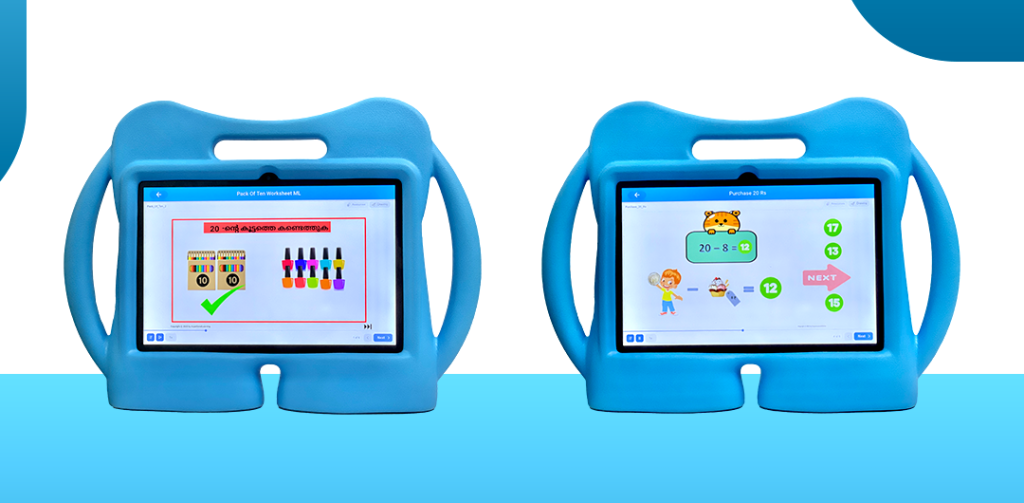
VergeTAB makes numbers and problem-solving fun and engaging for learners

But the more important factor is that, as a distraction-free Digital Therapy Tablet, VergeTAB allows children to learn these tasks without the risk of excess screen exposure. Therapists can customize content, track progress, and engage children in developmentally appropriate tasks through the XceptionalLEARNING platform. This ensures that the assigned activities are aligned with therapy goals and IEPs, making sessions efficient, measurable, and enjoyable. 

In real therapy and classroom environments, geometry skills like shape recognition and spatial reasoning are practiced using VergeTAB in a controlled, distraction-free setup designed specifically for special education and math learning. Schools and clinics use VergeTAB along with XceptionalLEARNING to ensure structured skill development and measurable progress in geometry understanding.
See how VergeTAB works in real sessions

10 Super-fun Interactive Activities on VergeTAB to learn Geometry Easily

1. Shape Builder Puzzle (2D Focus)  

Goal: Complete half-built 2D shapes using matching digital puzzle pieces.

Steps:

  • Step 1: Show an incomplete triangle, square, or pentagon on screen.
  • Step 2: Provide draggable shape pieces alongside.
  • Step 3: Guide the child to rotate and place the correct segments.
  • Step 4: Offer visual/audio feedback for each match.
  • Step 5: Add time limits as the challenge increases.

Skills Developed: 

  • Shape identification
  • Mental rotation
  • Sequencing
  • Visual discrimination

Used In: 

  • Occupational Therapy (OT) – for visual-motor integration
  • Cognitive Therapy – for sequencing and planning

2. Shape Transformation Tracker  

Goal: Understand how shapes change when rotated, flipped, or resized.

Steps:

  • Step 1: Present a 2D shape (e.g., rectangle).
  • Step 2: Show its rotated or flipped version.
  • Step 3: Ask the child to match the original and transformed shapes.
  • Step 4: Provide guided animation for difficult transitions.

Skills Developed: 

  • Transformation logic
  • Spatial visualization
  • Directional awareness

Used In:

  • Cognitive Therapy – for mental flexibility
  • Special Education – for conceptual understanding

3. Geometry Sorting Grid

Goal: Sort a variety of 2D and 3D shapes based on attributes like edges, faces, and corners.

Steps:

  • Step 1: Provide a variety of mixed shapes (e.g., circle, square, cube, cone, etc.).
  • Step 2: Display sorting categories (2D/3D, number of sides, corners).
  • Step 3: Drag shapes into the correct bins.
  • Step 4: Offer prompts or visual hints for corrections.

Skills Developed: 

  • Categorization
  • Visual memory
  • Logical grouping

Used In:

  • Cognitive Therapy – for classification
  • Maths Readiness Programs – for early geometry

4. Tangram Challenge

Goal: Reconstruct a complete shape using multiple small 2D pieces (Tangram style).

Steps:

  • Step 1: Present a silhouette (e.g., house, cat).
  • Step 2: Provide small shapes (triangles, squares, parallelograms).
  • Step 3: Child rotates and fits pieces into silhouette.
  • Step 4: Feedback confirms correct placement.

Skills Developed: 

  • Problem solving
  • Visual closure
  • Fine motor control

Used In:

  • Occupational Therapy (OT) – for manual dexterity
  • Cognitive Therapy – for puzzle-based logic

5. 3D Shape Explorer  

Goal: Identify and interact with 3D shapes (cube, sphere, cone, pyramid) digitally.

Steps:

  • Step 1: Show rotatable 3D shapes on VergeTAB.
  • Step 2: Tap to reveal labels: faces, edges, vertices.
  • Step 3: Match real-world objects to 3D shapes.
  • Step 4: Quiz after exploration.

Skills Developed: 

  • 3D recognition
  • Real-world mapping
  • Spatial understanding

Used In:

6. Build a City (3D Construction)  

Goal: Use 3D blocks to design basic structures like houses, towers, or bridges.

Steps:

  • Step 1: Select blocks (cube, cylinder, rectangular prism).
  • Step 2: Stack or arrange them following the visual blueprint.
  • Step 3: Add/delete to reach the target shape.
  • Step 4: Earn stars for balance and creativity.

Skills Developed: 

  • Spatial construction
  • Hand-eye coordination
  • Logical planning

Used In:

  • Physical Therapy – for upper limb movement
  • STEM Learning – for engineering basics

7. Symmetry Mirror Task  

Goal: Complete the symmetrical half of a shape using digital drawing or pieces.

Steps:

  • Step 1: Display half of a shape on the left side.
  • Step 2: Show grid or mirror axis.
  • Step 3: Ask the child to recreate the missing side using cues.
  • Step 4: Feedback animation reveals symmetry.

Skills Developed: 

  • Symmetry recognition
  • Fine motor control
  • Visual alignment

Used In:

  • Occupational Therapy (OT) – for bilateral coordination
  • Remedial Education – for maths concept building

8. Geometry Memory Match

Goal: Match cards with geometric shapes (2D and 3D) from memory.

Steps:

  • Step 1: Display face-down cards.
  • Step 2: Tap two cards to flip.
  • Step 3: Match identical shapes (e.g., two cones or two hexagons).
  • Step 4: Cards disappear when matched.

Skills Developed: 

  • Working memory
  • Attention
  • Shape identification

Used In:

  • Cognitive Therapy – for memory training
  • ADHD Intervention Programs

9. Size Comparison Lab  

Goal: Compare similar shapes by size (e.g., big vs. small triangles, longer rectangles).

Steps:

  • Step 1: Show two same-shape objects of different sizes.
  • Step 2: Ask the child to identify bigger/smaller.
  • Step 3: Introduce gradation (small, medium, large).
  • Step 4: Apply to real-world visuals like boxes or balls.

Skills Developed: 

  • Measurement awareness
  • Visual comparison
  • Descriptive language

Used In:

  • Speech Therapy – for language development
  • Maths Skill Building

10. Shape Story Sequencer

Goal: Arrange events or characters using shapes to form a story (circle is the sun, triangle is a tree, etc.).

Steps:

  • Step 1: Show a storyline using geometric icons.
  • Step 2: Ask the child to sequence the story shapes in order.
  • Step 3: Narrate the scene based on their arrangement.
  • Step 4: Encourage alternative endings using new shapes.

Skills Developed: 

  • Creative thinking
  • Sequencing
  • Symbolic representation

Used In:

  • Speech Therapy – for narrative building
  • Special Education – for visual storytelling
Conclusion

Teaching 2D and 3D geometry through VergeTAB helps children go beyond abstract learning. It empowers them to develop critical visual-motor and cognitive skills in a structured, therapeutic setting. Each activity is a stepping stone to real-world learning—made possible by the smart integration of therapy and technology. If your school or clinic is looking for a practical way to help children understand 2D and 3D geometry using a dedicated therapy device, VergeTAB provides a safe, guided, and distraction-free digital environment built specifically for special education and math skill development.

Used together with XceptionalLEARNING, VergeTAB helps professionals deliver structured activities that build inhibition, flexibility, and metacognitive abilities in children.
Request a VergeTAB Demo
Talk to our team on WhatsApp for institutional enquiries
How VergeTAB Supports Psychological Counseling in Inclusive Classrooms

Reading Time: 5 minutes

Clinically Reviewed by

Princy Sunny

Psychologist

Inclusive education means helping all students succeed emotionally, socially, and academically. However, delivering consistent psychological support in schools can be challenging. That’s where VergeTAB, a therapy-focused, distraction-free tablet powered by the XceptionalLEARNING Platform, makes a difference. It provides skill-building psychological tools designed for inclusive settings. This blog highlights how VergeTAB supports psychological counseling through practical applications, measurable outcomes, and therapist-guided digital activities.

What Makes VergeTAB Unique?  

VergeTAB is a purpose-built therapy device that works only with the XceptionalLEARNING Platform. It does not allow external apps, games, or web distractions. Instead, it’s a secure environment that hosts therapeutic, educational, and behavioral development tools.

Key Features Include:  

  • Custom therapy programs tailored to each student
  • Real-time tracking of emotional and behavioral data
  • Interactive digital activities supporting counseling goals
  • Therapist-monitored progress dashboards
  • Offline functionality for schools with limited internet

These features make VergeTAB an ideal companion for counselors, psychologists, and special educators working in inclusive classrooms.

How VergeTAB Enhances Psychological Counseling  

1. Facilitating Emotion Recognition and Expression  

Many students in inclusive classrooms struggle to recognize and articulate their emotions. VergeTAB offers tools that help children explore their inner world in a non-threatening, interactive way:

  • Emotion Thermometer: Students visually rate how they feel using colourful scales.
  • Mood Journals: Daily or weekly entries help build emotional vocabulary.
  • Audio Journaling: For non-verbal or speech-delayed children to record their thoughts.
  • Feelings Flashcards: Digital cards showing facial expressions and scenarios for emotion identification.

Skill Developed: Self-awareness and emotional literacy

2. Promoting Self-Regulation and Calming Strategies  

Emotional regulation is crucial for learning. VergeTAB provides digital regulation tools that students can access independently or with therapist guidance:

  • Guided Breathing Videos: Animated visual guides for paced breathing.
  • Progressive Muscle Relaxation (PMR): Step-by-step calming routines.
  • Interactive “Calm Down” Toolkit: A personalized set of calming techniques.
  • Visual Break Timer: Helps children transition out of overwhelming situations.

Skill Developed: Self-control, stress management, and focus

3. Teaching Social and Interpersonal Skills  

Social challenges are common in inclusive classrooms. VergeTAB provides interactive learning modules to build social cognition:

  • Social Stories: Visual narratives teach behaviors like turn-taking, asking for help, or resolving conflicts.
  • Scenario-Based Choices: Children make decisions in digital stories and explore consequences.
  • Companion Interaction Modules: Guided digital dialogues to practice greeting, sharing, or complimenting.

Skill Developed: Social interaction, empathy, and problem-solving

4. Empowering Children with Confidence and Identity  

VergeTAB includes activities that help students build self-esteem, self-image, and identity:

  • Strengths Explorer: Children discover and record their talents and interests.
  • Self-Portrait Builder: Visual drawing tool to express how they see themselves.
  • Digital Affirmation Board: Daily positive statements read by avatars or self-recorded.
  • “My Story” Module: Build a personal story highlighting triumphs and goals.

Skill Developed: Self-confidence, positive self-talk, motivation

5. Enabling Behavior Monitoring and Functional Assessment  

VergeTAB simplifies behavior tracking for therapists and special educators:

  • ABC Tracker (Antecedent–Behavior–Consequence): Input real-time data with visual graphs.
  • Behavior Frequency Charts: Track how often behaviors occur and their intensity.
  • Trigger Logs: Record environmental or emotional prompts that precede behavior.
  • Reward & Feedback Systems: Reinforce positive behaviors with virtual tokens or praise.

Skill Developed: Insight into behavior patterns, reinforcement learning

Therapy Activities Powered by the XceptionalLEARNING Platform

Available only via XceptionalLEARNING on VergeTAB, the Digital Activity Book. Each activity is designed to promote emotional development, self-awareness, and mental well-being in inclusive learning environments.

Emotional Regulation Tools  

  • Emotion Thermometer: Helps students identify and rate their current emotional state, promoting self-awareness.
  • Anger Volcano Tracker: A fun and visual method to understand anger triggers and escalation patterns.
  • Mood Meter: Daily visual check-in to help students reflect and share feelings with their therapist or teacher.

Cognitive Behavioral Therapy (CBT) Exercises  

  • Thought Record Sheets: Children write or record their thoughts, identify distortions, and find alternative perspectives.
  • Worry Box: A digital worry submission form where children safely express fears or anxieties.
  • My Coping Toolbox: Visual menu of personalized coping strategies to help children deal with stress.

Confidence & Self-Esteem Builders  

  • “My Strengths” Game: Activities to identify and affirm personal strengths and talents.
  • Affirmation Station: Audio and visual affirmations designed to rebuild self-worth and a growth mindset.
  • Self-Portrait Builder: Digital canvas for kids to draw how they see themselves, followed by guided reflection.

Social-Emotional Learning Modules  

  • Role-Playing Social Stories: Interactive scripts with avatars and narration covering topics like taking turns, resolving conflicts, or apologizing.
  • Problem-Solving Scenarios: Choose-your-path activities that simulate real classroom issues and teach decision-making and empathy.
  • Personal Space Bubbles: Animated videos and activities helping students understand physical and emotional boundaries.

Mindfulness and Calming Practices  

  • 5-4-3-2-1 Grounding Tool – Uses the five senses to bring students back to the present during moments of distress.
  • Balloon Breathing – Children breathe along with an animated balloon, learning paced breathing for calmness.
  • Nature Soundscapes – Plays calming sounds like ocean waves or rain, helping students self-soothe.
  • Body Scan Meditation – A guided digital session to relax body parts one by one, promoting mindfulness and body awareness.
  • My Safe Place Visualization – Children create a visual safe space where they can retreat mentally during stress or sensory overload.

Practical Applications in Inclusive Classrooms

Case Study: Boosting Self-Esteem in ADHD

  • Student: 9-year-old with ADHD
    • Challenge: Negative self-talk and difficulty forming peer relationships
  • VergeTAB Tools Used: Affirmation Station, My Strengths Game, Social Story Builder
  • Application & Result:
    • Daily use of Affirmation Station reinforced positive self-talk and growth mindset.
    • My Strengths Game helped the student discover personal talents.
    • Social Story Builder provided digital role-playing to practice respectful communication and making friends.
    • Outcome: The student began expressing pride in personal achievements, reduced negative self-talk, and initiated positive peer interactions—leading to stronger classroom friendships and improved self-esteem.

Case Study: Reducing Anxiety in Group Work

  • Student: 8-year-old with social anxiety
    • Challenge: Shuts down during group activities and avoids classmate interaction
  • VergeTAB Tools Used: Digital Calm Corner with Breathing Animation, Daily Mood Log
  • Application & Result:
    • Digital Calm Corner: Student accessed it before group sessions, using guided breathing animations to reduce anxiety.
    • Daily Mood Log: Helped track emotions and communicate feelings to the therapist.
    • Outcome: Over time, the student recognized signs of anxiety, independently used calming tools, and gradually participated in group activities—leading to improved social engagement and emotional confidence.

Why VergeTAB is Ideal for School-Based Psychological Counseling

  • Built for Therapy
    • No external apps or distractions
    • Locked environment works only with XceptionalLEARNING tools
  • Child-Friendly Interface
    • Intuitive, visual-based navigation
    • Includes avatars and audio prompts for younger or non-verbal children
  • Therapist Dashboard
    • Monitor individual student data in real-time
    • Customize sessions and therapeutic activities
    • Export progress reports for parents or school teams
  • Safe and Secure
    • Complies with HIPAA and FERPA privacy standards
    • Functions offline in low-connectivity school environments
  • Customizable and Scalable
    • Supports Individualized Special Education Programs (IEPs)
    • Effective for one-on-one or group therapy sessions

Integrating VergeTAB into School Counseling Programs  

Step-by-Step Integration:  

  • Assessment: Identify students needing psychological support
  • Device Setup: Assign VergeTABs configured with XceptionalLEARNING profiles
  • Routine Building: Embed therapy activities into the daily classroom schedule
  • Progress Tracking: Use dashboards to measure outcomes
  • Collaboration: Involve teachers, therapists, and parents in holistic care

Since introducing VergeTAB in therapy sessions, I’ve seen a noticeable boost in participation. Children are more focused, motivated, and eager to engage. The interactive social stories make it much easier for them to relate to real-life scenarios and respond meaningfully.” — Akshara Sruthi. S, Psychologist

Key Takeaway:
Schools using VergeTAB report higher student engagement, reduced behavioral incidents, and better emotional expression across inclusive classrooms.

Conclusion: VergeTAB – The Future of Child-Centered Counseling

Psychological support in inclusive classrooms must extend beyond observation—it must be interactive, proactive, and tailored to individual needs. VergeTAB, powered by XceptionalLEARNING, delivers just that—transforming a blank device into a powerful psychological support system for learners of all needs. Through real-time feedback, engaging emotional activities, and guided behavior tracking, VergeTAB transforms a blank tablet into a digital companion for emotional growth and development. It’s more than a device—it’s a therapeutic bridge between the child and their counselor.

Interested in Implementing VergeTAB? Explore how VergeTAB and the XceptionalLEARNING Platform can support your inclusive classroom. VergeTAB is a Digital Therapy Activity Device that supports emotional and behavioral growth in children. It’s also an Interactive Learning Device for Children, making therapy fun and classroom-friendly. Access our Digital Activity Book, connect with our team of experts, and book a free demo to see how personalized therapy becomes simple, scalable, and successful. Contact us today to transform your classroom with smart psychological counseling tools.

Ready, Set, Focus: How VergeTAB Helps Children with ADHD Stay on Task

Reading Time: 4 minutes

Clinically Reviewed by

Akshara Sruthi. S

Clinical Psychologist

In today’s fast-paced world, children with ADHD often struggle to stay focused, organized, and complete tasks. Finding effective support tools is a challenge for parents and professionals. VergeTAB, a purpose-built therapy tablet, offers a powerful solution—especially when integrated with the XceptionalLEARNING (XL) platform. This blog explores how VergeTAB helps improve attention, behavior, and learning outcomes for children with ADHD through structured, therapist-guided digital activities.

Understanding ADHD and Its Impact  

ADHD affects a child’s ability to regulate attention, behavior, and emotions. The condition often disrupts learning, social interactions, and task completion. Children with ADHD typically face:

  • Inattention: Difficulty concentrating, easily distracted, struggles with instructions.
  • Hyperactivity: Constant motion, fidgeting, trouble staying seated.
  • Impulsivity: Interrupting others, acting without thinking, difficulty waiting.

Managing ADHD involves more than just therapy—it requires structured environments, consistent support, and personalized intervention strategies.

Introducing VergeTAB: A Purpose-Built Therapy Device  

VergeTAB is a specialized tablet designed to support therapy and learning in children with developmental challenges. What sets VergeTAB apart is that it starts as a blank slate—free of distractions, apps, or open internet access. It becomes fully functional only when integrated with the XceptionalLEARNING (XL) platform, which enables therapists and educators to assign structured, digital therapy activities directly to the child’s device. This integration allows VergeTAB to be fully personalized, making it a powerful tool in ADHD management.

How VergeTAB + XL Platform Supports Children with ADHD

Let’s look at how VergeTAB, powered by XL, practically helps children with ADHD stay on task and build focus in therapy or educational settings.

1. Distraction-Free Environment by Design  

Unlike traditional tablets filled with games and notifications, VergeTAB is completely blank until linked to the therapist or educator through the XL platform.

  • No default apps or browser access
  • No advertisements, social media, or irrelevant content
  • Only assigned therapy content appears on the screen.

Impact: Children focus on therapeutic tasks without temptation or sensory overload from unrelated content.

2. Personalized Digital Activity Assignments  

Using the XL platform, therapists can remotely assign customized therapy activities based on a child’s goals, strengths, and challenges.

  • Visual schedules
  • Executive function games
  • Speech and language modules
  • Sensory regulation activities
  • Cognitive training games

Impact: Each child sees only what’s relevant to them, improving attention and engagement through targeted activities.

3. Therapist-Led Progress Tracking  

With the XL platform, professionals can monitor usage and progress in real-time.

  • Detailed session reports help track focus levels, task completion, and response time.
  • Behavior and attention analytics inform personalized adjustments.
  • Parent insights allow consistent support across home and therapy environments.

Impact: Therapists can adapt strategies on the go, ensuring maximum effectiveness of interventions for ADHD.

4. Timed Activities and Built-In Breaks  

Children with ADHD benefit from clear task limits and predictable breaks. VergeTAB + XL enables:

  • Activity timers set by therapists
  • Automatic break scheduling
  • Visual countdowns to prepare for transitions

Impact: Helps children anticipate shifts, reducing anxiety and improving task compliance.

5. Visual Reinforcement and Gamified Feedback  

Motivating children with ADHD is often a challenge. XL’s content includes gamified modules and reward systems:

  • Earn points or badges for completing activities
  • Immediate positive feedback reinforces the effort
  • Task streaks and levels encourage routine and consistency

Impact: Turns therapy into an engaging experience, promoting intrinsic motivation and sustained focus.

6. Tools for Emotional and Behavioral Regulation  

Therapy content assigned through XL can include emotional regulation tools specifically for children with ADHD:

  • Calming activities and breathing exercises
  • Interactive stories teaching coping skills
  • Sensory modulation videos and tasks

Impact: Builds essential self-regulation skills critical for focus and classroom behavior.

7. Accessibility Anytime, Anywhere  

Because XL is a cloud-based platform, and VergeTAB is portable and secure, children can access therapy wherever they are.

  • Sessions at school, home, or while traveling
  • Consistent access to routines and schedules
  • Offline access to pre-loaded activities

Impact: Encourages routine and eliminates therapy gaps caused by location or logistics.

8. Parent Involvement Without Overwhelm  

XL allows therapists to share specific tasks or strategies with parents, ensuring collaboration without confusion.

  • Parents receive only relevant instructions
  • Built-in parent dashboards allow at-home practice
  • Automated reminders help maintain consistency

Impact: Supports ADHD management in everyday routines without overwhelming families.

Why Not Just Use a Regular Tablet?

FeatureRegular Tablet
VergeTAB
Pre-installed appsGames, browsers, adsNone
Access controlLimited100% therapist/educator controlled
Therapy customizationGeneric appsProfessionally assigned content
Distraction levelHighMinimal to none
Engagement toolsOverstimulation riskPurposeful, structured activities
VergeTAB vs Regular Tablet: Focused Therapy, Zero Distractions

Built for Professionals, Designed for Progress  

VergeTAB is not a generic screen-time device. It is a professional-grade therapy tool that empowers:

  • Speech-language pathologists
  • Occupational therapists
  • Special educators
  • ADHD and behavior specialists

Control, customization, and consistency—all critical for ADHD support.

Who Can Benefit from VergeTAB + XL for ADHD?  

  • Children with ADHD or executive function challenges
  • Families seeking structured support at home
  • Schools aiming for inclusive digital interventions
  • Clinics that offer occupational or speech therapy
  • Remote therapists conducting teletherapy sessions

Watch VergeTAB in Action  

Explore real therapy moments and success stories on our VergeTAB Videos Page. See how VergeTAB supports focus, learning, and emotional regulation in children.

Conclusion: Focus Starts with the Right Tool

Children with ADHD need more than reminders and redirections—they need personalized, consistent, and engaging therapy experiences. VergeTAB, when integrated with the XceptionalLAERNING platform, delivers exactly that. Together, they provide a distraction-free environment, professional-level tracking, and flexible therapy plans tailored to every child’s unique needs. VergeTAB is more than a device—it’s a gateway to focused learning, regulated emotions, and successful therapy outcomes. To get personalized guidance or schedule a demo, contact us and connect with our expert support team. Enhance therapy sessions with our interactive Digital Therapy Activity Device, designed to boost engagement and learning through therapist-assigned activities.

The Future of Pediatric Therapy: Integrating Digital Tools into Daily Practice

Reading Time: 4 minutes

Clinically Reviewed by

Aswathy Ponnachan

Medical and Psychiatric Social Worker

In today’s pediatric therapy landscape, technology is a game-changer. From speech to behavioral therapy, digital tools are transforming how therapists deliver care, engage families, and track progress. The Digital Activity Book and XceptionalLEARNING (XL) Platform are at the forefront—making therapy more flexible, efficient, and personalized. This blog explores how these tools are shaping the future of pediatric therapy and helping therapists and families reach developmental goals with ease.

The Rise of Digital Integration in Pediatric Therapy  

The Shift Towards Hybrid Models  

Pediatric therapy has traditionally relied on in-person sessions, physical materials, and manual documentation. However, with the rise of teletherapy and increasing demand for accessibility, hybrid models—combining in-person and digital services—have gained momentum. These models offer:

  • Greater flexibility for families and therapists
  • Continuity of care during travel or illness
  • Increased engagement through interactive technology

Benefits of Going Digital  

Digital tools bring numerous advantages:

  • Efficiency: Streamlined workflows reduce time spent on paperwork
  • Personalization: Adaptive activities tailored to each child’s progress
  • Data Tracking: Real-time data collection for goal setting and progress monitoring
  • Accessibility: Services reach rural or underserved areas through online platforms

Digital Activity Book: A Game-Changer in Pediatric Therapy  

What is the Digital Activity Book?  

The Digital Activity Book is a specialized therapy tool designed to bring structured, engaging, and evidence-based therapy content directly into children’s hands. Developed to support multiple disciplines—such as speech, occupational, and behavioral therapy—it functions as a dynamic, interactive tool that bridges the gap between clinic-based sessions and home practice.

Key Features of the Digital Activity Book  

  • Therapy-Focused Content: Loaded with interactive tasks aligned with therapy goals
  • Offline Accessibility: Enables children to continue therapy without internet dependency
  • Child-Friendly Interface: Visually appealing and easy to navigate
  • Video Integration: Supports video modeling, demonstrations, and guided activities

Why the Digital Activity Book Matters  

The Digital Activity Book supports blended learning and therapy, essential in pediatric care. It empowers:

  • Therapists to deliver structured therapy content digitally
  • Parents to reinforce learning at home through engaging exercises
  • Children to interact with therapy material in a fun, playful format

The Digital Activity Book’s portability and customizability make it ideal for on-the-go therapists, inclusive classrooms, and home-based learning environments.

XceptionalLEARNING (XL) Platform: The Backbone of Digital Pediatric Therapy  

What is the XL Platform?  

The XceptionalLEARNING Platform is a well-built digital therapy management system that offers everything a therapist needs—from assessment tools and therapy programs to Digital Activity Book and progress tracking.

XL Platform in Daily Practice  

For therapists, the XL Platform acts as a centralized dashboard, organizing:

  • Daily therapy plans
  • Session notes
  • Communication with parents
  • Activity assignments via the Digital Activity Book

For families, the XL Platform offers transparency and support. Parents can view progress, practice tasks at home, and stay informed about their child’s developmental milestones. Families can also find certified therapists across specialties, ensuring their child receives expert care tailored to their unique needs.

Bridging the Gap: Digital Activity Book + XL Platform  

A Unified Approach to Therapy Success  

Together, the Digital Activity Book and the XL Platform offer a synchronized solution that eliminates the gap between planning, delivery, and tracking in pediatric therapy.

Benefits at a Glance  

The Digital Activity Book and the XceptionalLEARNING (XL) Platform complement each other to provide a seamless and effective pediatric therapy experience. Here’s how each contributes:

  • Portability: The Digital Activity Book allows therapists to carry therapy anywhere, making sessions possible at home, school, or on the go.
  • Real-time Activity Sync: Both tools support real-time activity synchronization, ensuring smooth assignment and completion of therapy tasks.
  • Progress Monitoring: The XL Platform offers built-in progress tracking, allowing therapists to receive instant updates on a child’s development.
  • Parent Involvement: Both tools enable parents to participate actively in therapy through home exercises and dedicated dashboards.
  • Special Education Support: The combination supports the delivery of IEP-friendly content, aligning with special education goals and strategies.

Together, the Digital Activity Book and the XL Platform help therapists customize therapy sessions, monitor developmental milestones, and improve outcomes for children in a more efficient and effective way.

Key Benefits for Stakeholders  

For Therapists  

  • Reduces manual paperwork
  • Simplifies report generation and documentation
  • More time for personalized, high-impact therapy

For Parents  

  • A clear understanding of therapy goals
  • Engaging tools to support therapy at home
  • Transparent, real-time communication with therapists

For Children  

  • Interactive and engaging therapy experiences
  • Consistent therapy across different environments
  • Fun formats that reduce resistance and build a routine

How to Start Integrating Digital Tools  

  • Start Small – Begin with a digital activity book in daily sessions
  • Train Your Team – Use XL’s built-in tutorials to get your staff up to speed.
  • Engage Families – Involve parents early with home-based activities
  • Measure Progress – Use the XL dashboard to track outcomes
  • Iterate and Improve – Adjust strategies based on data insights

Conclusion: A Smarter, More Connected Future  

Digital tools are no longer optional in pediatric therapy—they’re essential. They enable a smarter, more connected approach to care that adapts to each child’s unique needs. With the Digital Activity Book, children experience therapy as fun and accessible, while the XceptionalLEARNING (XL) Platform ensures structure, planning, and measurable outcomes. Whether you’re a therapist looking to streamline your workflow, a school aiming to upgrade your special education resources, or a parent seeking consistent home support, this digital ecosystem is your partner. Begin your journey toward smarter pediatric care today—discover the power of the Digital Activity Book, explore top online therapy tools, request your free demo, and contact us to purchase and integrate Effective Therapy Practices. Let’s work together to shape the future of therapy.

Using VergeTAB in Art and Music Therapy: A Creative Expansion

Reading Time: 4 minutes

Clinically Reviewed by

Aswathy Ponnachan

Medical and Psychiatric Social Worker

In today’s evolving therapy landscape, creativity has become a key tool for healing and self-expression. Art and music therapy—once considered add-ons—are now widely valued for supporting emotional, cognitive, and social development, especially in children and individuals with special needs. These therapies help express feelings that words often cannot. With technology integrated into modern care, tools like VergeTAB are transforming how these therapies are delivered, making sessions more engaging, interactive, and accessible. In this blog, we’ll explore how VergeTAB, combined with the innovative XceptionalLEARNING (XL) platform, is revolutionizing digital art and music therapy in exciting and creative ways.. Let’s explore how this synergy is redefining therapy in a tech-driven world.

The Healing Language of Art and Music

What is Art Therapy?

Art therapy combines creative expression with psychological support, helping individuals, especially children and neurodiverse learners, communicate through visual arts like drawing, painting, or sculpting.

Benefits of Art Therapy:

  • Boosts fine motor skills
  • Enhances emotional expression
  • Reduces anxiety
  • Builds self-esteem
  • Supports sensory integration

What is Music Therapy?

Music therapy uses activities like listening, playing instruments, and songwriting to support emotional, cognitive, and social development. It is particularly effective for children with autism, speech delays, and behavioral issues.

Benefits of Music Therapy:

  • Improves auditory and speech development
  • Enhances mood and focus
  • Encourages emotional regulation
  • Strengthens social skills

While traditionally offered in-person therapies are now evolving with digital tools—breaking barriers and reaching more individuals through accessible platforms.

The Role of Technology in Creative Therapy  

The integration of technology in therapy isn’t just a trend—it’s a transformation. Digital tools make therapy:

  • More accessible, especially in remote or underserved areas
  • Personalized through adaptive programs
  • Trackable, allowing for better monitoring of progress
  • Interactive, keeping learners engaged
  • Flexible, supporting hybrid or fully virtual models

This is where VergeTAB steps in—a powerful, therapist-friendly device specifically designed to meet the needs of special education and therapy-based environments.

VergeTAB: The Ultimate Therapy Companion  

VergeTAB is more than just a tablet. It’s an innovation tailored for therapists, educators, and families working with individuals with developmental, behavioral, or speech-related challenges. Built with therapeutic engagement in mind, VergeTAB combines portability with powerful functionality.

Key Features of VergeTAB for Creative Therapy:  

  • Therapy-Ready Display and Interface
    • Touchscreen optimized for sensory use: VergeTAB’s intuitive screen supports easy, interactive navigation.
    • User-friendly for all: Designed for effortless use by both children and therapists.
  • Audio & Visual Capabilities
    • Therapy-friendly sound tools: Support audio-based instructions and communication tools.
    • Visuals for creative engagement: Bright, responsive display enhances visual learning and art activities.
  • Support for Creative Expression and Motor Skills
    • Interactive touch tools: Encourage drawing, tapping, and hands-on engagement.
    • Motor planning support: Apps aid fine motor skills and coordination in young learners.
  • Offline and Online Access
    • Reliable connectivity: Functions with or without internet for uninterrupted sessions.
  • Safe and Secure
    • Child-safe design: Built for inclusive, ability-focused learning.
    • Minimal distractions: A Customizable interface helps maintain focus.

XceptionalLEARNING (XL) Platform: A Gateway to Personalized Therapy  

The XL platform by XceptionalLEARNING is a digital ecosystem that supports therapists, educators, and families in delivering specialized interventions. It provides:

  • A centralized dashboard for managing student goals
  • Access to a vast library of digital activities and video content
  • Real-time tracking and analytics
  • Customizable lesson plans
  • Multisensory content designed for special needs education

How XL Enhances Art and Music Therapy:  

  • Personalized Activity Recommendations:
    • Suggests therapy modules based on the child’s needs and abilities
    • Includes art and music therapy exercises aligned with developmental goals
  • Live Session Support:
    • Facilitates remote or hybrid therapy sessions with real-time interaction
  • Progress Monitoring:
    • Tracks improvements in fine motor skills, creative expression, or auditory responsiveness
  • Collaboration Tools:
    • Allows multiple therapists (e.g., speech, occupational, behavioral) to coordinate efforts
    • Parents and teachers can also view progress and contribute to strategies
  • Creative Portfolios:
    • Stores a child’s artwork or musical compositions digitally
    • Celebrates progress and can be shared during evaluations or parent meetings

Practical Applications: Using VergeTAB in Creative Therapy  

  • Virtual Drawing and Painting: Children use VergeTAB’s touchscreen for drawing and coloring to express emotions, build storytelling skills, and improve color recognition.
    • Example: “Draw your favorite place and share why it feels calming.”
  • Fine Motor Skill Games: VergeTAB offers touch-based games and activities that help children strengthen hand-eye coordination and fine motor skills through engaging tasks like tapping, tracing, and dragging objects on the screen.
    • Example: “Complete a tracing activity on VergeTAB to improve pencil grip and control for writing.”
  • Digital Storytelling Through Art and Sound: Combining drawing with audio recording helps speech development, emotional expression, and confidence.
    • Example: “Draw your pet and record a voice message about them to share on XL.”
  • Group Creative Sessions: Using XL’s collaboration tools, children can join joint art or music sessions remotely, promoting social interaction and teamwork.
    • Example: “Create a shared digital mural and discuss it together.”
  • Sensory Regulation and Relaxation: VergeTAB offers calming art exercises, relaxation music, and breathing games to reduce anxiety and support focus.
    • Example: “Color slowly while listening to soft music from XL.”

Why VergeTAB is a Game-Changer  

Traditional creative therapies can be limited by physical materials, space, or time. VergeTAB breaks down these barriers by:

  • Making therapy portable and flexible
  • Saving time with reusable digital content
  • Offering consistent access to tools for continuity at school and home

It also reduces the prepration work for therapists, who can simply log in to the XL platform, assign activities, and monitor outcomes—all from one device.

Implementing VergeTAB in Therapy Programs  

For Schools:  

  • Integrate VergeTAB into special education classrooms
  • Use during art or music time, or therapy sessions.
  • Align with IEP (Individualized Education Program) goals.

For Clinics:  

  • Use in one-on-one or group therapy sessions
  • Keep profiles organized using XL for each client
  • Reduce time spent printing worksheets or collecting supplies

For Parents:  

  • Support therapy continuity at home
  • Engage your child with structured creative tasks
  • Collaborate with therapists via the XL platform

Conclusion: Empowering Creativity with Technology  

By combining art and music therapy with smart technology, VergeTAB empowers children to express themselves, grow emotionally, and engage in meaningful therapy from anywhere. Whether you’re a parent, therapist, or educator, this is your gateway to personalized, interactive, and joyful learning. VergeTAB isn’t just a device—it’s a bridge between the mind and expression, the heart and healing. Empower your child’s potential with VergeTAB, powered by XeceptionalLEARNING — the ultimate interactive learning device designed for therapy and special education. Discover how VergeTAB can transform your child’s therapy experience. Schedule a free demo, explore our therapy tools, and easily purchase the device that brings learning to life. Need help? Contact our support team to get personalized guidance.

Structured Learning Made Simple with VergeTAB in Applied Behavior Analysis (ABA) and Task Analysis

Reading Time: 4 minutes

Clinically Reviewed by

Akshara Sruthi. S

Clinical Psychologist

Applied Behavior Analysis (ABA) therapy stands as a cornerstone in supporting individuals with Autism Spectrum Disorder (ASD) and other developmental challenges. At the heart of ABA therapy lies task analysis—a technique that breaks complicated activities into smaller, achievable steps, making it easier for individuals to learn new skills and gain greater independence. In the digital age, tools like VergeTAB revolutionize how therapists and educators implement task analysis. By integrating technology into therapy sessions, VergeTAB enhances the efficiency and effectiveness of structured learning. This blog explores how task analysis in ABA therapy integrates seamlessly with VergeTAB’s advanced features, demonstrating how technology can simplify structured learning and boost its effectiveness.

Understanding Task Analysis in ABA Therapy  

What is Task Analysis?

Task analysis divides complex skills into simple, manageable steps, enabling individuals to learn tasks progressively confidently. For example, brushing teeth can be divided into steps like picking up the toothbrush, applying toothpaste, brushing, and rinsing.

Importance of Task Analysis  

Task analysis plays a crucial role in ABA therapy for multiple key reasons:

  • Encourages Skill Development: Facilitates mastery by breaking tasks into clear, manageable steps.
  • Reduces Errors: Minimizes mistakes by ensuring understanding before moving forward.
  • Support Independence: Empowers individuals to perform tasks without assistance.
  • Supports Transfer: Encourages applying skills in multiple settings.

Introducing VergeTAB: A Digital Companion in Therapy  

What is VergeTAB?  

VergeTAB is a specialized therapy tablet designed to support therapists, educators, and families in delivering effective interventions. Integrated with the XceptionalLEARNING (XL) platform, VergeTAB offers a suite of interactive tools tailored for individuals with developmental needs.

Key Features  

  • Interactive Content: Engaging activities targeting speech, cognition, motor skills, and emotional regulation.
  • Progress Monitoring: Effortless tracking of achievements and results.
  • Remote Collaboration: Facilitates communication among multidisciplinary teams.
  • Child-Friendly Interface: Designed with sensory considerations to enhance user experience.

Integrating Task Analysis with VergeTAB

Digital Task Sequencing: VergeTAB digitizes task sequences with clear visual and auditory cues, supporting learners with varying needs through:

  • Visual Schedules for better anticipation and routine-building
  • Step-by-Step Guidance to maintain instructional consistency
  • Repeatable Modules reinforce skills through practice.

Customizable Learning Paths: Therapists can personalize sequences by adjusting difficulty and pacing:

  • Personalized Interventions targeting unique skill gaps
  • Dynamic Learning that adjusts to the learner’s progress.

Enhanced Engagement: Interactive elements such as animations, sounds, and immediate feedback boost learner motivation and focus.

Data Tracking and Progress Monitoring: VergeTAB automatically records task completion data, helping therapists:

  • Track learner progress accurately over time
  • Identify patterns or areas needing extra support
  • Make data-driven decisions to refine therapy plans

Remote and Hybrid Therapy Delivery: VergeTAB enables seamless virtual sessions where therapists can:

  • Assign digital tasks for practice at home
  • Monitor progress remotely
  • Maintain continuity of care beyond in-person visits

Multisensory Learning Support: By combining visual, auditory, and touch-based cues, VergeTAB supports diverse learning styles and sensory needs — improving understanding and retention.

Collaboration and Family Involvement: Families are essential therapy partners. With VergeTAB, they can:

  • View Therapy Goals and understand session structures.
  • Help learning continue at home through easy-to-follow digital activities.
  • Stay Connected through shared records and progress updates.

Consistency Across Environments: Using VergeTAB promotes uniform teaching strategies, helping learners generalize skills across school, therapy, and home settings.

Benefits of Using VergeTAB in ABA Therapy  

For Therapists  

  • Efficiency: Streamlines session planning and documentation.
  • Collaboration: Enhances communication with other professionals and caregivers.
  • Data-Driven Decisions: Provides real-time insights into learner progress.
  • Customization: Easily tailor interventions to meet individual learner needs.
  • Remote Flexibility: Conduct virtual sessions and monitor progress from anywhere.

For Learners  

  • Clarity: Visual and auditory cues aid comprehension.
  • Confidence: Mastery of each step builds self-assurance.
  • Consistency: Uniform presentation of tasks reduces confusion.
  • Engagement: Interactive features maintain interest and motivation during sessions.
  • Adaptability: Tasks can be adjusted in real-time to match the learner’s pace and ability.

For Families  

  • Accessibility: Enables reinforcement of skills at home.
  • Involvement: Empowers parents to participate actively in therapy.
  • Support: Offers resources and guidance for continued learning.
  • Training: Provides easy-to-understand tutorials and tips for supporting therapy goals.
  • Communication: Facilitates ongoing updates and feedback between therapists and families.

How VergeTAB Enhances ABA Therapy: A Practical Look  

In real-world therapy settings, VergeTAB transforms structured learning into an engaging, technology-enabled experience. Here’s how it works:

Supports Daily Routines

  • Digitizes tasks like self-care (e.g., brushing teeth) and academic skills.
  • Offers step-by-step visuals and audio prompts to guide the learner.

Visual Schedules and Interactive Prompts

  • Helps children anticipate steps in a task.
  • Promotes clarity and reduces anxiety through routine-building.

Multi-Sensory Learning

  • Combines images, sound, and touch to reinforce understanding.
  • Makes learning accessible for different sensory needs.

Paced Learning and Real Progress

  • Learners practice at their own pace with consistent feedback.
  • Builds independence, confidence, and mastery over time.

Outcome: Children gradually complete essential tasks with less help, gaining autonomy and celebrating small victories every day.

In Conclusion, Task analysis remains essential in ABA therapy, and the XceptionalLEARNING Platform enhances this with interactive tools like the Digital Activity Book. VergeTAB, a leading Digital Therapy Activity Device, makes structured learning engaging and personalized. For those seeking the best therapy services with tablet, VergeTAB delivers proven results. To learn more, contact our customer support number at +91 8921287775 and buy to transform your therapy approach.