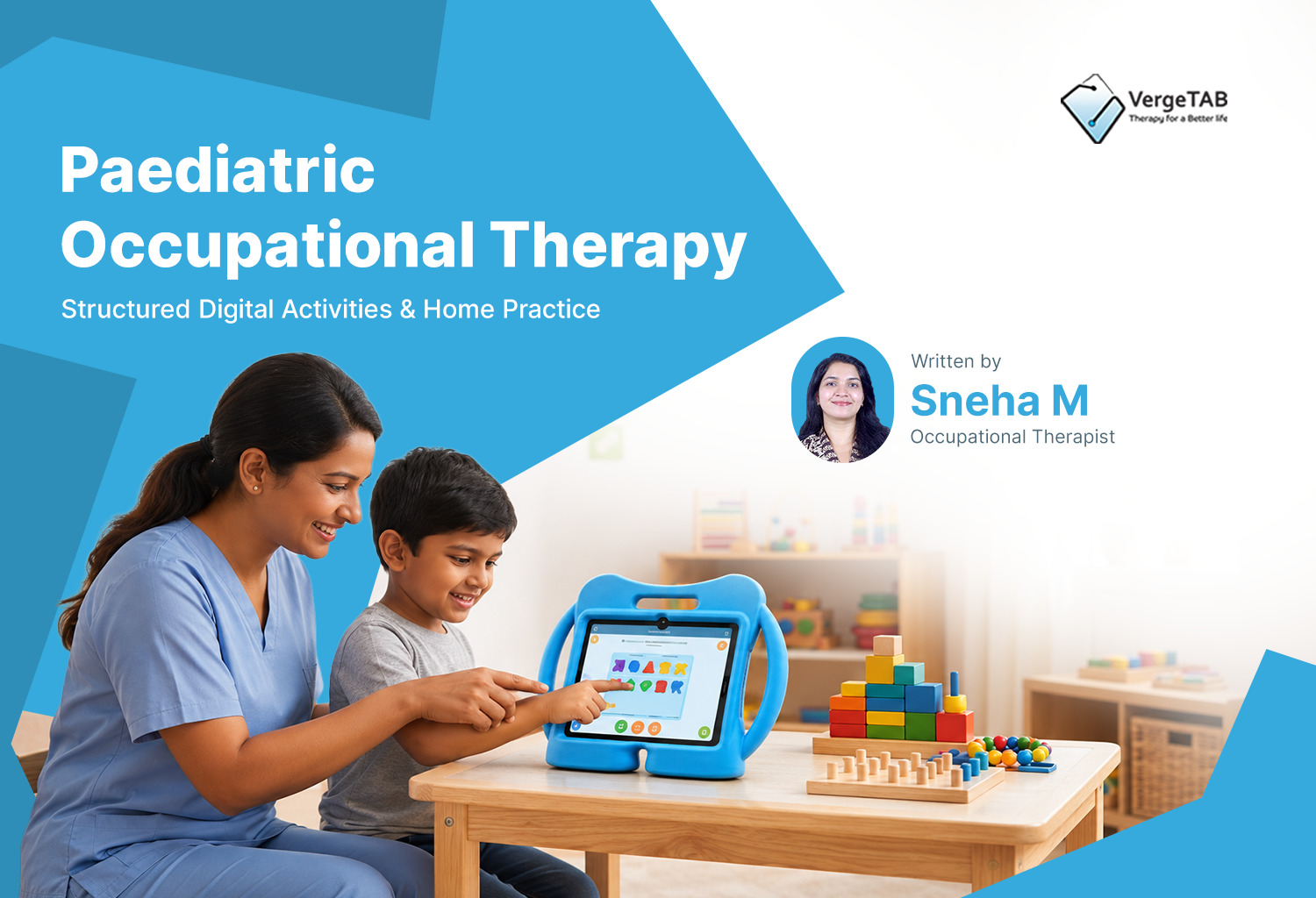
VergeTAB in Paediatric Occupational Therapy: Structured Digital Activities and Home Practice
24 Nov 2026

Written by Sneha M
Occupational Therapist
XceptionalLEARNING
AUTHOR DISCLOSURE
The author is affiliated with XceptionalLEARNING, the organisation behind VergeTAB. This article reflects the author’s professional perspective.
Introduction
Occupational therapy focuses on helping individuals develop the skills required to participate in meaningful everyday activities. For children with developmental and learning difficulties, occupational therapy may address areas such as fine motor coordination, visual perception, sensory processing, attention, cognitive development and functional independence.
Occupational therapists use a variety of intervention approaches, including play-based activities, hands-on exercises, sensory-based experiences and structured therapeutic tasks to address individual needs.
As rehabilitation practices continue to evolve, technology is creating additional opportunities to support therapeutic intervention and extend practice beyond conventional clinical settings.
VergeTAB, powered by the XceptionalLEARNING (XL) Platform, brings structured digital activities into occupational therapy practice. VergeTAB is a locked digital learning device: it has no open browser, app store, advertisements or entertainment apps, and a child can only open the activities their therapist has assigned. It gives therapists an additional way to incorporate interactive digital resources into intervention programmes while maintaining a therapist-led approach.
Rather than replacing conventional occupational therapy methods, VergeTAB complements existing clinical practices by supporting engagement, structured activity participation and continuity of practice between therapy sessions.
1. Enhances Engagement and Participation Through Structured Digital Activities
Maintaining a child’s attention and active participation is an important aspect of occupational therapy, particularly when working with children with developmental difficulties.
Some children may benefit from having therapeutic tasks presented through different formats. Structured digital activities can offer one such format.
Depending on the activities selected and the child’s individual abilities, these tasks may provide opportunities to practise:
- Attention and concentration.
- Visual perception and visual discrimination.
- Visual-motor coordination.
- Cognitive skills and problem-solving.
- Memory and sequencing.
- Following instructions and task completion.
The occupational therapist determines whether a digital activity is appropriate for the child’s needs and how it can be incorporated into the overall intervention programme.
2. Supports Goal-Oriented Occupational Therapy Intervention
Every occupational therapy intervention should be connected to specific functional goals based on an individual’s abilities, challenges and everyday participation needs. This section looks at how digital activities can fit those goals clinically.
Digital activities should be chosen because they serve a goal, not because they are available. The therapist matches each activity to the child’s developmental level, functional abilities and therapeutic requirements. For example:
- Visual-motor coordination: A child experiencing difficulties with visual-motor coordination may participate in suitable activities involving visual matching, identification or controlled interaction.
- Attention and concentration: A child who finds it difficult to sustain attention may engage in structured activities involving attention, sequencing and following instructions.
- Cognitive development: A child with cognitive challenges may participate in activities involving memory, recognition, classification and problem-solving.
- Visual perception: Activities involving pattern recognition, shape identification and visual discrimination may provide opportunities to practise specific visual-perceptual skills.
These digital activities can complement other intervention methods, including hands-on exercises, play-based activities and functional skill development.
The occupational therapist remains responsible for clinical reasoning, activity selection, grading, adaptation and evaluating the functional relevance of each activity.
3. Expands Therapeutic Resources and Intervention Approaches
Conventional occupational therapy frequently involves physical materials such as puzzles, blocks, worksheets, flashcards and manipulatives. These continue to play an essential role. Digital resources provide an additional medium through which therapists can introduce and practise selected skills.
For example, a therapist may combine:
- Physical puzzles with digital visual-matching activities.
- Hands-on sequencing tasks with structured digital sequencing activities.
- Manipulative-based exercises with suitable digital recognition activities.
- Traditional worksheets with interactive learning tasks.
This combination allows therapists to introduce variety into sessions while keeping practical, hands-on experiences central. Digital activities are not intended to replace physical materials or meaningful real-world tasks.
Conventional OT Resources
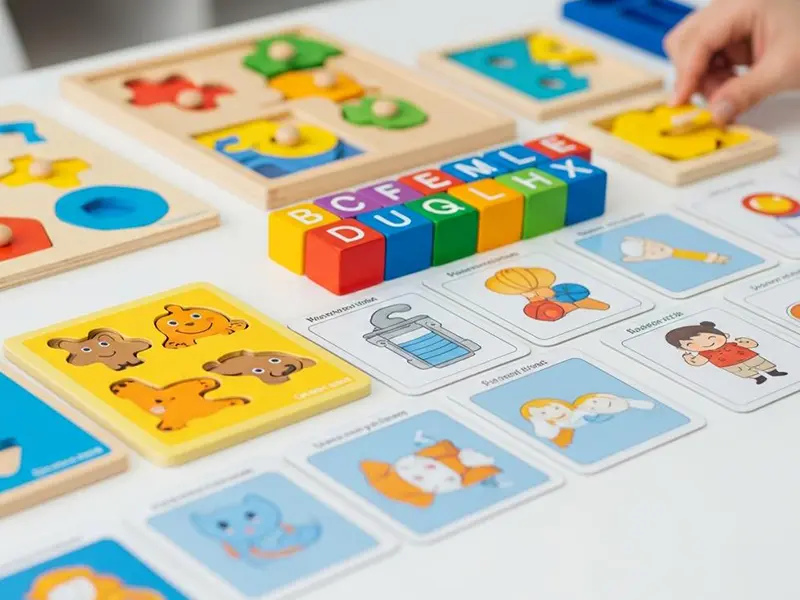
- Physical puzzles
- Blocks and manipulatives
- Worksheets and cards
- Hands-on exercises
Digital Activities
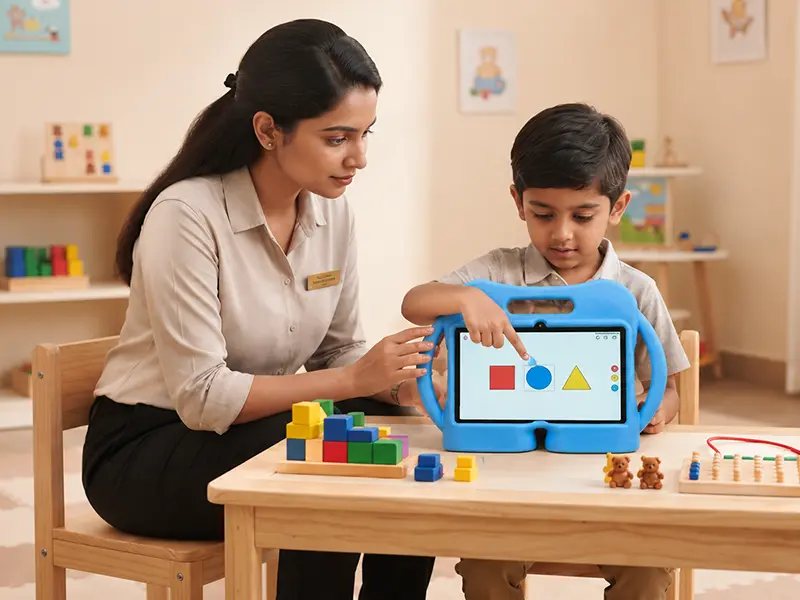
- Visual matching
- Recognition activities
- Sequencing tasks
- Structured digital practice
4. Strengthens Home-Based Practice and Parental Involvement
Therapeutic practice does not end when a child leaves the clinic. Consistent home practice and parental involvement can help reinforce skills addressed during sessions. However, maintaining regular practice at home can be challenging, particularly when parents are unsure which activities to practise or how to support their child.
When a therapist assigns activities for use on VergeTAB at home, parents have an opportunity to:
- Understand the activities recommended by the therapist.
- Encourage participation in assigned activities.
- Support repetition of selected tasks.
- Observe their child’s participation in structured activities.
- Become more involved in the child’s intervention journey.
For instance, when the assigned activity targets visual discrimination or sequencing, parents can encourage the child to complete it as part of the home-practice routine. Parents play a supportive role, while therapists guide intervention decisions and review progress.
5. Supports Continuity of Practice Beyond Therapy Sessions
Regular attendance and consistent practice can be affected by distance, transportation, school schedules, health concerns and other family commitments.
Because activities can be practised outside the clinic, children can stay engaged with their therapy goals between appointments. Such technology-supported practice can complement regular clinical intervention, particularly when combined with appropriate parental guidance and therapist follow-up.
Digital activities do not eliminate the need for in-person assessment, hands-on intervention, therapeutic handling or direct therapist guidance where clinically necessary. They provide an additional resource within a broader occupational therapy programme.
6. Supports Activity Assignment and Progress Monitoring Through the XL Platform
Monitoring progress is an important part of occupational therapy because goals and strategies may need to be reviewed and adapted as a child develops new skills.
This section describes what the XceptionalLEARNING Platform provides. Through the platform:
- Therapists can assign structured digital activities for the child to open on VergeTAB.
- Activity progress can be monitored through dashboards and reports.
- Parents and therapists can access relevant dashboards and reports.
Digital progress information should be considered alongside clinical observation, functional assessment, caregiver input and other relevant measures of the child’s development. Technology can support documentation and review, but it does not replace professional assessment or clinical decision-making.
7. Encourages Technology-Enabled Occupational Therapy Practice
The integration of technology into rehabilitation is not simply about introducing digital devices into clinical settings. It is about identifying meaningful ways in which technology can complement established therapeutic approaches.
This also creates opportunities for rehabilitation centres, special schools and therapy clinics to explore technology-supported intervention as part of their existing services. The focus should always remain on selecting appropriate activities based on individual needs rather than introducing technology for its own sake.
How Occupational Therapists Can Incorporate VergeTAB into Intervention
This section is a practical sequence of steps.
1. Identify intervention goals
Assess the child’s needs and set appropriate goals.
2. Select relevant digital activities
Choose suitable activities on the XL Platform that match the child’s level, abilities and goals.
3. Assign and introduce
Assign the activities and, where possible, introduce them in a session so the child and parent know what to do.
4. Encourage practice beyond therapy sessions
The child practises at home, with parents encouraging and observing as appropriate.
5. Review and adjust
Review platform information together with your own observations and assessments, then adjust the plan.
This approach helps connect clinical intervention, structured digital activities and home-based practice while keeping the occupational therapist at the centre of the process.
The Occupational Therapist Remains the Key to Successful Intervention
Although technology offers several possibilities, occupational therapy remains fundamentally a client-centred profession.
A digital activity alone cannot replace clinical observation, activity analysis, therapeutic handling, hands-on sensory-based intervention where clinically appropriate or individualised clinical reasoning.
The occupational therapist identifies the child’s needs, establishes meaningful goals, selects appropriate intervention strategies and evaluates outcomes.
For example, a digital activity involving visual matching may provide an opportunity to practise visual discrimination. However, developing functional independence also requires opportunities to apply relevant skills in everyday environments through meaningful activities and real-world experiences.
Similarly, digital interaction may complement selected visual-motor tasks, but it cannot replace the full range of physical activities required for fine motor development.
VergeTAB serves as a supportive tool within this process, helping occupational therapists expand their resources and explore additional ways of delivering structured intervention. The effectiveness of technology-supported practice depends on how appropriately it is selected, integrated and guided by the therapist.
Conclusion: Bringing Technology and Occupational Therapy Together
The future of occupational therapy lies in combining established clinical knowledge with emerging technological possibilities.
VergeTAB, powered by the XceptionalLEARNING Platform, offers occupational therapists an additional resource to incorporate structured digital activities into intervention programmes. By supporting engagement, expanding therapeutic resources, encouraging home-based practice and enabling activity assignment and progress monitoring, VergeTAB can complement existing occupational therapy approaches.
Technology should never replace the professional expertise, clinical judgement and individualised care that form the foundation of occupational therapy. Instead, it should be used meaningfully to support therapists, children and families throughout the intervention journey.
VergeTAB is not about replacing the way occupational therapy works. It is about enhancing what occupational therapists can achieve through the meaningful integration of technology.
Explore VergeTAB for Occupational Therapy
Powered by XceptionalLEARNING
Occupational therapists, rehabilitation centres and special schools interested in exploring structured digital activities as part of their intervention approach can discover how VergeTAB and the XceptionalLEARNING Platform work together.
VergeTAB – Supporting the evolution of technology-enabled rehabilitation.