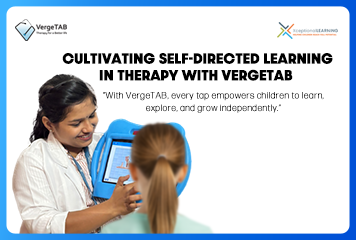
How VergeTAB Builds Self-Directed Learning Skills in Therapy Sessions
21 Oct 2025

In therapy sessions and special education classrooms, therapists and educators often notice that children struggle to learn independently. Many children wait for constant instructions, lose focus quickly, or depend heavily on adult guidance to complete even simple tasks.
Traditional worksheets and generic learning apps do not effectively build self-directed learning because they lack structure, guided progression, and measurable reinforcement.
VergeTAB, used together with the XceptionalLEARNING platform, is implemented in schools and therapy clinics to deliver distraction-free, goal-based digital activities that help children gradually develop self-directed learning skills through structured practice and guided independence.
Talk to our team on WhatsApp
Why Self-Directed Learning is Essential for Children
The traditional teacher-centered approach often limits children’s ability to engage meaningfully with learning materials. In contrast, self-directed learning empowers children to:
- Take ownership of their learning
- Build decision-making and problem-solving skills
- Enhance curiosity and a love for learning
- Develop confidence and self-reliance
- Reflect on progress and self-evaluate
Research in child development shows that children who engage in SDL are more likely to demonstrate better academic performance, improved social skills, and enhanced emotional regulation. SDL prepares children not just for classroom success, but for everyday challenges.
VergeTAB: The Ideal Tool for Self-Directed Learning
VergeTAB, combined with the XceptionalLEARNING platform, offers a unique, streamlined learning environment that eliminates common distractions found on traditional tablets. It provides:
- Customizable therapy activities tailored to individual needs
- Real-time progress tracking and feedback
- Limits how long and how often a child can do each activity.
- Goal-setting and achievement markers.
- No access to other apps and websites.
- Integration with Individualized Education Programs (IEPs)
By shifting from an instructor-led approach to a child-led experience, VergeTAB transforms therapy sessions into interactive, self-paced, and rewarding learning journeys.
Chat with our team on WhatsApp for guidance
Innovative Self-Directed Learning Activities with VergeTAB
1. Challenge Wheel: Spin and Learn
In this fun and spontaneous activity, children spin a virtual challenge wheel to select from a variety of tasks such as language puzzles, fine motor challenges, memory games, or academic exercises. The randomness of the wheel adds excitement and unpredictability to learning.
Skills Developed:
- Spontaneous decision-making
- Adaptability and flexibility
- Self-motivation
Therapist Tip: Customize the sections of the wheel according to the child’s developmental goals, making it versatile for different therapy domains.
2. Skill Adventure Maps
Children use an adventure map where they can click or tap on fun places like Memory Mountain or Language Lake. Each place has different games or challenges just for them, making learning playful and easy to follow.
Skills Developed:
- Sequential planning
- Long-term goal setting
- Self-paced progression
Bonus: Children earn virtual badges as they complete challenges, encouraging them to seek continuous improvement.
3. Build-Your-Day Planners
Children manage their own therapy schedule by choosing activities like speech tasks, occupational exercises, academic games, and sensory breaks. They decide how much time to spend on each, giving them control over their daily learning routine
Skills Developed:
- Time management
- Self-organization
- Responsibility for personal routines
Parental Involvement: This activity can be extended to home routines, helping children plan their daily activities independently.
4. Choice-Based Story Adventures
In this activity, children help guide a story by making choices for the characters at important moments. For example, they might decide if a character helps a friend or finishes a task first, and the story changes based on what they pick
Skills Developed:
- Consequential thinking
- Moral reasoning
- Empathy development
Therapist Tip: Engage children in post-story discussions, encouraging them to reflect on their choices and outcomes.
5. Do-It-Yourself Reward Designer
Children create their personalized reward system by choosing their virtual incentives, such as activating new themes, customizing avatars, or accessing fun mini-games after completing goals.
Skills Developed:
- Personal goal ownership
- Motivation reinforcement
- Delayed gratification
Therapist Tip: Guide children to set realistic, achievable goals and select meaningful rewards that align with their interests.
6. Independent Exploration Zones
VergeTAB provides open-ended exploration areas where children can engage in unstructured learning activities like digital drawing, sound exploration, or sensory interactions. These zones encourage curiosity and creativity.
Skills Developed:
- Creative expression
- Exploratory learning
- Independent engagement
Parental Use: Parents can use these zones during free play at home to promote autonomous exploration.
7. Self-Paced Mastery Levels
Children work through progressively challenging levels within a specific skill set, such as phonics, sequencing, or maths facts. They determine when they are ready to advance to the next level, promoting self-assessment.
Skills Developed:
- Self-evaluation
- Confidence in skill mastery
- Personal goal progression
Bonus Feature: Reflection checkpoints encourage children to articulate their readiness to advance, promoting metacognitive skills.
8. Reflection Galleries
Children compile a digital portfolio showcasing their proud moments, favourite tasks, and successful completions. This gallery can include screenshots, audio clips, and drawings.
Skills Developed:
- Self-recognition
- Reflective thinking
- Confidence boosting
Therapist Tip: Review the Reflection Gallery periodically to celebrate progress and set new targets.
In real therapy and classroom environments, these skills are practiced using VergeTAB in a controlled, distraction-free setup designed specifically for special education and therapy use. Schools and clinics use VergeTAB along with XceptionalLEARNING to ensure structured skill development and measurable progress.
See how VergeTAB works in real sessions
Extending Self-Directed Learning Beyond Therapy
The skills children develop through SDL activities on VergeTAB translate seamlessly into real-life situations:
- Academic Skills: Children transfer time management and planning to school assignments.
- Daily Routines: Self-planning and sequencing skills help with morning routines and household chores.
- Social Development: Choice-making and reflective thinking improve interpersonal relationships.
Families and educators can use VergeTAB to foster consistency across home, school, and therapy settings, ensuring that children apply SDL strategies in multiple environments.
The Therapist’s Role: Guiding, Not Directing
In the SDL model, therapists shift from traditional directive roles to facilitators of learning. They:
- Guide children through goal-setting
- Offer choices and encourage autonomy
- Prompt self-reflection and self-monitoring
- Celebrate child-led achievements
This approach increases therapy engagement, reduces frustration, and empowers children to take charge of their progress.
Conclusion
Therapy becomes more meaningful when children lead the way. If your school or clinic is looking for a practical way to build self-directed learning skills using a dedicated therapy device, VergeTAB provides a safe, guided, and distraction-free digital environment built specifically for special education and therapy.
Request a VergeTAB Demo
Talk to our team on WhatsApp for institutional enquiries