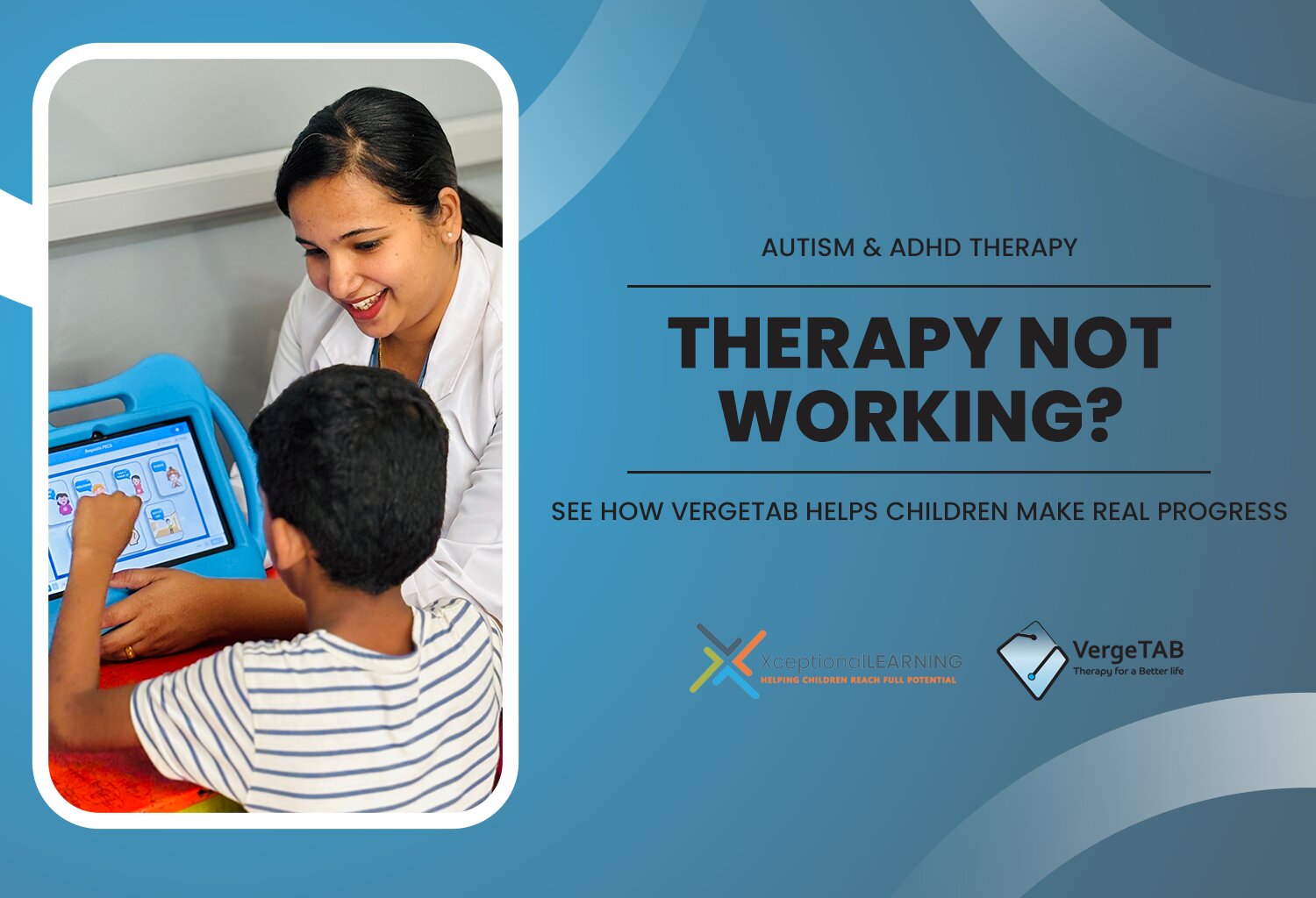
Autism and ADHD Therapy Isn’t Working? How VergeTAB Helps Children Make Real Progress
08 Apr 2026

Every parent wants to see their child grow. You follow therapy plans, attend sessions, and try to stay consistent at home. Yet after weeks or months, one question keeps coming up:
“We’re doing everything… so why isn’t my child improving?”
If this feels familiar, you’re not alone.
In most cases, therapy isn’t failing — something important is missing between sessions.
In this blog, you’ll learn why progress sometimes stalls and how structured home routines, supported by VergeTAB and the XceptionalLEARNING (XL) Platform, can transform your child’s development.
The Common Gap in Therapy
Most therapy plans focus on scheduled clinic sessions—two or three times per week. During sessions:
- A therapist works with your child
- Parents may observe
- A few instructions are given for home
The problem: children don’t learn only during therapy sessions. Learning happens in hundreds of small moments throughout the day:
- During playtime
- While following daily routines
- Through repeated practice of new skills
Without guidance in these moments, therapy’s impact remains limited to the clinic. Even excellent therapy sessions alone cannot create meaningful improvement.
Why Children Don’t Improve at Home
Many parents are doing everything right:
- Attending therapy regularly
- Trying activities at home
- Supporting their child
But still, progress feels inconsistent.
Why?
Because of:
- No fixed routine
- Practice based on time/mood
- Lack of structured guidance
This creates effort without structure — and that slows real progress.
Need Help Structuring Home Therapy?
Quick guidance can make a huge difference — even 20–30 minutes of structured practice daily helps your child progress.
Why Structure, Consistency and Repetition Matter
Children with autism, ADHD, or other developmental challenges improve not through exposure alone, but through:
- Consistency – predictable routines every day
- Repetition – practising skills regularly in real-life contexts
- Structure – guided, goal-oriented activities that build upon previous skills
Without these, even high-quality therapy sessions may not translate into real-world progress.
Why More Therapy Isn’t Always the Answer
Many parents think:
“Let’s add more sessions”
But this often leads to:
- Overload
- Resistance
- Burnout
The real solution is daily structured practice, even for just 20–30 minutes.
Why Regular Tablets and Apps Don’t Work
Many families turn to tablets or apps. Initially promising, problems soon emerge:
- Distractions: Games, notifications, or random videos reduce focus
- No clear goals: Apps rarely align with therapy objectives
- No progression tracking: Skills aren’t systematically reinforced
- Disconnected from therapist guidance: Parents can’t ensure alignment with therapy goals
Result: Child is busy… but not learning effectively.
What Makes VergeTAB Different
VergeTAB is not a regular tablet — it’s a structured therapy system designed for real progress.
It provides:
- Distraction-free environment
- Goal-based therapy activities
- Structured daily routines
- Alignment with therapist sessions
Parents often notice:
- Better focus
- Longer engagement
- More predictable responses
See How Structured Therapy Works in Real Life
Watch: From Struggles to Success – How VergeTAB Helped Improve Engagement and Learning
See how children improve through consistent, structured daily practice.
How VergeTAB Improves Home Therapy
Instead of random activities, children get:
- Guided daily sessions
- Repetition for skill-building
- Predictable routines
- Progress tracking
Even 20–30 minutes daily creates meaningful improvement.
Step-by-Step Home Routine (Example)
1. Warm-Up (5 minutes)
- Simple stretching or movement
- Short mindfulness or breathing exercises
2. Skill Practice (15 minutes)
- Speech: Repeating words using visual prompts
- Behaviour: Completing mini daily routine tasks
- Occupational therapy: Fine motor or hand-eye coordination exercises
3. Guided Play (5–7 minutes)
- Interactive games with a clear learning goal
- Focus on turn-taking, attention, and response
4. Cool-Down / Reflection (3 minutes)
- Review what was learned
- Praise participation
- Log progress for parent/therapist
Consistency matters more than duration.
Before vs After Structured Therapy
| Before | After |
|---|---|
| Therapy only in sessions | Daily guided home practice |
| No clear routine | Structured daily plan |
| Easily distracted | Focused engagement |
| Parents unsure | Parents confident |
This shift is where real progress begins.
How VergeTAB + XL Platform Work Together
This system:
- Connects therapy + home practice
- Tracks progress through the XceptionalLEARNING (XL) Platform
- Guides parents step-by-step
- Ensures consistency daily
Result: Therapy continues beyond sessions.
Frequently Asked Questions (FAQ)
Is digital therapy safe for children with ADHD or autism?
Yes. Digital therapy tools like VergeTAB provide distraction-free, goal-oriented learning, ensuring safe and focused engagement.
What makes VergeTAB different from regular tablets or apps?
Unlike typical apps, VergeTAB is aligned with therapy goals, tracks progress, and provides structured, guided sessions.
How do I track my child’s progress at home?
VergeTAB + XL Platform automatically logs completed tasks and skill development. Parents and therapists can review progress anytime.
Why is my child not improving in therapy?
Progress often slows when skills are practiced only during sessions—children need consistent, structured practice at home to improve. Even 20–30 minutes of guided daily repetition helps bridge this gap and supports steady development.
Final Thoughts
If your child’s progress feels slow, the issue is rarely therapy itself.
The missing link is structured daily practice at home.
With the right system, you can:
- Build consistent routines
- Support your child with confidence
- See measurable improvement
Even small daily steps can lead to big changes over time.
Ready to Improve Your Child’s Progress?
Start building structured, consistent therapy at home today.