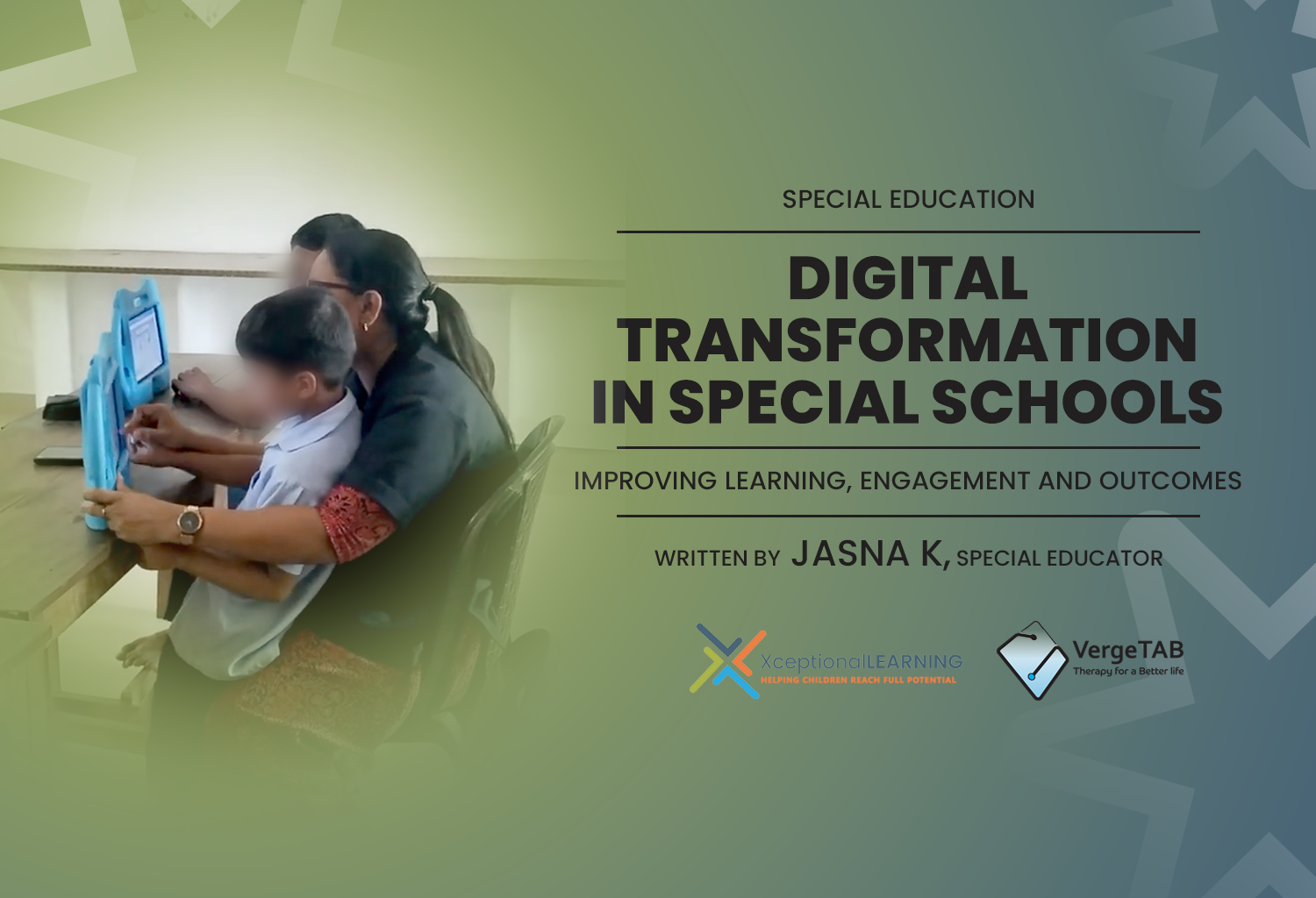
How Digital Transformation is Changing Special Education in Schools
31 Mar 2026

Introduction: Special Education in a Changing World
Special schools today are no longer limited to traditional teaching methods. With rising therapy needs and increasing parental expectations, digital transformation in special education is becoming essential for delivering structured and measurable outcomes.
For both educators and parents, the goal remains the same—ensuring that every child receives meaningful, structured, and effective learning opportunities.
Today, special schools are evolving by integrating digital therapy platforms and special education technology to support not just academic growth, but also independence, communication, and life skills.
Changing Social Needs and Educational Expectations
There has been a significant shift in how society understands disability and education. Increased awareness of inclusion and disability rights has raised expectations from both schools and parents.
Modern special education schools now focus on:
- Life skills development
- Social interaction
- Communication abilities
- Vocational readiness
This shift requires individualized special education programs that adapt to each child’s unique needs.
Digital Transformation in Special Education: Why It Matters for Special Schools
Technology is no longer optional—it is becoming essential.
Digital tools in special education help:
- Simplify complex concepts through visual learning
- Provide structured and repeated practice
- Support multiple learning styles (visual, auditory, activity-based)
For educators, special education software and digital systems improve lesson planning and progress tracking.
For parents, these platforms offer better visibility into their child’s learning journey.
Traditional vs Digital Special Education: What’s Changing?
| Traditional Approach | Digital Approach |
|---|---|
| Manual progress tracking | Real-time tracking and reports |
| Limited engagement | Interactive, activity-based learning |
| One-size-fits-all teaching | Individualized learning programs |
| Paper-based materials | Digital activity-based content |
How Digital Learning Improves Engagement in Special Education
Children with special needs respond better to learning that is interactive, structured, and engaging.
Digital methods such as:
- Animated lessons
- Interactive exercises
- Activity-based digital learning
help improve:
- Attention span
- Participation
- Confidence
This leads to more consistent and meaningful learning outcomes.
See Real Classroom Impact: How Digital Learning Improves Engagement
Watch how digital learning is transforming special education classrooms in real-life settings:
Want to implement this in your school?
Digitalizing Education in Special Schools (DESS): A Transformative Initiative
To address the growing need for effective and inclusive learning, initiatives like the Digitalizing Education in Special Schools (DESS) project by XceptionalLEARNING are bringing meaningful transformation to classrooms.
DESS introduces a hybrid learning model, combining traditional teaching with digital solutions to create a balanced and effective learning experience.
At the core of this model is VergeTAB, a digital activity book designed to enhance structured learning.
Within this approach:
- Each student uses an individual device for focused engagement
- Lessons are delivered through structured, interactive content
- Teachers can guide, monitor, and manage activities in real time
For educators, this enables better classroom management and personalized instruction.
For parents, it ensures that learning is structured, monitored, and meaningful.
By combining teacher-led instruction with digital support, DESS creates a more inclusive and adaptive learning environment.
The Evolving Role of Teachers
Despite rapid technological advancement, teachers remain central to a child’s learning journey.
Today, educators are:
- Facilitators of interactive learning
- Guides for individualized learning paths
- Users of digital tools to enhance understanding
Ongoing training and professional development are essential to help teachers effectively integrate technology into their teaching practices.
Challenges in the Transition
While digital transformation offers many benefits, schools may face challenges such as:
- Limited infrastructure
- Need for training and technical support
- Adjustment to new teaching methods
With proper planning and collaboration between educators and parents, these challenges can be effectively managed.
The Future of Special Schools
The future of special education lies in combining traditional teaching strengths with digital innovation.
Special schools will continue to focus on:
- Building independence and life skills
- Enhancing social and communication abilities
- Preparing children for real-world participation
With advancements in assistive and digital technologies, the potential to support children will continue to grow.
Conclusion
Special schools are evolving by integrating traditional teaching approaches with digital innovation to create more structured and effective learning environments.
Initiatives like DESS highlight how combining teacher-led instruction with tools like VergeTAB can significantly improve engagement, consistency, and learning outcomes.
By working together—educators, parents, and organizations—special schools can create empowering environments that support independence, confidence, and long-term development for children with special needs.
Need help choosing the right digital solution for your school or child?
Frequently Asked Questions
What is a digital therapy tablet in special education?
A digital therapy tablet is a specialized device designed to deliver structured, goal-based learning and therapy activities for children with special needs. It supports engagement, tracks progress, and enables personalized learning within a controlled environment.
How does digital therapy work with VergeTAB?
VergeTAB works exclusively with the XceptionalLEARNING platform, where therapy activities, lesson plans, and progress tracking are managed. Teachers and therapists can assign structured activities, monitor performance, and guide students in real time.
Can digital therapy replace traditional teaching?
No. Digital therapy supports teachers and therapists by enhancing engagement and consistency. The best results come from a hybrid therapy approach.
How does digital therapy improve learning outcomes in special education?
Digital therapy improves learning by providing consistent practice, visual and interactive activities, and real-time progress tracking. When combined with teacher-led instruction, it creates a hybrid learning model that enhances engagement, skill development, and overall outcomes.